Monday, June 21
Delta DTW > LHR [canceled]
Carla Harryman
What does it mean to travel? And what are the risks? You could hit an iceberg, for example. In this age of global devolution due to war, pandemic, climate change, and supply chain disruption, the risks are increasing. The magic “reward miles” that purchased at least one ticket were offset by ambiguous reentry requirements and increased insurance costs. Our awareness of global supply chain disruptions came with the brutal cancellation of our fully boarded flight. The air conditioning had heated up, needing to be replaced; the parts were in Atlanta, but no means to get them to Detroit; by the time they would arrive, crews had to rotate; no additional crews were available. By the time this was decided we had wandered the Detroit airport for some hours, only then to be automatically rebooked. The gap in expectations was predictive: this would be no easy trip, but still worth the attempt, we believed.
Tuesday, June 22
Delta DTW > IAD
Virgin IAD > LHR
Refreshed by an extra night of sleep before departure, we renewed the attempt. Now we are less concerned with global supply chains, as the aviation network is algorithmically rebooted to our advantage. Now it is a question of mask behavior and the algorithms of disease transmission. Universally, or in the metropole, the “unfulfilled democratic demands” for global travel had become a surge of pent-up consumerism; with the release from austerity, as a form of repression, off came the masks. They were no longer required to board a flight, nor were negative test results required for readmission, at least for passport holders. The politics of the New Normal are us. Willingly confined to our cubic meter of seating, we endured the deprivation of freedom as a contract with global mobility. One flight took us to the sterile, remodeled Dulles Airport, with many murals of JFK, and then onward to Heathrow, on an airline named for the “Virgin Queen” during the heydey of Thatcherism.
Wednesday, June 22
189 King’s Cross Road, London
“Surrealism Beyond Borders”
@ Tate Modern
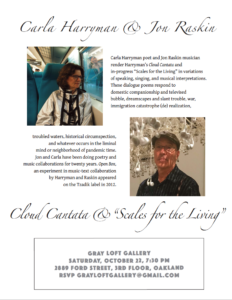
Our trip was structured around several agendas: for me, catching up with global exhibitions, literary friends, and Berlin; for Carla additionally, a launch of Cloud Cantatas, published by Pamenar Press and delivered that very day in London. After presenting at last November’s virtual conference on surrealism, I had wanted to get to the New York version of the show before it closed in January at the Met, but omicron put an end to that. The Tate Modern was the next venue, the monumental showcase for New British Art responding to the global, decolonial imperative. To what extent this exhibition truly understood or could identify the theoretical horizons of the global dispersion of surrealism was, however, in doubt. Static art-historical orders of style and periodization remained in place, tending toward inadequately framed concepts of history and space. There were groups of painters in Mexico City or Cairo, for example, who carried on the tradition of group activity in surrealism. But what could be seen of the decolonial moment, precisely the moment of surrealism’s global dispersion through emigration and emulation after 1945? There was not nearly enough education on postcolonial liberation, not enough hard connection between the “inner” liberation of surrealism and the politics of liberation as a post-modernity. That said, there were many revisionist moments to be explored: the rise of an African-American “demotic” surrealism with Ted Joans, Amiri Baraka, and Bob Kaufman, for example; or the anti-Eurocentric contributions of second-wave women surrealists, from Leonora Carrington and Remedios Varo to Claude Cahun, Maya Deren, and Ithell Colquhoun, not to mention Lee Miller and Dorothea Tanning. But this was still surrealism as art history, alas. The lesson for global exhibitions is to radically contextualize the exemplary work in an unfolding horizon of global negativity—a globality that is not one thing.
… More