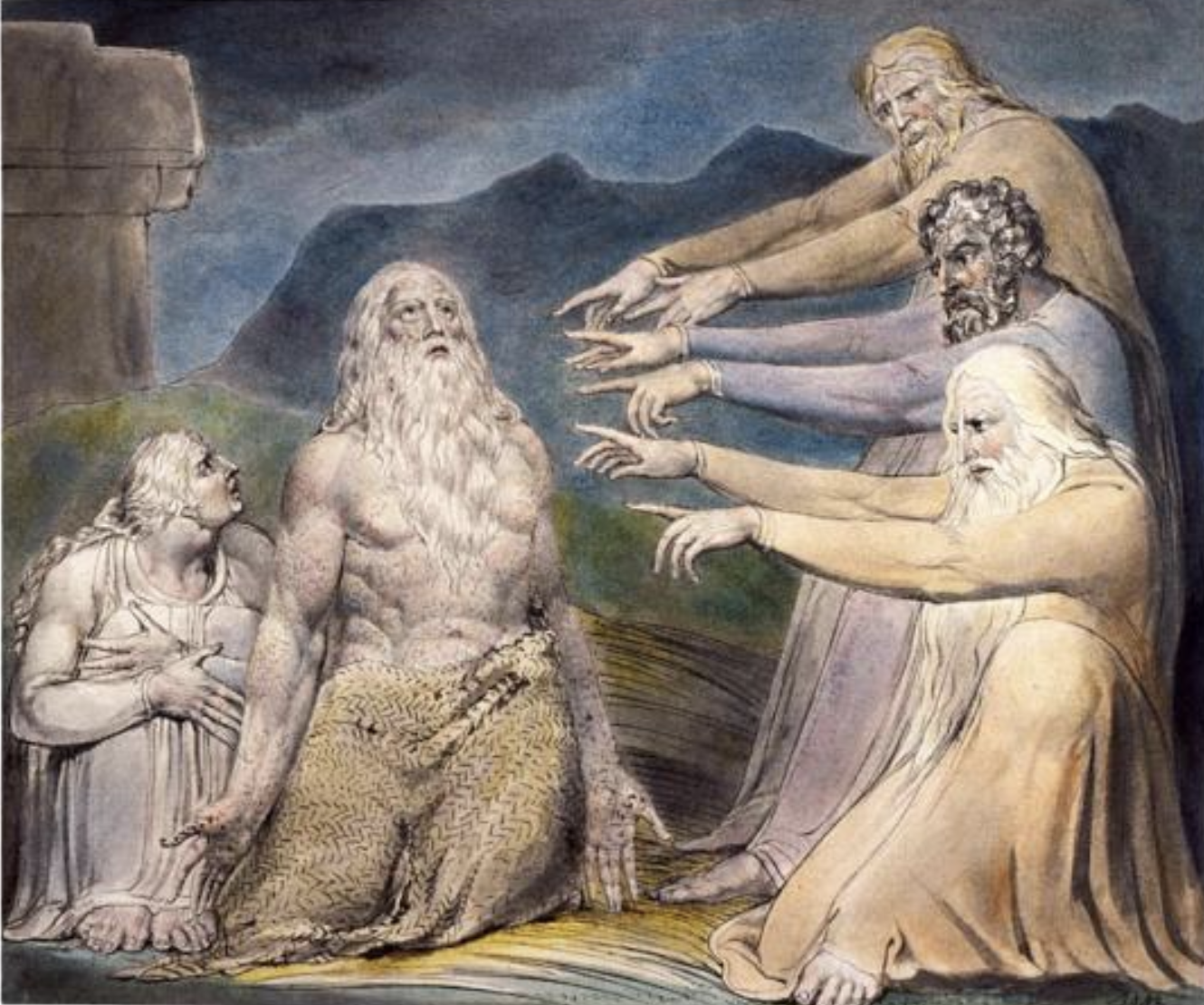
 This page continues my effort to answer to the dozen posts from literary figures—some well known, others not—on the anonymous “blog” that was uploaded after the social media campaign on Twitter (X) and Facebook in 2019. My framing it with William Blake’s illustration for The Book of Job may seem immodest, but it is meant to point to the psychological reality of multiple fingers pointing at the afflicted man (and the helplessness of Job’s Wife, looking on). For him the world has been rent in two, between multiple accusers and the single accused, in a moment of existential clarity: no one will come to help. The experience of this awesome pile-on of recrimination and projection was truly dismaying in a sense Blake put his finger on. And it continues: my reason for writing this is both to disclose the contexts and motives of each accuser, and to ask why they would join together in such pitiless and destructive act. Here the whole is truly greater than the sum of its parts: an effect of being “cast out and down” that gives a bleak perspective on the nameless terror that undergirds our world. After Slavoj Zizek’s motto “the wound is healed only by the spear,” I fall in that direction.
Marjorie Perloff
If I were able to be objective about Marjorie Perloff, I might begin with her Stanford memorial, where she is “a world-renowned scholar of contemporary poetry and champion of experimental poetry,” or her Wikipedia page: “Her work on contemporary American poetry, and, in particular, poetry associated with Language poetry and the Objectivist poets, posits and critiques an ‘Official Verse Culture’ that determines what is and is not worthy of publication, critique and emulation.” That was indeed the case: Perloff made it her life’s mission to separate “what thou lovest well remains,” after the Pound tradition she valorized, from everything else. Doing so, she became a one-woman “Official Verse Culture,” a version of what our movement rejected when it began. Her post on the “blog” is a low point of her career, an instance of blatant opportunism: using the student social media campaign to silence, with meritless accusations, her most vocal critic.
Perloff’s turn to Language writing was a major career move for her, providing an aesthetic perspective to oppose the reigning verse orthodoxy (from the workshop to Helen Vendler) she used to advantage. But from the outset her readings were fast and loose, and there was no one around to call her on their inaccuracies—or their retrograde politics. She says she first met me with Ron Silliman for coffee in Berkeley after she published her essay “The Word As Such: L=A=N=G=U=A=G=E Poetry in the Eighties,” in 1984; actually, she and I met at a UC Press event a bit later, where she gushed: “I’m surprised, you’re not nearly as bad as people tell me!” I first engaged her seriously around her claims for the autonomy of language in Progress (1985), where she criticized my use of words such as industrial and Eisenhower in a poem. A bit later, I confronted her anti-communism, and her misreading of the Russian avant-garde, after having been red-baited in the Partisan Review (here):
What disturbs me more, however, is the more general occasion our work offers (or may offer) in linking a particular reading of the modernists with what seem to be explicitly anti-communist politics. I must admit that I don’t fully understand this agenda—that is, how you can be interested in our work and hold your politics and at the same time make the modernists the basis of it all. . . . I have to read your politics here in the context of other recent remarks on similar subjects and conclude that there is also an attraction for you in making out-of-date East-West politics out of the discussion that attends our work. This seems to me a far from innocent move, and I hope you have no illusions about what the response will be from those who are producing the work themselves. They don’t share your views! [29 November 1987]
Perloff’s characterization of our early contact says it all: “At that point [prior to this exchange] Watten was not yet belligerent.” Perloff’s rightist politics (her support for the U.S. government during the Vietnam War; her Middle East politics) were widely known and an embarrassment to many, but that would not keep her protegés in the East from not noticing, in contrast to the more politically aware poets on the West Coast. Through the 90s, the schism between a formalist and apolitical account of Language writing versus works like Progress, Under Erasure, and Bad History led to increasing discomfort. The faultlines of dissensus opened at a series of poetry conferences, including the Orono conferences (the 30s, 50s, and 60s) but also Assembling Alternatives (1996) and others. By the end of the decade, Perloff was ready to withdraw her support from Language writing as a school and focus on individuals she could trust. And there were other caveats, all centered around her role as our self-appointed critic: at the 1999 Page Mothers conference, she declared Language writing to be over in the name of feminism, and then advised women writers that they had no business writing theory, which should be left to critics—a position strongly challenged by Carla Harryman.
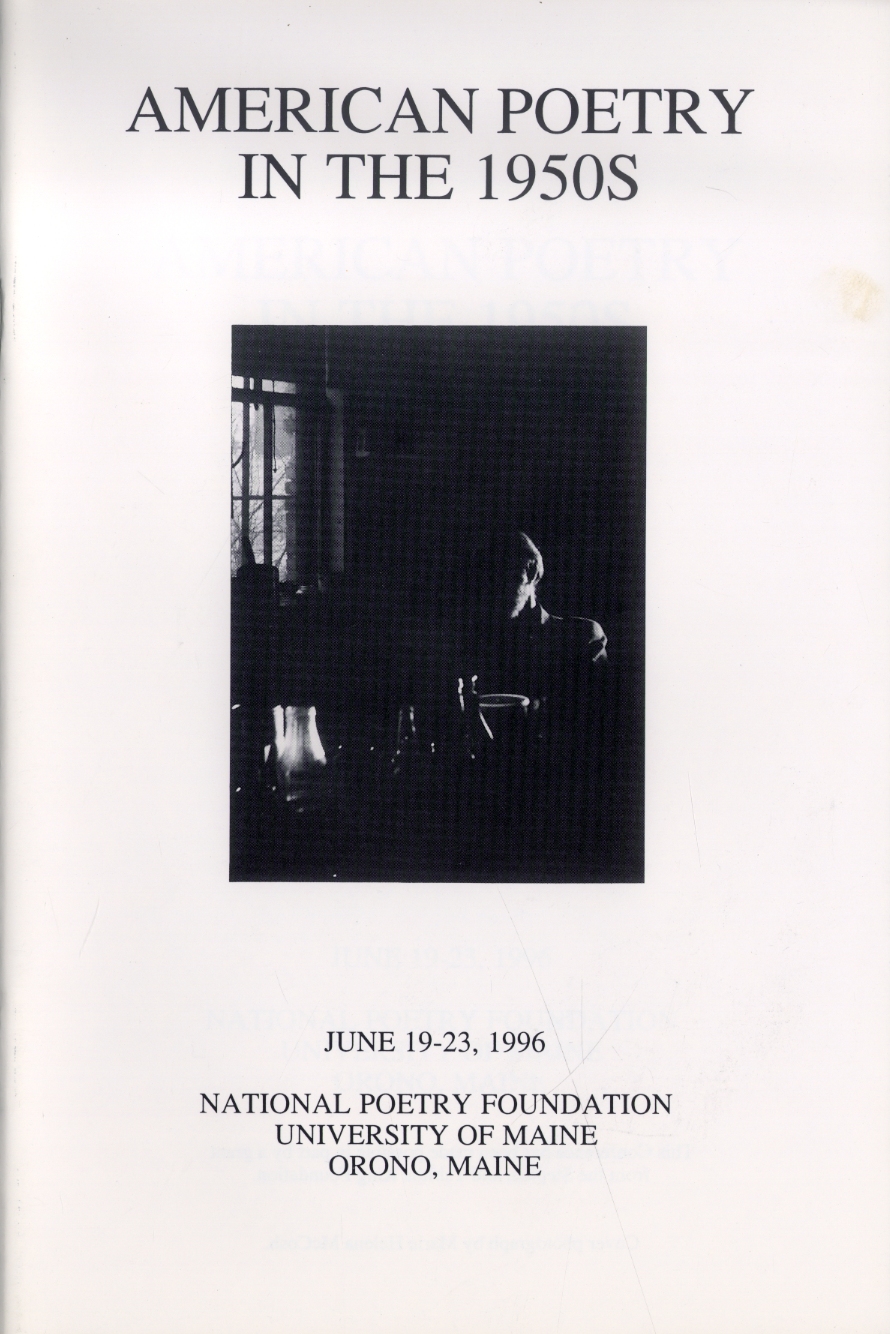 Another watershed moment of this history took place a bit earlier, at the 1996 American Poetry in the 1950s conference at the University of Maine, Orono. At the crowded conference bar, Perloff and I performed a spirited post-session debate on the relevance of “capitalism”—in relation to what? the 50s, the avant-garde, Language writing?—that she later characterizes as abusive, in her post: “Soon, however, I witnessed his abusiveness first hand, namely at one of the conferences at Orono, Maine where he screamed at me.” This is utterly false, as Kevin Killian and Dodie Bellamy reported as witnesses, in a short recollection from Kevin’s memorial in 2019:
DB [Dodie Bellamy]: [referring to an anecdote about a bar in Philadelphia] Did we go there more than once—because that’s the place where I got into the fight with David Buuck, and the two of us stood outside screaming at each other, as the Philadelphia poets stood around, observing. It was similar in a way at the Orono conference on poetry of the ‘50s, when Barrett Watten and Marjorie Perloff stood in a communal lounge and shouted into each others’ faces about capitalism, and we stood round silently cheering as if at a boxing match. Except, with David and me there were no pretenses of it not being personal. . . . Of course after that drama, having released the steam of our tensions, our friendship has been sweet ever since.
KK [Kevin Killian]: Maybe that’s how Barrett and Marjorie feel.
DB: I don’t think so. (from Kevin and Dodie, San Francisco Museum of Modern Art, 25 August 2019; 25)
What really happened was this: Perloff wanted to get down about “capitalism” and poetics. After some poking and prodding by Marjorie, things started to get heated and, I thought, interesting; so did a crowd of onlookers, who stood around us, as Dodie recalls, “silently cheering as if at a boxing match.” This was high theater, akin to the Kitchen Debate between Nixon and Khrushchev—in a crowded, noisy bar, where raising one’s voice was not only performative but necessary to be heard. Marjorie was not shy about that and seemed to enjoy it; she had quite a bit of aggressivity and was more than able to parry and jab. At the end of it all I remember laughing and saying to someone, “Marjorie wanted that.” The sticking point, however, was that I did not yield my position nor defer to her, and that is what ends up as “abusiveness.” No, Marjorie, you had the power and I was the untenured, avant-garde poet whom you were baiting, and enjoying it.
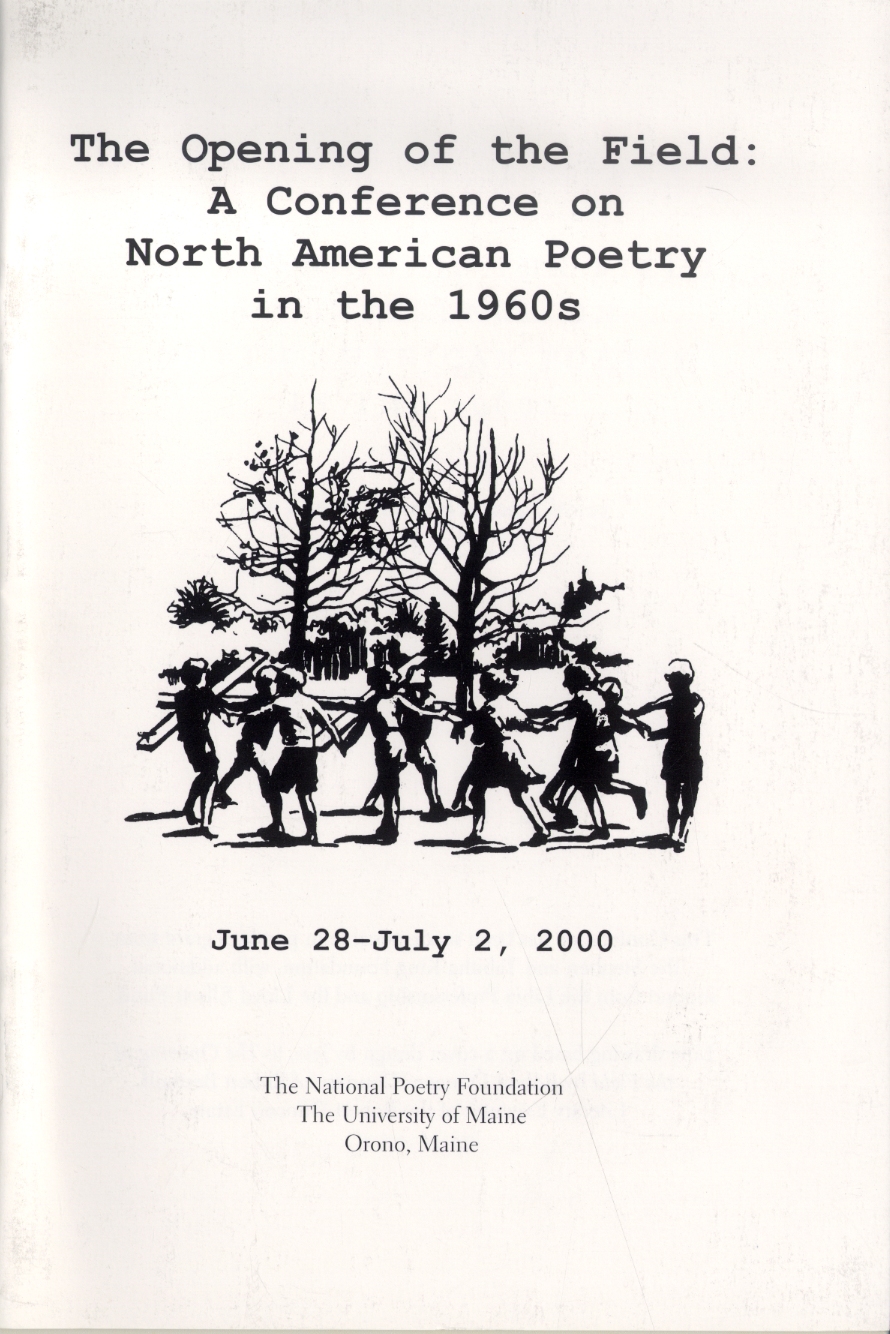 Perloff goes on to make a victim narrative out of it: “Subsequently, he did everything possible to undermine my work. It was awkward at conferences and I began to avoid meetings that he attended.” This is jaw dropping: what I was doing, and what everyone in a critical capacity should be doing, is taking positions, arguing a point, offering an alternative view. What really occurred was that Perloff was worried about losing control of the discourse. At the next Orono conference (North American Poetry of the 60s, 2000), she was to the side of the debate, serving as moderator as Amiri Baraka and I had our exchange. Language writing was moving into a more political register, as the subsequent conference (Poetry of the 70s, 2008) showed, where I gave a paper on Language writing and capitalism after 1973 and the onset of neoliberalism. Our conversation in 1996 was productive, it seems!
Looking back on this history, in Questions of Poetics: Language Writing and Consequences (2016) there are numerous references to Perloff (in the index there are dozens), criticizing her account of Language writing as a “period style” and reduced to a linguistic formalism, ignoring its politics:
A key moment of retrenchment [from early Left readings of Language writing] is Marjorie Perloff’s essay “The Word as Such” [which,] while endorsing a politics of radical particularity, consists largely of extended close readings. . . . A poetics of the material signifier, confined to isolated examples, suspends or defers any larger claim for method, finally disclosing the politics that inform this elision in a signature moment of Cold War Red-baiting: ‘What the Language poets call late monopoly capitalism is never compared to the economic system of existing Marxist countries—the Soviet Union, China, Cuba, and their satellites.’ Perloff’s criticism is itself neoliberal—balancing an economic requirement for free flow of capital (seen as the unleashing of meaning effects of the material text) with a political necessity to limit interpretation to aesthetic ends (seen in her rejection of any motivation for these devices that is not simply textual). [82–83]
This is principled criticism, summarizing two decades of controversy, focusing issues and looking ahead—claiming, in fact, an alternative history from the one Perloff represented, after Pound. But rather than my holding her back or keeping her out of conferences (ridiculous!), Marjorie would do what ever she could to bury my alternative genealogy. This leads to her second claim, which is equally meritless:
At one point: he submitted a book, the Poetics Journal Reader, to Iowa Press [in fact, University of Wisconsin Press] and I was an anonymous reader for the Press. I suggested that it was too long for a book or even two books and better to have it available as a blog or website–in any case, a digital version. He found out somehow that I was the reader and wrote me some hate mail. That was pure bullying and harassment, especially considering that he had no right to see the report, or learn who its author was, to begin with. I ignored the hate mail and have managed to ignore his treatment of me since. [Post]
What really happened was that a press staff mistakenly sent Perloff’s reader’s report for the proposed Guide to Poetics Journal, edited by me and Lyn Hejinian (whom she fails to mention), directly to us. We were both appalled to see Perloff, who had made a point of supporting Poetics Journal through its run (1982–98), did not think it was worth preserving in an anthology (compared to The L=A=N=G=U=A=G=E Book or even L=A=N=G=U=A=G=E itself, now in a hard-bound facsimile edition). Rather, she would have liked to have seen a digital edition, such as those on the Eclipse website, edited by her former student and acolyte Craig Dworkin:
The aim of this very long manuscript is, in Barrett Watten’s words, to provide “a present toolkit for pedagogical purposes and a historical record of the debates in and around poetics over a roughly fifteen year period. . . .” I’m afraid the projected book fails on both counts. Let me explain. [Perloff, Report on A Guide to Poetics Journal provided to the editors]
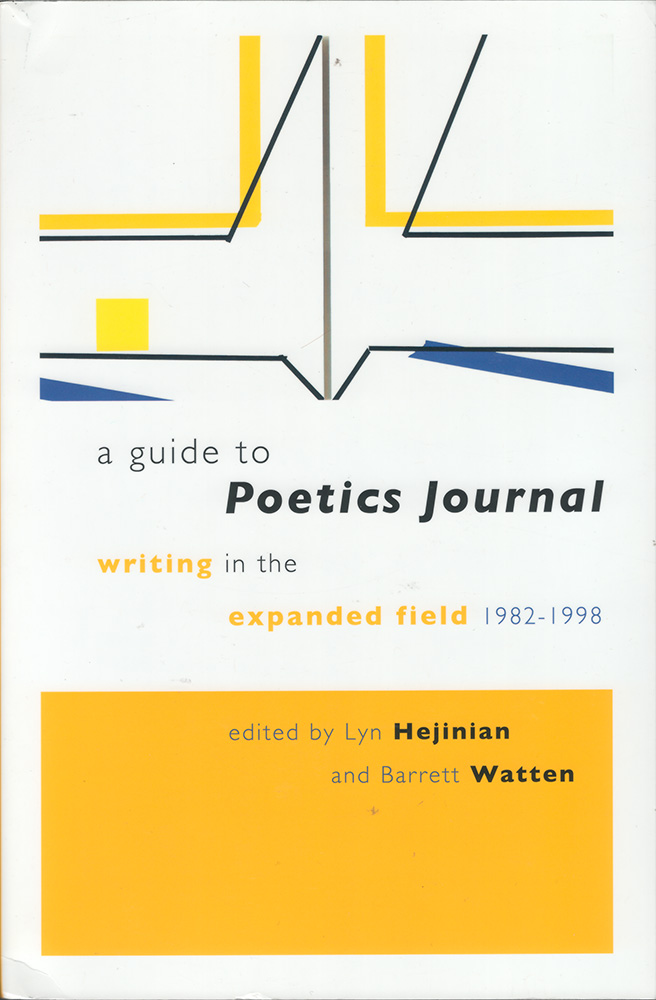 The projected book did not “fail”; it is published in a handsome edition by Wesleyan University Press (2013); and the entire digital archive has been preserved. Later, a different set of readers would be entirely positive. Perloff’s main objection was that her experience of reading the journal as it came out (“I happen to own all ten issues of Poetics Journal, periodical that I read avidly during the period in question”) was not reproduced in a selection; the new content order did not reflect the order in which it appeared. Fair enough, and it took Lyn and I considerable rethinking and labor to come up with the final version. But Perloff already knew what she wanted:
What is needed i think, is a facsimile edition of the whole journal. I am thinking of journals like Camera Work or 291 or Others—journals from the early century that are fascinating even though again, much in them now seems slight. . . . We need a good facsimile of Poetics Journal, if not in print, then online. Craig Dworkin could put it up on ECLIPSE or the Iowa site could do it. The Language Book is available on ECLIPSE as is the index of This. All of ASPEN is available on Ubuweb. This is the appropriate place and then it must be complete. [Perloff, Report]
Perloff saw Poetics Journal as a moment of modernist preservation, which informs the digital uploading of avant-garde content on Eclipse and Ubuweb. But there is also the question, which I raise in my response to Dworkin (above), of warehousing and monetizing. This was the main agenda for Perloff: to remove the work from its context and preserve it, as it were, under glass—rather than an active refunctioning, which is what Hejinian and I wanted. When Perloff heard from the volume editors that the secretarial misfire had occurred, she wrote me somewhat sheepishly: “But, hey, if Wisconsin wants to publish your book, that’s fine with me. . . . You may be furious at me but I am just as furious, as I told them, at the process that made me the patsy here. It all happened because of missing and faulty procedures” (2 December 2003). What she was really angry about was having her anonymous reader’s report compromised; this was Perloff canon-making weapon, which she used throughout her career.
My response to Perloff’s letter was likewise to a degree furious, but it also had a point: I believed she was trying to kill the project, but why?
What you are saying [recommending the project be uploaded in a digital archive] is, essentially, the important work has been already reprinted in collections by *other* editors, and that Dworkin’s project should satisfy specialists. That keeps our editorial perspective off the market, doesn’t it, and helps control a reception of the Language School that goes along with your particular canon-making arguments—who’s in, who’s out at the moment. [3 December 2003]
My letter was unyielding, but “hate mail” and “harassment” it was not. This was the kind of misfire people get upset about, and Perloff had the right to be annoyed that her confidential report had been sent to us—but that did not change its content, nor the larger issue of Language writing’s reception, which is what the entire struggle is about. In the annals of literary history, there will be a reckoning in time. But for Perloff to stoop to the false characterizations she put up on the “blog,” along with the destructive effect she knew they would have, is beyond the pale. As literary and critical bad faith, not to mention slander, Perloff’s post is a culminating moment.
Jessica Smith
Jessica Smith was an undergraduate swimming with the graduate students who effectively swamped the 2004 job search for the Gray Chair at SUNY Buffalo. I had encountered her before at Buffalo, when she was very young; I still have the heart-shaped poem object gave me, inscribed “Heartfelt.” She reports, “Barrett Watten has never been personally cruel, commanding, or creepy with me” but then goes on to gossip to her heart’s content, putting it up online on an anonymous site where it cannot be answered. “But I also know that I have had much better professors in academia, professors who haven’t scared me, and that his students deserve better.”
The student cohort I met at Buffalo, and especially Jessica, were smitten with fantasies of poetry and power (see my response to Michael Cross above), in crisis now that Charles Bernstein and Robert Creeley had left. What makes that experience similar to being “mobbed” by the students at Wayne State is the absent authority in both situations—in the Poetics Program (with its fantasmatic poetry hierarchy) and in our department. At Buffalo, this was a legitimacy crisis of succession such as Early Modernists might study—visible in a test tube or reaction chamber. It was as if they were being asked to choose their own parents—a version of the “primal scene.”
Smith’s account of the 2004 search at Buffalo is FALSE; I did not stalk students but was in contact with one student who was advocating my candidacy; she told me that there had been open discussion of my candidacy online, which I read after she sent me the url. It is FALSE that I harassed students who spoke up against my candidacy. There were many irregularities in this search, and I discussed them with then chair of the department Joseph Conte. The rest of her note is petty and characterizing. Indeed I have been in several high-end literary controversies [see above]. She is one of those grad students or junior faculty who amplifies all exchanges into questions of power, as evident in her star-truck recounting of mythic events in the history of poetics at Buffalo. [2019 note]
What was wrong with the Buffalo search: the faculty did not take control of the graduate students and vacated the scene; and there were absent players who threatened to do something to the students for the wrong decision.
Brian Kim Stefans
This post, by a “poet and professor at another institution,” is by Brian Kim Stefans, whom I had met and socialized with quite a bit in the late 90s (through two mutual friends, Cole Heinowitz and Miles Champion). I believed I was friendly with Brian, published an important piece on his website during the Gulf War that generated quite a lot of comment, both pro and con, and had many interactions with him (including being on a conference panel at one of the ASAP conferences). [2019 note]
I very much regret his account, though it is not entirely accurate. I recall Brian Kim sending me an email, perhaps in the context of his website Arras. He said something about my being an “alpha male” and wondered if he would ever consider himself the same. My response, which I will not reproduce, was an attempt at a joke: if you are saying you are a deficient alpha male but that I am one, then here you go. A bad joke; it should never have left my desk. I apologize for that, and for anything it might have meant other than a perverse form of solidarity (if that is imaginable). In my essay on aggressivity in poetics, which I am due to write, I will use it as an example.
He resents these early exchanges, and I can understand why—in two brief instances, online, over many years. These were the early days of the Buffalo “Poetics Listserv” in the 90s, where online manners had not yet been fully developed and where flames frequently occurred. He does not represent the many interactions we have had that were engaged and respectful. [2019 note]
What I will say overall is that there was an early psychology of the poetics chat and Facebook post, later the Twitter/X feed, that intersects with derealization and thus fosters aggressivity. I believe we all, and myself in particular, know enough about what harm that can do. I imagined at the time I was engaging in a form of poetics locker room banter (without identity ascriptions). Some of that also came up in Flarf poetics in the 90s. I hope we are now beyond it; maybe the “blog” will hasten its death.
Brian Whitener
This is a former University of Michigan graduate student and now scholar in Lusophone Cultural Studies. We were friendly around poetry readings at Rob Halpern’s house series in Ypsilanti, and he asked to interview me (which we taped on two occasions, but which has since gone unpublished). He says he had conversations with Marie Buck about our interaction in 2008 (which I did not hear about until 2010), but he would have been unaware of the department politics that led her to produce and circulate a voicemail record, which I never saw at the time and which surfaced a decade later. Marie was making the episode into a common cause, and Brian was expressing solidarity with that. When he sought me out for an interview, however, he never mentioned any concern. I fault him for that, as doing so might have led to a tension-relieving conversation with Marie. On the other hand, the desire expressed by withholding the document and then uploading it would never have realized its full potential. Here, the derealization of the digital environment masks the destructive consequences of even the slightest buy-in to a pile-on. This is a lack of “due process” in basic senses: an anonymous “blog” has no testimonial status whatsoever. There is also bad faith in Whitener’s conducting the interview with me later on.
An account from a poetry scholar
Watten’s reputation–as a toxic, bullying, narcissistic abuser (especially, but not only, of those less powerful than himself)–has been an open secret in the community of poets and poetry scholars for a very long time. I have spoken about this repeatedly and frequently with other professors and writers who work within this small, close-knit field over the past two decades: many of us have “war stories” to share about times we became subject to his terrorizing threats and anger. . . . Because Watten’s intimidating, threatening, and retaliatory conduct was so intense and traumatic for me, I am unable to provide specifics of the incident. [Post]
Because no evidence or context of any kind is provided for this post, I had no idea who wrote this statement or what it concerns. It is one of most flagrant and gratuitous acts of disinformation in the entire corpus.
I do not recognize the author of this account; no context or detail is provided. It seems based on one encounter, which then becomes a campaign to harass and intimidate. I have no idea what encounter or campaign this refers to. The use of the terms “abuse” and “harass” in the absence of any context is irresponsible. [2019 note]
It has taken half a decade to realize it is likely from [name removed here]. I just reread it and it is pure and unadulterated slander. Nothing took place remotely like what the post describes, which emits a sublimity of traumatic experience disconnected from any real event. The account refuses to provide any evidence whatsoever (“Because Watten’s intimidating, threatening, and retaliatory conduct was so intense and traumatic for me, I am unable to provide specifics of the incident”), and because it was so traumatic it must be true. As well, the author has retailed his story to anyone who would listen: “I have spoken about this repeatedly and frequently with other professors and writers who work within this small, close-knit field over the past two decades: many of us have ‘war stories’ to share about times we became subject to his terrorizing threats and anger.” At this time, it is necessary hold off further discussion of this outrageous statement until I can verify the author, at which point I will detail the circumstances that I believe fit the narrative. If any reader knows the author or can place the scene, contact me back channel.
An account from a poetry scholar
BW was in the audience for my first ever academic conference presentation and interrupted it by shouting “Who is saying that?!” I think he wanted me to justify my authority to speak about the matter, rather than to repeat the source I had just cited. I was a graduate student at the time and chose to interpret this as someone seeking clarification rather than someone seeking to undermine my authority. But I now believe it was solely the latter.
The number of dubious claims in this short account are in fact many. Who said what to whom, and when? And what was the occasion; which conference? What was the paper about, which session? Is this person sure the response was from me; had we ever met? Was the person he reports on “shouting,” or simply speaking out of turn? Loudly from the back or pointedly from the front row? This is absurd. Only the pile-on granted this person the right to post such a trivial and meaningless claim.
Notes and links
“Literary Contexts” continues from the previous page.
Page 12: “The Tragedy is Farce”
Page 12.1, “Literary Contexts I”
Page 12.3, “Academic Contexts I”
Page 12.4, “Academic Contexts II”
Page 12.5, “Academic Contexts III”