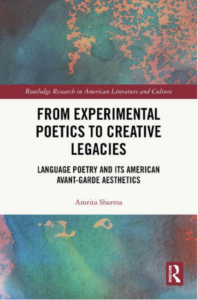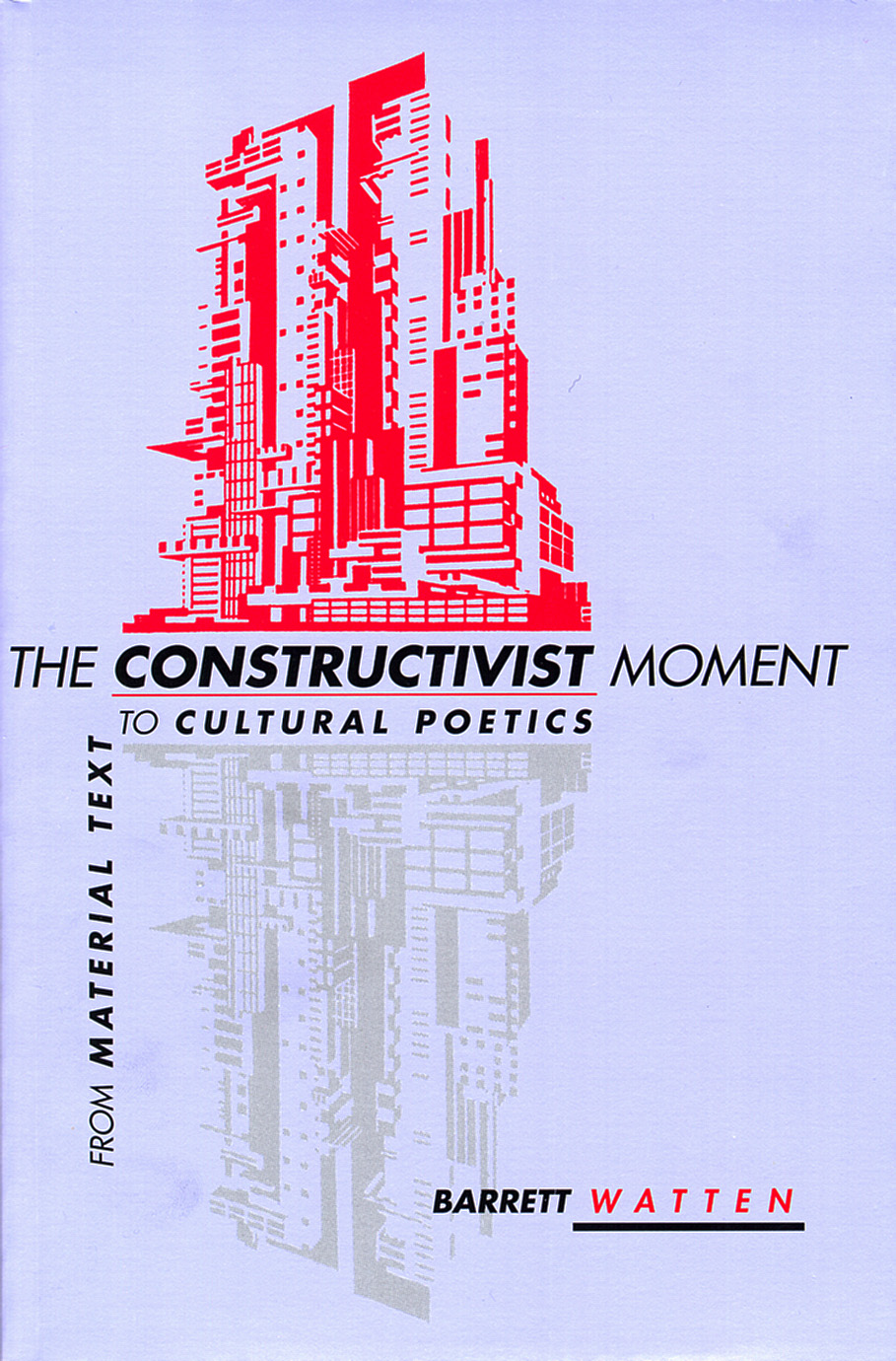
A recent post by Vladimir Feshchenko, Russian linguist and scholar of language-centered writing, raised a question of the historical reception of Language writing—as a history of its own making. Language writing’s historicism is in this sense double—not only a question of its publications, influences, reception, contexts, but the way its formal and theoretical or explorations lead to the future unfolding of new meanings. One thus can trace the historical (real-time) reception of Language writing in relation to these aspects of its “constructivist” poetics, in the sense I develop in The Constructivist Moment. That was 2003, “midway through Language writing’s journey,” and the results keep coming in. They continue in a line that extends to Lyn Hejinian’s later theory of allegory, in Allegorical Moments (2023), pluralizing “moments” in dialogue with that “moment.” … More
>> Documents <<
May 30, 2026
Entry 73: Language Notes IV
May 17, 2026
Entry 72: Zones (Paris and Berlin)
Zone (Paris)
@ Double Change / L’Atelier Michael Woolworth
2 rue de la Roquette, 11e
May 4, 2026
with Suzanne Doppelt, Cole
Swenson, and Carla Harryman
Abigail Lang: translation
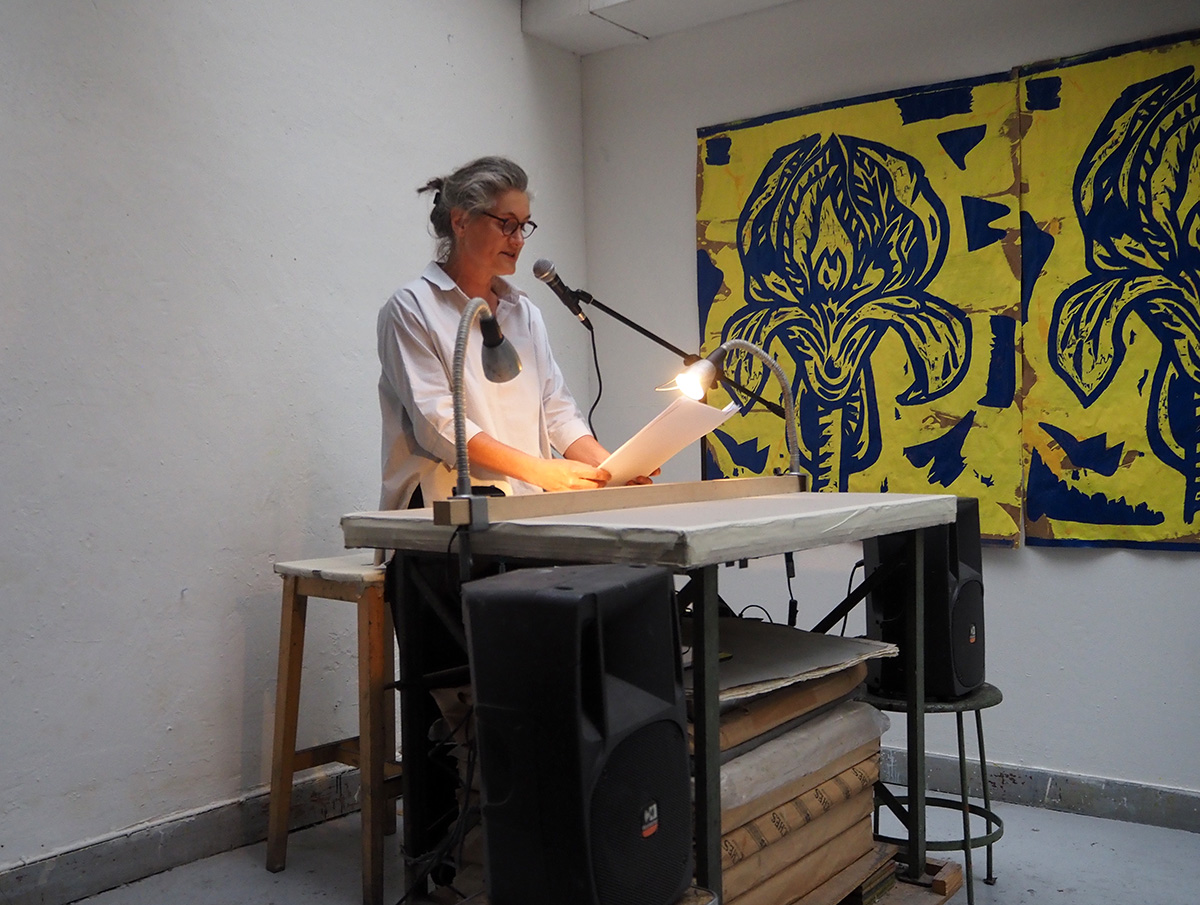
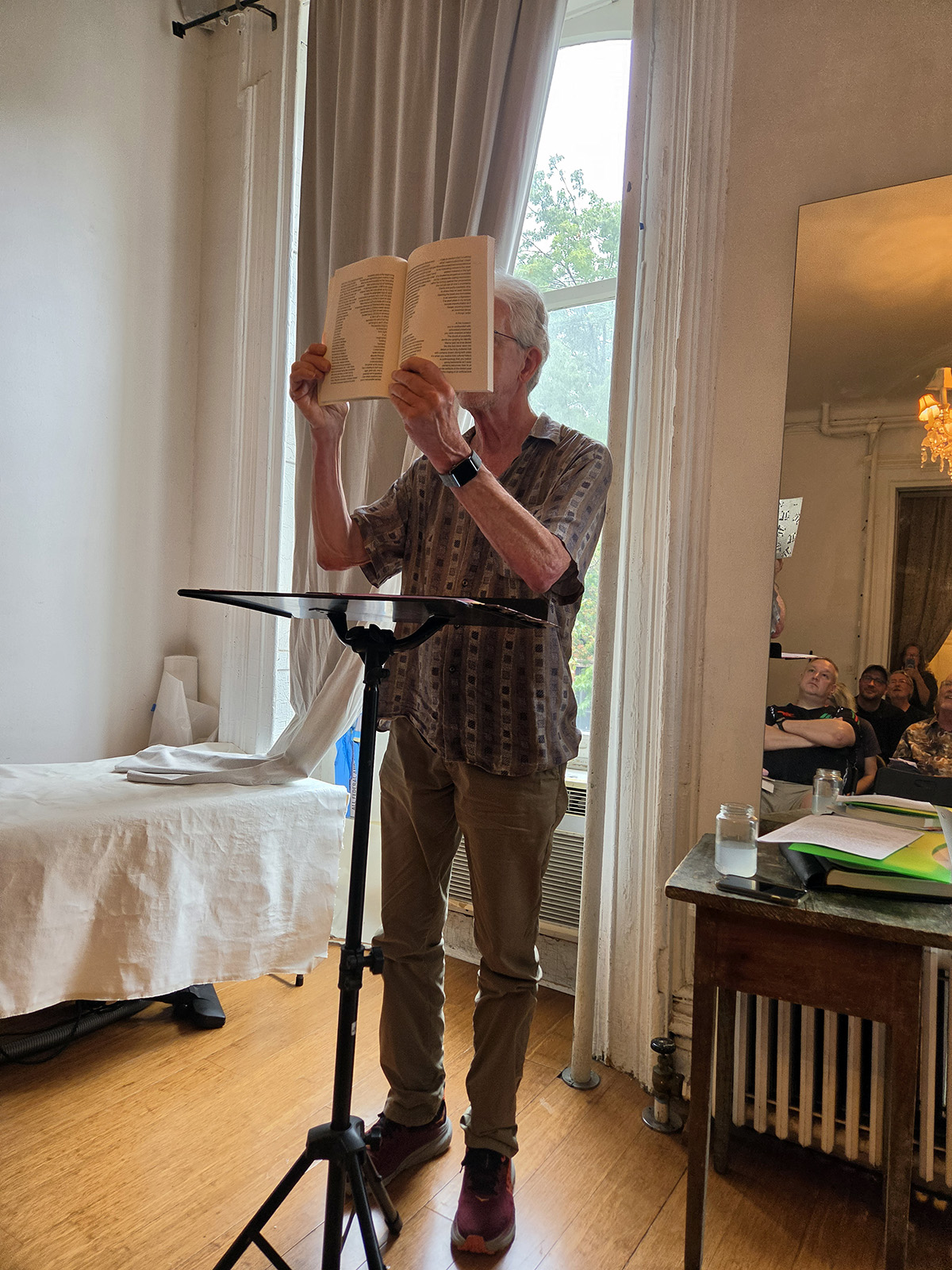
For Double Change, I followed the procedure from my previous reading in Oakland, while limiting the sequence to thirteen sections for reasons of economy. I thus sampled once from each of the twelve works in Zone plus one selected as “clinamen” or swerve to end the piece. A previous post (“Performing the Zone,” here) summarizes the method, but as before the “aleatorical indeterminate” of the randomly generated numbers for text and passage (beginning, middle, end) could not have been improved by human means.
Below, I note pagination and the beginning and ending of the thirteen samples. In addition, Abigail Lang read French translations after sections 3, 6, and 9—in the section derived from Williams’s Paterson alternating French and English with every stanza. I read the French lines from “Orphée in Translation,” after abandoning the idea of having Abigail pronounce them properly. This was the right choice: my attempting French as “other” is a mirror reinforced imagistically throughout the poem (cf. “a man cut in half by a window,” a key moment in surrealism). … More
April 19, 2026
Entry 71: April 19 in Memory
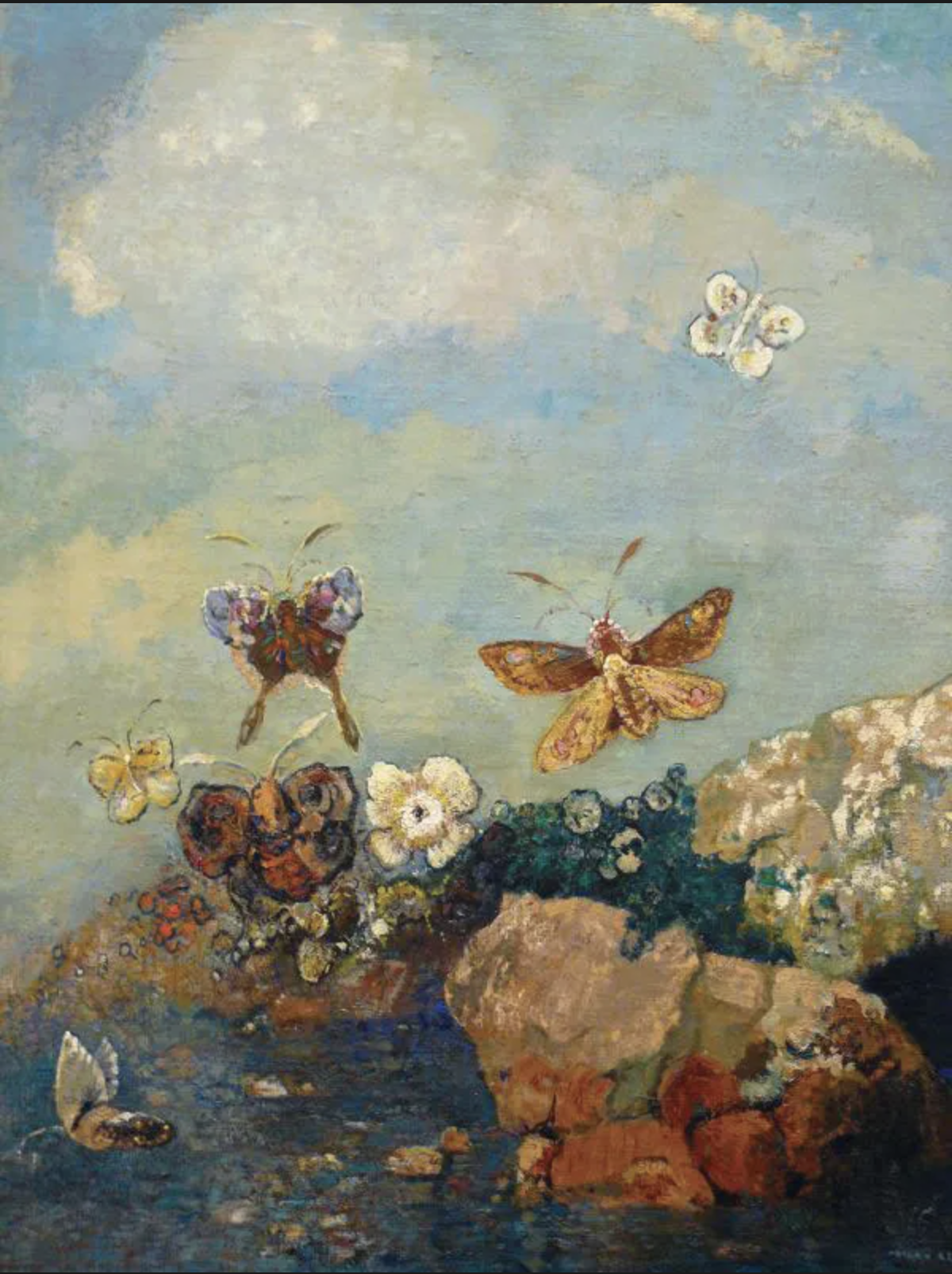
On this day in history, I am informed, Odilon Redon was born in Bordeaux, France. There is otherwise a remarkable series of destructive events, according to Encyclopedia Brittanica, none of them related to each other except for the date of April 19. I’m not going to list them, but their constellation is affected by the memory of my mother, Jeanne Alderton Watten, who was born precisely one hundred years ago on this date in 1926. I must remember not to let the occasion pass. I will further inscribe it in memory by typing out and re-presenting the work I wrote that brought those dates together in Bad History. Such were the deaths the date is associated with. Of course, nothing is ever lost, nor can it be—to quote Emerson. It is just such transcendence the date offers 100 years hence. Also in 1926 was a positive conjunction of births—the poets Allen Ginsberg, Robert Creeley, and Larry Eigner all were born that year. I once relayed that fact to Creeley, and he gave me one of those big sloppy kisses of his later days. Remind me, now that I have come to his age, not to do that to anyone (in any case we are not allowed). Odilon Redon seems just the right touch to remember my mother, who had the instincts of an artist and generously enacted them. But now I see Redon was born the next day, not the day horrible things happened. Thus erased, we move ahead. The image on the right, randomly accessed on the wrong date, thus confirms me in my mission. … More
March 18, 2026
Entry 70: Performing the Zone
In the Zone, there is no beginning, middle, or end—they have been erased. But there is a before, during, and after—they are activated. Zone is the space between text and world that productively activates them.
—Introduction to reading from Zone: correlations (1973 2021), 15 March 2026
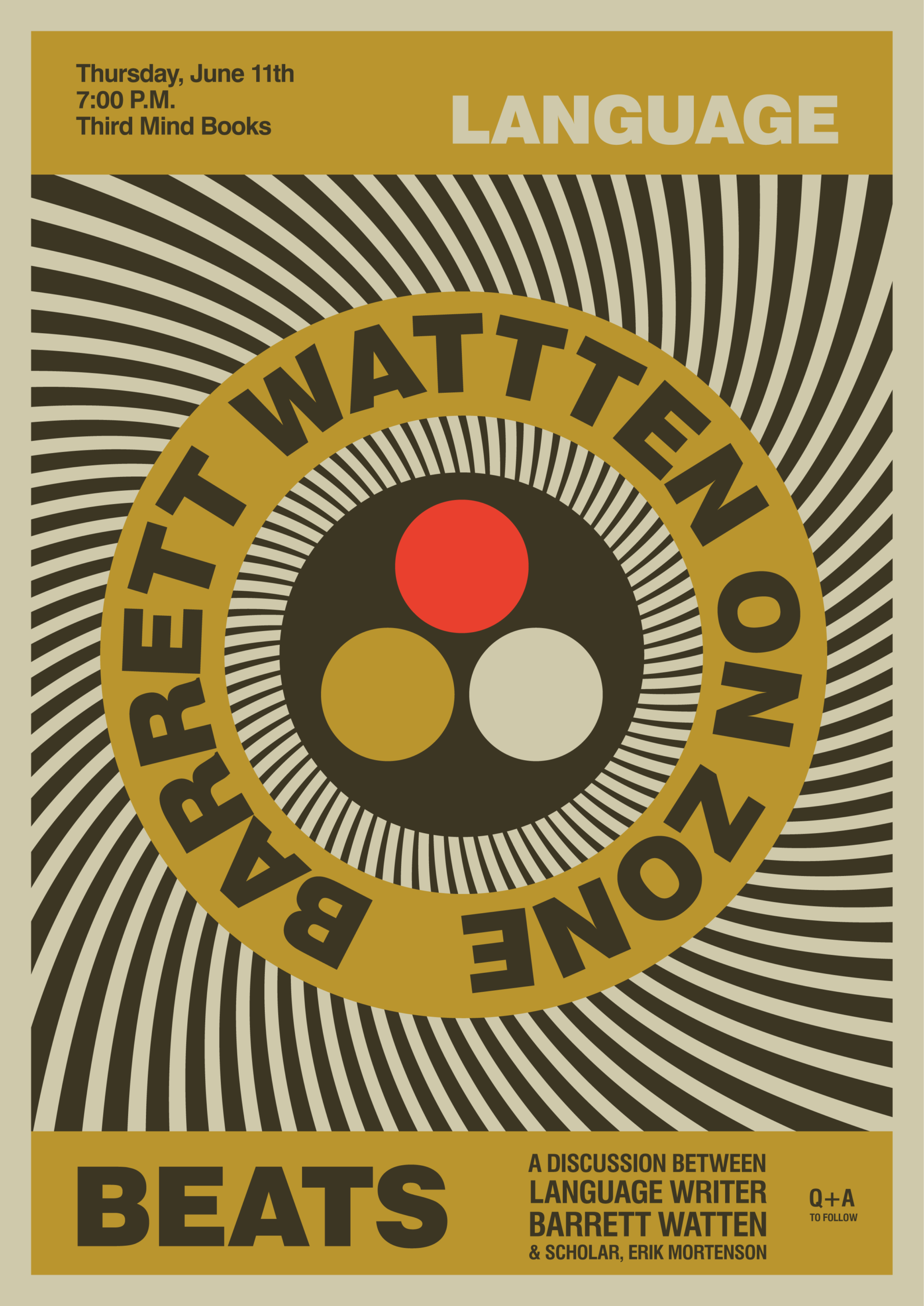
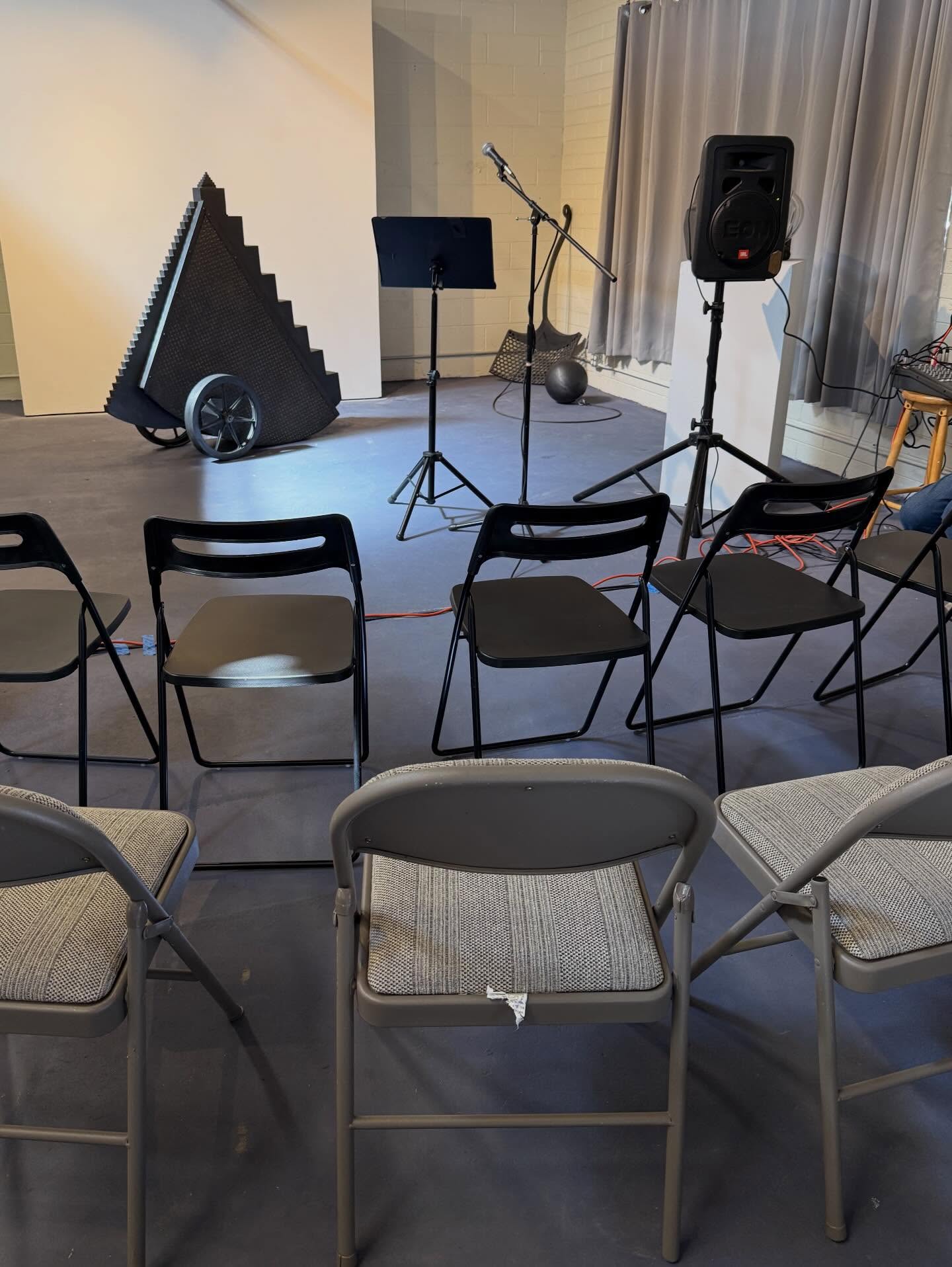
For my reading from Zone, I prepared a score made by randomly sampling and sequencing selections from across its twelve separate works, a continuous presentation without individual titles and with little or no comment, with the exception of an occasional nod to an audience member (George Lakoff, Brian Ang) mentioned or inferred in the text, and on one occasion to interact with loud street music coming from outside the gallery space. This is a strategy I have deployed on a number of occasions, and it suggests or “rhymes” with the modular construction of most if not all the works in Zone, each built up by differing versions of sampling and sequencing. Brian Ang noticed this strategy in a reading I gave at Kelly Writers House in 1999 (here). In dialogue with Ang’s account, I documented two readings from 2013, in Nuremberg and Amsterdam, for their sampling and sequencing strategies (Nuremberg here; Amsterdam here). … More
January 19, 2026
Document 109: Poetics of the Zone
“Avant-Garde Poetics of the Zone:
Interchange, Transposition, Translation”
CALL FOR PAPERS/MULTI-SESSION PROPOSAL
SUBMIT BY JANUARY 30 (CONFERENCE DEADLINE FEBRUARY 1)
European Network for Avant-Garde
and Modernism Studies (EAM)
10th Annual Conference, Stockholm, Sweden
2–4 September 2026 /flyer here … More
October 18, 2025
Entry 69: Language Notes III

ENG 5530, “Language Writing and Beyond,” has now passed the halfway mark. Organizing the vast amount of material is one thing, but the challenge of teaching Language writing at this historical date—50 years after the first emergent activity—involves rethinking its (non)narrative, its “author function”, its categories, its forms, its values, its politics, what is revealed and concealed, and what comes next. To summarize this pedagogical work of framing, I devised a midterm exam that students understood was, to begin with, an assemblage of the work done so far. Here I want to make this intellectual labor, in the context of an advanced upper division “Topics” course at Wayne State University, available to the field. I believe strongly a revision is necessary and in the works, and that the “usual” account has long since outlived its opening rationale for our work of literary production and reception, and that much needs to be recovered. What emerges, decisively, is that Language writing was in no sense a “period style,” a combine of, say, open form plus material textuality after the New Americans or collage-driven abstraction as a “turn to language” with the New York School—or really, any of a dozen major influences, from modernism and Conceptual Art and to the politics and artist spaces of the 70s. … More
August 30, 2025
Entry 68: Language Notes II
ENG 5530: Language Writing and Beyond
Wayne State University, Fall 2025

Breaking with custom, I am uploading the syllabus (minus boilerplate and policy) for my “Topics in Poetry” this fall. The reasons are several. Since coming to Wayne State, unlike other major hires of Language writers in the early 90s, I was brought in to teach literature and cultural studies, with my poetry and poetics career a plus but not well understood. Over twenty-five and more years, I crafted a pedagogy designed to bring literature and cultural studies together, and the dissertations I advised reflect that synthesis—while there are several that address modernist and later poetries at a high level of discussion. However, I have never taught a course devoted to my work or literary movement in poetry and poetics per se, and now is the time—again for more than one reason. One, I want this poetry, history, and theory to be as pedagogically known and significant as any other “approach,” at any level of instruction from GenEd (to students in other fields) through the Major and the graduate program—my teaching at three levels as has usually been the case. Then, it is time for an overview of Language writing that takes into account not only its emergence but the controversies and reception issues it produced, followed by its academic reception and gradual departure from the academy, and finally with the evidence of the strong new work that has appeared, from every major figure, since the Millennium. Lyn Hejinian’s death in 2024 is also a turning point: while her work was always written prospectively and toward its continuing, we may now compare her lifelong project—Beginnings, Middles, and Ends at once—to other authors who may be read in that way: Stein, Zukofsky, Riding, Creeley, Hughes, Baraka and so on. Retrospection is one aspect of that reading, but also a careful attention to the values of time, memory, historicity and everyday life in her project. Given many aspects of her uniqueness, constructing comparative frameworks must now also be undertaken across the board: with the original figures, the controversial history, the emergence of new schools and writers where there is variously a connection to an overarching focus on Language as site of meaning making.
Herewith the provisional syllabus, as always a working document that may be cut back or amended as the course unfolds, with many authors and issues overly condensed or regrettably left out. Sixteen sessions, or eighteen, would do more justice, but fourteen 2½-hour classes is what we are given. So forth: … More
August 15, 2025
Entry 67: Language Notes
This fall, I continue an adventure of some 50 years with the literary movement with which I am associated, Language writing, once so-called and now so inscribed. ENG 5530 is a dedicated “Topics in Poetry” course, addressing students at all levels at Wayne State University. For some, this will be a first encounter with poetry; others are already writing in ways identified by their teachers as “aha! Language writing!”; and others are taking a literature or creative writing elective with, hopefully, open minds and interest. I want to approach the topic with new eyes and ears, and thus have not given much thought as the opening of school approaches to how, precisely, I will proceed. In moving forward, I will be retrospectively assembling a curriculum but not in any linear fashion—that end has already taken place. How then to redefine, redeploy, rethink Language writing while constructing the course of study that opens new issues and opportunities?
My first thought was to provide a useful historical background, summarizing the “tale of the tribe” without dwelling on it. One divergence from the canonical narrative already appears—as Language writing gathered momentum and a degree of institutional recognition, there was a kind of mimicry of the Pound tradition and its “tale of the tribe,” a concept that is in need of historical and cultural correction. “Tribe” is not an auspicious term, for example, and the fact that there might be one “tale” that would hold it together even less so. The Orono conferences, importantly, were the site for a shift from the Pound model to an increasing pluralism, that over the decades (30s, 50s, 60s, 40s, and 70s) had increasingly to do with departing from a single narrative. Still, some kind of historical or periodizing ground is needed.
The best source I know for that was a series of online essays by Eleana Kim, written in 1994 and published on Gary Sullivan’s web site Readme, which is no longer online. Nada Gordon, however, has archived the series on the Wayback machine and I was able to download and pdf the series, with the addition of the bibliography from Nada directly. I have assumed that Kim is the same person as the UC Irvine Professor of Anthropology (here), but that needs to be confirmed. If so, she likely wrote the history as a graduate student, as she began publishing in Korean Studies about 2000. I suspect there is a connection, however, as the account of Language writing has a political awareness, sense of inclusion and exclusion, and critical astuteness about dominant narratives that could well connect to a cultural anthropologist. When that is determined I will repost, but this stands for one of the questions that now could be asked as the course unfolds: Why did Eleana Kim write on Language writing, and what does she think now? How did this very well written, politically savvy narrative become forgotten and erased, and why?
Eleana Kim, “Language Poetry: Dissident Practices
and the Makings of a Movement”Note to the archived publication: “This essay was written in 1994 and, with the exception of minor editing for clarity, has not been rewritten. It does not, in other words, take into account material published in the years since.”
Part 1: “What is Language Poetry?” here
Part 2: “Tradition and Communal Praxis” here
Part 3: “San Francisco, circa 1975” here
Part 4: “Theory, What Theory?” here
Part 5: “Rumor in the House of Fame” here
Part 6: “The New Americans vs. the Treed Americans” here
Part 7: “Inclusions” here
Part 8: Bibliography here
Bear in mind that this was written in 1994; thus the bibliography is out of date. It would be important, first, to establish a 90s bibliography, but even more to track the works that have appeared since the millennium. That body of work could lead to an entirely different narrative. As well, the emergence of two immediate offshoots of Language writing, Flarf and conceptual writing; the influence of Language writing on poets of color; its relation to New Narrative, hybrid writing, disability aesthetics, digital writing and AI—all would need to be taken into account, which is precisely what I plan to do over the next fourteen weeks. Stay tuned for more posts as decisions get made on what to read and feedback happens on how that reading takes shape.

July 5, 2025
Event 106: I Met (Memorial Page)
On May 29, Iris Cushing wrote the Pete’s Candy Store mailing list with news of dear friend and former student Cole Heinowitz’s drowning in the Yuba River, Northern California, on Saturday, May 25—Memorial Day Weekend. This page records a series of dates; I first learned of the terrible fact on Tuesday, May 27, just arrived in San Diego for several days work in the UCSD Archive. It is now Saturday, July 5, as I write this, six weeks to be precise from the initiating date. Thus I am making a memorial within the confines and limits of memory, as a memorial in itself. On June 6, Iris wrote again, inviting me and a number of writers close to Cole to read at a memorial event on June 13. I have found that memory works in a series (a nested stack) of distinct but mutually supporting frameworks. There could be no doubt about my wanting to participate and attend. First there is the durational spread that gives us the illusion of living in the present; then short-term memory, lasting through the day and likely as long as a weekend. My decision to attend and book a flight and lodging was made in that frame, and was implemented over the next few hours. As I move forward, through ever longer spans of duration, I reach the proximate limit of a time span of about three weeks. It was within this initial three-week time span that the memorial was scheduled and took place; it is now three weeks from that date. I am writing, then, before its temporal proximity shifts and the event, and all that it articulated, is further displaced. … More