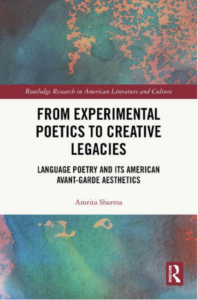
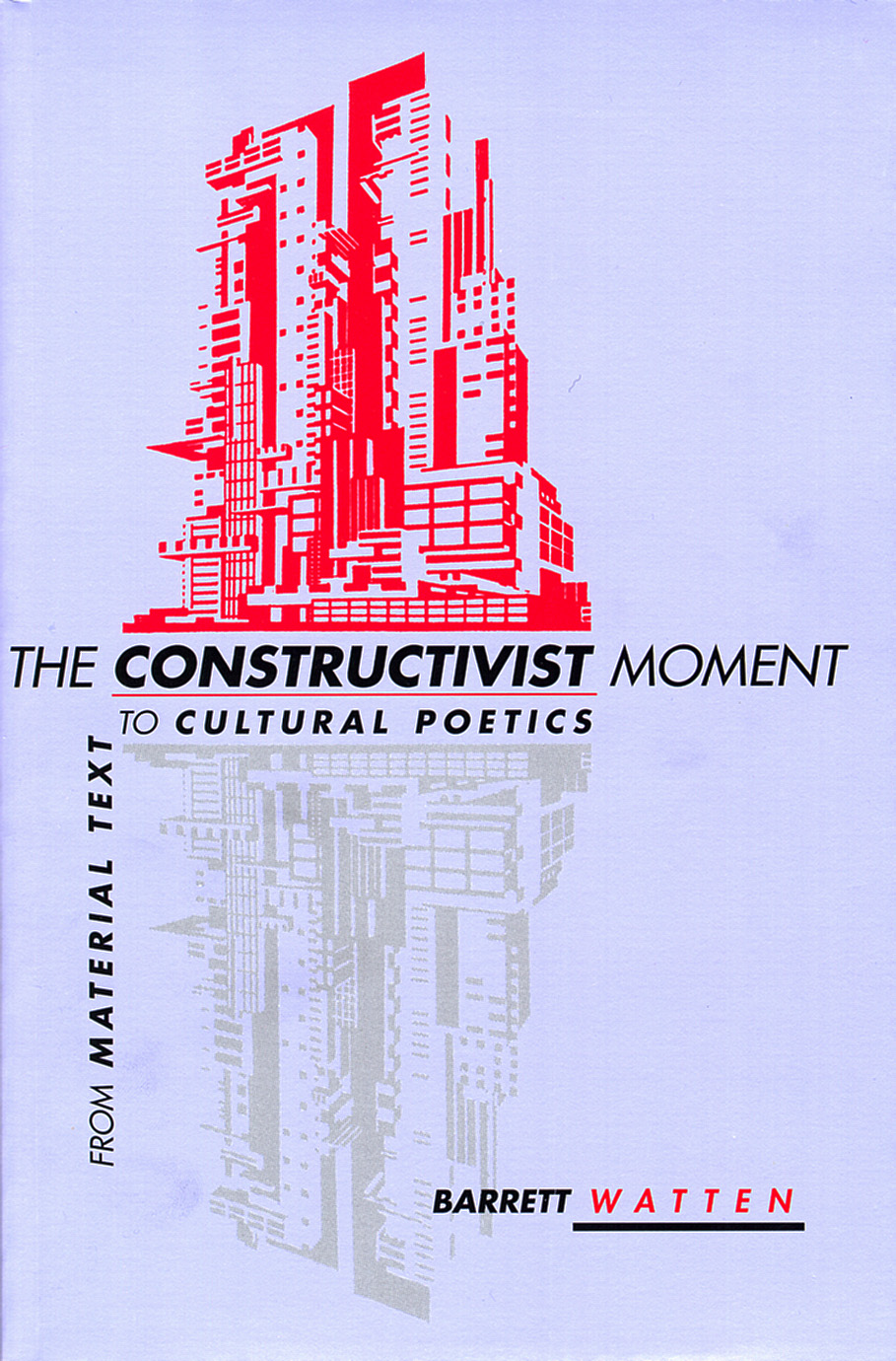
 A recent post by Vladimir Feshchenko, Russian linguist and scholar of language-centered writing, raised a question of the historical reception of Language writing—as a history of its own making. Language writing’s historicism is in this sense double—not only a question of its publications, influences, reception, contexts, but the way its formal and theoretical or explorations lead to the future unfolding of new meanings. One thus can trace the historical (real-time) reception of Language writing in relation to these aspects of its “constructivist” poetics, in the sense I develop in The Constructivist Moment. That was 2003, “midway through Language writing’s journey,” and the results keep coming in. They continue in a line that extends to Lyn Hejinian’s later theory of allegory, in Allegorical Moments (2023), pluralizing “moments” in dialogue with that “moment.” … More
Entries published during May, 2026
May 30, 2026
Entry 73: Language Notes IV
May 17, 2026
Entry 72: Zones (Paris and Berlin)
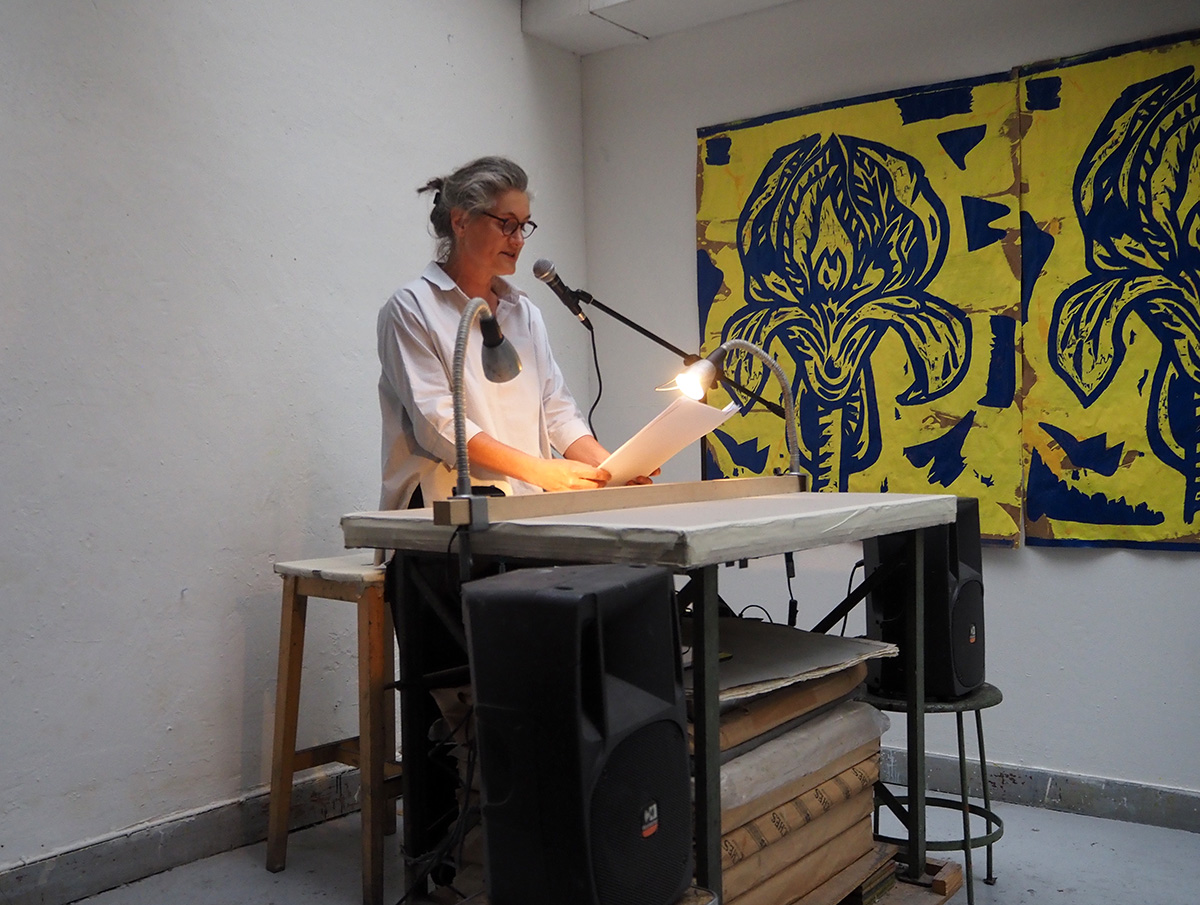 Zone (Paris)
@ Double Change / L’Atelier Michael Woolworth
2 rue de la Roquette, 11e
May 4, 2026
with Suzanne Doppelt, Cole
Swenson, and Carla Harryman
Abigail Lang: translation
For Double Change, I followed the procedure from my previous reading in Oakland, while limiting the sequence to thirteen sections for reasons of economy. I thus sampled once from each of the twelve works in Zone plus one selected as “clinamen” or swerve to end the piece. A previous post (“Performing the Zone,” here) summarizes the method, but as before the “aleatorical indeterminate” of the randomly generated numbers for text and passage (beginning, middle, end) could not have been improved by human means.
Below, I note pagination and the beginning and ending of the thirteen samples. In addition, Abigail Lang read French translations after sections 3, 6, and 9—in the section derived from Williams’s Paterson alternating French and English with every stanza. I read the French lines from “Orphée in Translation,” after abandoning the idea of having Abigail pronounce them properly. This was the right choice: my attempting French as “other” is a mirror reinforced imagistically throughout the poem (cf. “a man cut in half by a window,” a key moment in surrealism). … More
Poetics
The Grand Piano