Entries tagged with New Americans

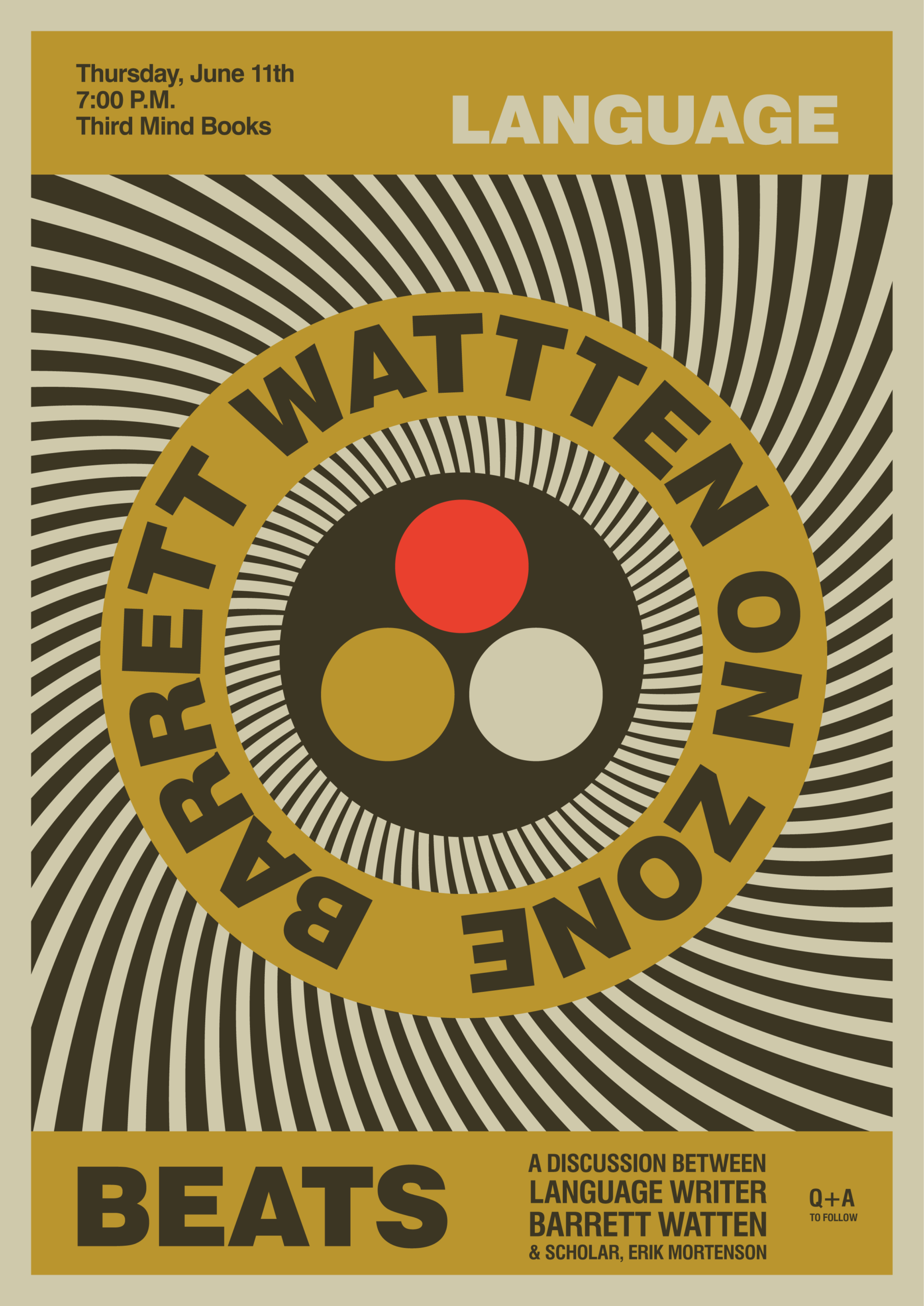
Entry 74: Language/Beats

Language/Beats
Book event & discussion

Barrett Watten: Zone:
correlations (Chax Press)
Erik Mortenson: Allen Ginsberg
in Context (Cambridge UP)

Third Mind Books
118 E. Washington, Ann Arbor
June 11, 2026, 7:00 P.M.

On this day, Erik Mortenson and I took the stage to present and reflect on recent work, literary history, and our work together, which stretches back two decades since Erik was my first Ph.D. advisee at Wayne State University. His project was exemplary, on its own merits and in terms of what I wanted to direct: a comprehensive, revisionist, culturally reflexive account of the Beat movement. What resulted was his first book, Capturing the Beat Moment: Cultural Politics and the Poetics of the PresentI cannot stop recommending this book: it is “cultural poetics” as it should be: a synthesis of historical and contextual readings, revisionist expansion of the canon, and focused attention to form and media—with strong readings of key figures in a larger field of authors, history, genre, and meaning. Not only should his work be better known; it should be taught and emulated. And there is strong evidence that the range of poetics it takes part in continues, not least with Erik’s current edited volume, Allen Ginsberg in Context. It was the occasion of his publication and my own Zone that brought us to this “moment” of continuation. … More
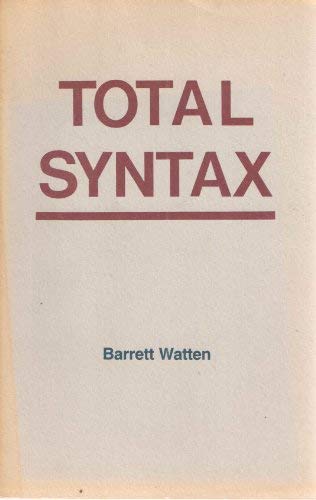
The recent unfriendly publication of my email exchange with Nathaniel Mackey, along with fragments of a Facebook thread that I had removed—both without permission, as is customary and a sign of respect among authors and publishers—demands some comment and explanation. I have asked that the material be taken down, as it is framed as an act of theft, intended to humiliate, and circulated to recreate the adversarial dynamics of the “poetry wars” of the 1980s. As such it is an extension of what I have called “The Duncan Thing” and have written about previously here.

Perhaps the best way to respond is to change the framework of this discussion, since the material is out there, and attempt to reframe it from my own perspective. Readers may read what I wrote differently in a context that does not evoke literary theft or online flaming. I have had a long-term, friendly, and collegial relationship with Mackey, and have seen and interacted with him many times over several decades—and have often done things that support his work in ways great or small. I will begin, then, with an email I sent to Mackey on March 30, 2017, asking if would be interested in being part of a panel on “Generation and the Arts of the Present” at the ASAP conference in Oakland that fall. … More

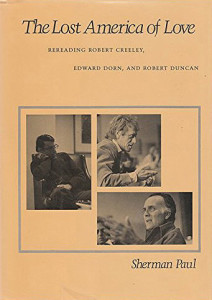
lost america of love cover ed

The question of my relation to the New Americans over the long decades since the ’70s has recently come up. In working through my last post, a response to a review that framed my 2016 book with a retelling of the poetic debacle of 1978, I linked to an essay I published in 2000 (per copyright date; it likely appeared in 2001) that was, at the time, my critical and historical assessment of some of its major figures: Robert Creeley, Edward Dorn, and Robert Duncan. Duncan (1988) and Dorn (1999) had already passed, and I do not think I sent the essay to Creeley, with whom I maintained good relations at the time (Creeley died in 2005). Creeley tended to glaze when I sent him offprints of my critical writing, for instance the essay on “poetic vocabulary” that links Jackson Mac Low and BASIC English, to which he wrote a one-word response: “Impressive.” Only later did I find, via a comment Creeley dropped in conversation and a letter in his Selected Letters, that BASIC English had been an influence on his work, after a high school teacher asked to write an essay using its minimal vocabulary.

The events of September 2001 decisively changed the focus of thinking through the poetics of the New Americans onto a more immediate political situation; the broad expanses of time needed for genial conversation on poetry and poetics would be displaced by a militarized discourse of threat, reprisal, and nonexistent WMDs. The essay itself was a kind of swerve, using a request from editor Timothy Murphy for a contribution for a volume of the academic journal Genre to be titled “Desert Island Texts,” with a prompt something like, “what one book would you want to have if stranded on a desert island.” … More