“Avant-Garde Poetics of the Zone:
Interchange, Transposition, Translation”
CALL FOR PAPERS/MULTI-SESSION PROPOSAL
SUBMIT BY JANUARY 30 (CONFERENCE DEADLINE FEBRUARY 1)
European Network for Avant-Garde
and Modernism Studies (EAM)
10th Annual Conference, Stockholm, Sweden
2–4 September 2026 /flyer here
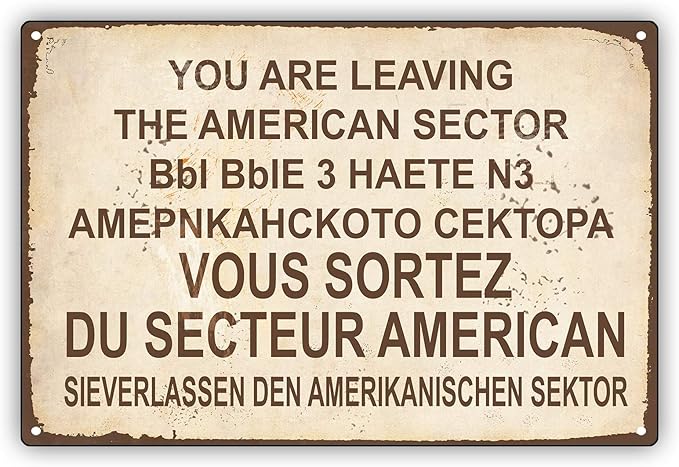
The organizers propose a session (if possible a double session) that takes up the global development of avant-garde poetics emerging apart from metropolitan centers of the historical avant-garde. We will explore authors and works who locate themselves, for however long, in spaces and times—“zones” of productivity—in which contact is made between cultural assumptions, artistic practices, and literary forms that repudiate nativism. These zones of contact would thus exclude 19th-century imperial modes of exploration or 20th-century processes of modernist diffusion, as they align with emerging “routes” of global contact, travel, cohabitation, migration, displacement, or exile. Following Mary Louise Pratt’s germinal discussion of the “contact zone,” the session brings to the table works of reciprocal exchange and transposition across boundaries of all sorts, including linguistic boundaries in translation. Often there will be a relation between the form of the work itself and the spatial construction of the zone of contact, even if imagined. There could be a translational space between languages that establishes the zone of the work. Such moments of contact could have an ephemeral or provisional time frame, or they could establish a cross-aesthetic dialogue of long duration. One example is the multi-authored memoir Leningrad, written after the epoch-defining 1989 contact between American and then-Soviet poets, which had transformative effects on both sides. Another example might be the decentered travel poetics of American poet Leslie Scalapino. The work of experimental writers in cosmopolitan Berlin (Yoko Tawada, Uljana Wolf, Inna Krasnoper) exists in a newly declared zone of multiple languages and interpretability. Radical strategies of transposition in East Asian avant-gardes or South American writers may extend from literary to performative or conceptual zones. African American writers, artists, and musicians relocating in Northern Europe inhabited another form of the zone. Even Beat writers’ concept of the “Interzone,” when seen as a reciprocal interchange with cultural otherness, could qualify, not to mention Artaud’s visits to the Tarahumara. The session organizers seek to generate the maximum comparative excitement from the contact between movements, areas, languages, and forms as instances of global politics that entirely reject the nativism, policed borders, and xenophobic projections of our time.
Notes and links
Submit proposals by January 30 to barrett.watten@gmail.com
PDF flyer of CFP: here
EAM website and CFP: here