>> Events <<

“Avant-Garde Poetics of the Zone:
Interchange, Transposition, Translation”

CALL FOR PAPERS/MULTI-SESSION PROPOSAL
SUBMIT BY JANUARY 30 (CONFERENCE DEADLINE FEBRUARY 1)

European Network for Avant-Garde
and Modernism Studies (EAM)
10th Annual Conference, Stockholm, Sweden
2–4 September 2026 /flyer here
… More

“Particularity, Nonnarrative, and Global Poetics:
Critical Regions of Cultural Transmission”

CALL FOR PAPERS/MULTI-SESSION PROPOSAL
SUBMIT BY OCTOBER 2, 12:00 P.M. PST

American Comparative Literature Association
Palais des congrès de Montréal
February 26–March 1, 2026 /submit proposal here
… More

For its pedagogical interest, I want to document the 23 seminars and 1 proto-seminar that I taught at Wayne State University since 1995. The seminars build on a series of dialectical faultlines, from the first offerings on the avant-garde and social modernity; literary subjectivity and language; cultural studies and poetics; social form and literary agency; to the crisis of modernity and the subject. The arrival of the New Modernist Studies offered a disciplinary framework for this sequence, followed by twin historical critiques of the avant-garde and postmodernism. As the series developed, I tried to construct spaces that would unite critical thinking and poetry. The series provisionally concluded in 2018 after three seminars that pushed toward new approaches at a moment of increasing crisis in the university: “The Poetics of Value”; “After the End of History”; and “Questions of Unreason.” While it was not a foregone conclusion that this level of ambition could not continue, it is now now time to look back and imagine what the prospects of this pedagogical endeavor may have been, what they were as they unfolded, and what they still might be.

1. ENG 7004 / Fall 2018 / Theoretical Issues in Cultural Studies: “Questions of Unreason in Modern Cultures” (https://bit.ly/2vgHFYL)

This seminar will bring together several interrelated areas of inquiry: 1) critical and psychoanalytic theories that address the genesis and form of “unreason” in modern culture and public art, including Critical Theory after Dialectic of Enlightenment and The Authoritarian Personality and psychoanalytic theory from Freud to Žižek; 2) theories of language and the public sphere from Habermas to ideology criticism; 3) theories of populism, racism, xenophobia, fascism, and gender and class antagonism; 4) popular movements that are relevant to these theoretical approaches, from hyper-nationalism to fascism, populism, and authoritarianism; and 5) works of modernism and the avant-garde that reflect on, diagnose, or exemplify questions of public unreason, from surrealism to the present. [See https://bit.ly/2vgHFYL]

2. ENG 8004 / Winter 2018 / Seminar in Literature and Culture after 1870: “2049: Historicizing the Present After the End of History”

The release of Blade Runner 2049 offers a chilling register of the global present and its dark futurity. This seminar will take the questions explored by the film, in relation to its postmodern progenitor Blade Runner (1982/1992), and explore the historical present through a series of dystopian registers. These will include global capitalism, democracy, and authoritarianism; climate change and ecocide in the anthropocene; the man/machine interface in ever advancing forms of digital technology; new class formations and urbanization; gender, sexuality, and the decline of patriarchy; war and the fragmented body; and new forms literary and artistic representation and response, both mimetic and antimimetic.

3. ENG 7033 / Winter 2017 / Postmodernism and Postmodernity: “The Poetics of Value: Modernity, Crisis, and the Work of Art”

We are constantly reminded in public discourse that our “values” have deteriorated and that we are living in a state of “valuelessness” that requires drastic measures. This seminar will take up the relation of values as represented in works of art to underlying forms of value and valuation they depend on—from aesthetic to moral to political to economic. Putting the question of value to works of art and cultural production, we will read a wide range of genres and text—literary, visual, and cinematic—with major theorists of value from Kant to contemporary Marxism. The seminar will begin with questions of aesthetic and moral values and valuation but will look forward to the turn to political economy and critique of modernity that emerged after the financial crisis of 2008, broadening it to include the “making” of value in an economic sense as a question of poetics and the valuation of the work of art.

… More

“Discrepant Analogy:
Immanent Transpositions of Surrealism”

CALL FOR PAPERS/SESSION PROPOSAL
SUBMIT BY MARCH 15, 12:00 P.M. CET

“Surréalismes Paris 2024
6th Conference of the International Society
for the Study of Surrealism (ISSS)
October 28–30, 2024 / pdf here
… More

“Avant-Gardes @ Zero Hour:
Destruction, Displacement, Emergence”

CALL FOR PAPERS/MULTI-SESSION PROPOSAL
SUBMIT BY MARCH 15, 12:00 P.M. CET

“Avant-Garde and War”
9th Conference of the European Network for
Avant-Garde and Modernism Studies (EAM)
Jagiellonian University, Kraków, Poland
September 17–19, 2024 / pdf here
… More

A Poetics of Encounter:
Dialectic of Outside with the Beats

Read at “Can We Teach the Beat Generation?”
Discussion organized by Erik Mortenson and Tony Triglio
Session 228, 5 January 2024, 10:15–11:30 AM, Loews 3rd Fl.
Modern Language Association, Philadelphia 

“The transmission of poetry is a passion unlike any other.”
“I too have started a riot in the academy.”

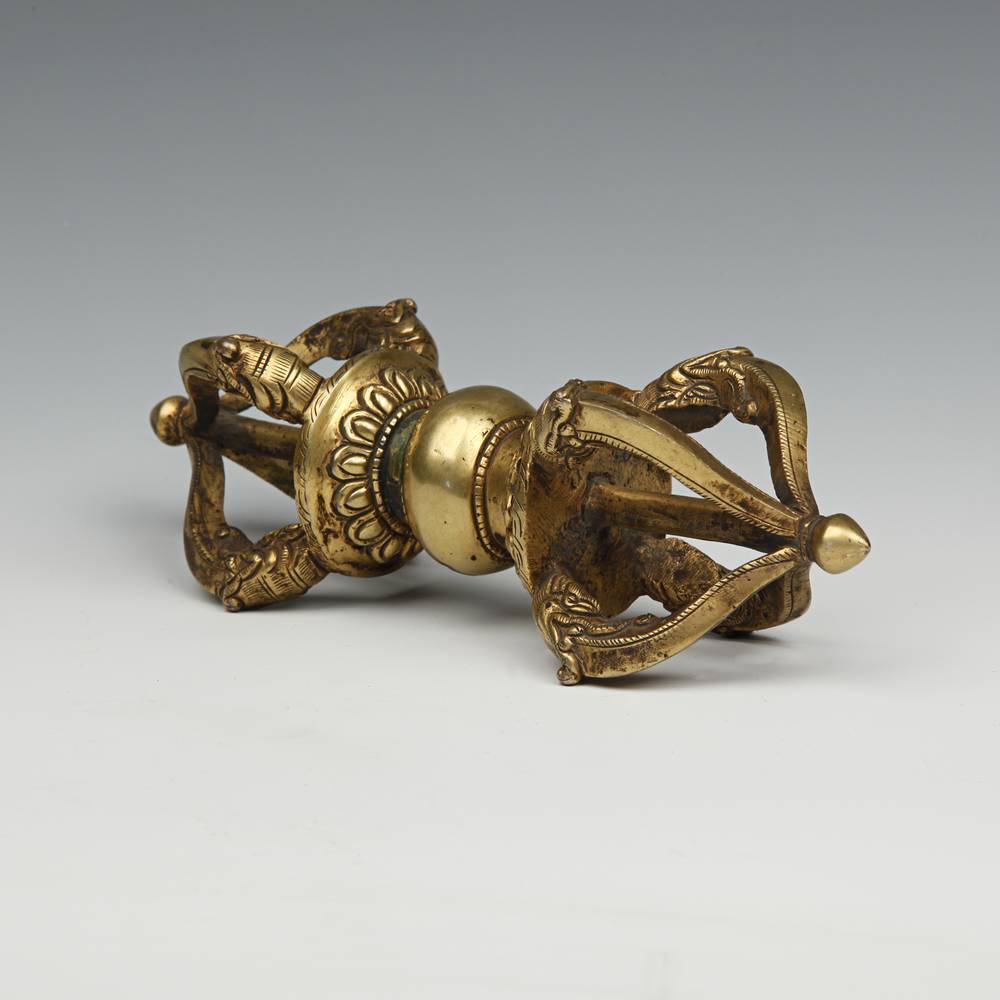
In this note, I want to call up certain moments of encounter that were, as with the visual image of a “diamond thunderbolt” or dorje, immediate, double-faced, and bivalent: outward in the transmission of poetry, from the Beats or New Americans and others; and inward, toward self-formation and a long process of professionalizing within the Academy. In charting such a poetics of encounter, I draw from my presentations at the “decades” poetry conferences at University of Maine, Orono, in the 90s and 00s that I, in the company of a shifting assemblage of poet/critics, took part in. I connect these moments to Steven Belletto’s genealogy of three early moments of encounter between Beats and the Academy: Jack Kerouac’s intervention at a symposium sponsored by Brandeis University in New York, 1958; Diana Trill­ing’s reaction to Allen Ginsberg’s being given an “unofficial” reading at Columbia, that same year; and Gregory Corso’s rebuttal to a symposium on the Beats in Wagner Literary Review, 1959. These are part of series of breakthrough moments: the Gallery 6 reading, San Francisco, 1955; Ginsberg’s appearance in Time magazine, 1959; the Vancouver Poetry Conference, 1963; the Berkeley Poetry Conference, 1965. What makes the first three definitively “Beat” aligns with two concepts from my essay on Michael McClure: antagonism and holism. In challenging the Academy’s scholastic pedagogy—I often thought of the English Department in the 60s or 70s as a kind of monastery, corridors filled with the brethren nodding to each other under hooded robes—the Beats took a position Outside that was, at the same time, subject to everything—“Is there a world?,” Kerouac asked; “Man does not exist,” opined Corso. The nature of this encounter between an unregulated Outside and a self-regulating Inside points to a dialectic of the Academy whose stakes are not only literary, pointing toward our volume’s significance not only for Literary but University Studies. … More

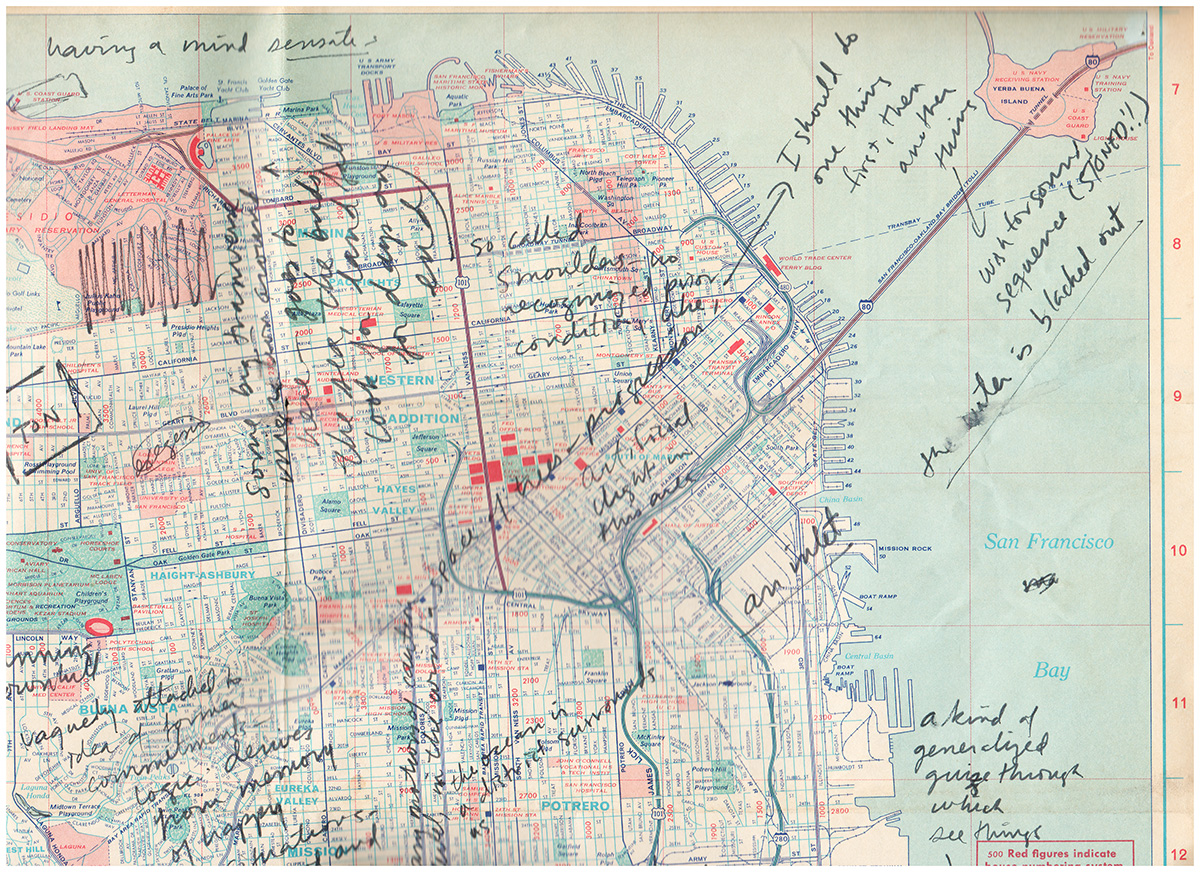
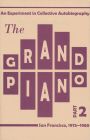
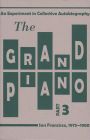
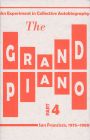
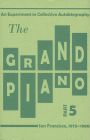
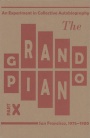
MATERIAL TRANSMISSIONS:
DEMOTIC SURREALISM/HIERATIC LANGUAGE,
SAN FRANCISCO, 1975–1980

Plunged each day into the fog of received ideas, man is led to conceive
of all things and to conceive of himself through a dizzy series of quickly
hidden stumblings, of false steps rectified as best as possible.

—André Breton, “The Automatic Message” (1933)

… More

SESSION PROPOSAL WITHDRAWN

Poetry, Translation, and Crisis:
From the Post-Soviet Moment
to War and Emigration

American Comparative Literature Association
Montréal, 14–17 March 2024

Due to the difficult circumstances of the global present,
the organizers have canceled this session proposal.
Stay tuned for plans for a virtual colloquy in 2024.  

In 1989 and 1990, eight American avant-garde poets traveled to then-Leningrad to meet with Soviet counterparts, experimental poets working under quasi-nonofficial conditions during late Perestroika. These meetings followed extensive travel and translation activities in the 1980s. Among then-Soviets, the poetic schools of “metarealism” and “conceptualism” were well represented—by poets such as Arkadii Dragomoshchenko, Alexei Parshchikov, Nadezhda Kondakova, Ivan Zhdanov, Ilya Kutik, Nina Iskrenko, Dmitrii Prigov, and Lev Rubinshtein. These events and developing contacts led to the publication of the collectively authored Leningrad: American Writers in the Soviet Union and a flurry of translations. Three decades later, the dialogue between American poets and poets of the former Soviet territory, including both Russia and Ukraine, has continued. A comprehensive anthology of American experimental poetry, Ot “Chiornoi gori” do “Yazikovo picmo” (From Black Mountain to Language Writing), appeared from NLO in late 2022, with a publication event in Moscow and subsequent online reading. Other translations are imminent or postponed under the present circumstances, while interest in and translation of two generations of poets, now disrupted by war and emigration, continues. This session solicits contributions on past and on-going translinguistic, transcultural projects from both periods: the post-Soviet moment and now. What “cultural work” is being undertaken and advanced in these works of translation and affiliation, crossing over global spaces of conflict and establishing global poetic networks? The session language will be mainly in English, but contributions in Slavic languages are encouraged, and hopefully English translations can be arranged.

… More

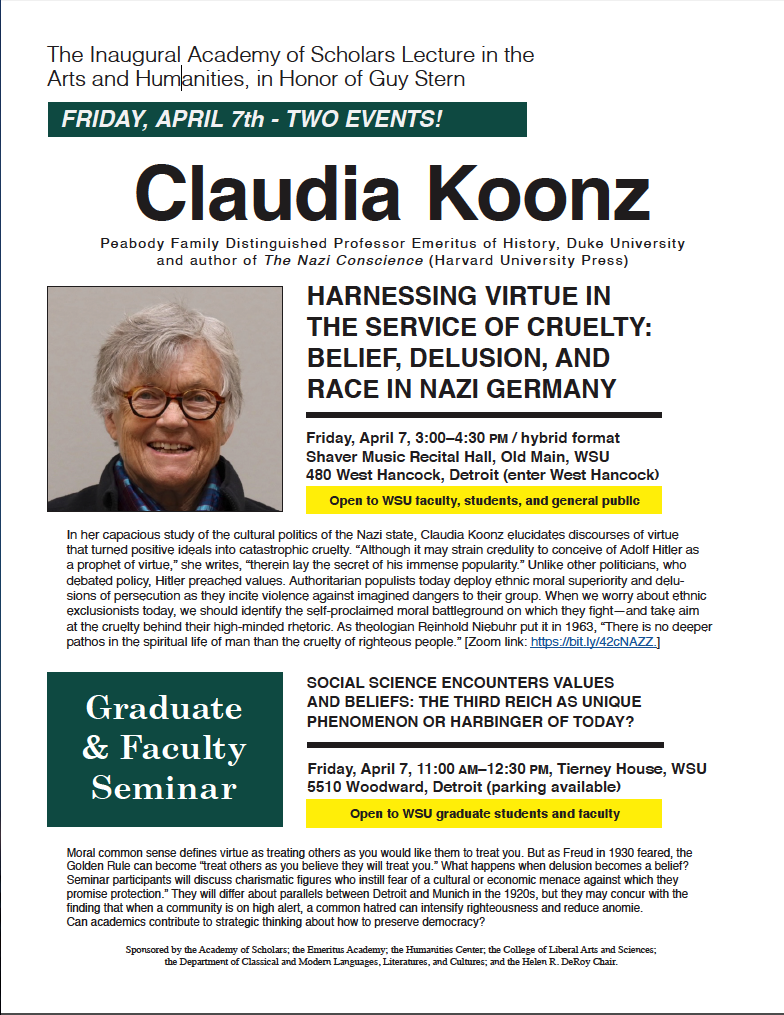
The Inaugural Academy of Scholars Lecture in the Arts
and Humanities, in Honor of Guy Stern

Prof. Claudia Koonz, History, Duke University
author of The Nazi Conscience (Harvard UP):

“Harnessing Virtue in the Service of Cruelty:
Belief, Delusion, and Race in Nazi Germany”

Friday, April 7, 3:00–4:30 / hybrid format
Shaver Music Recital Hall, Old Main, WSU
480 West Hancock, Detroit (enter West Hancock)

Open to WSU faculty, students, and general public

… More

Diasporic Avant-Gardes Noir: Blackness, Innovation, Futurity
American Comparative Literature Association
Sheraton Hotel, Chicago, 17–19 March 2023
Register for Zoom link: http://bit.ly/3YW8A4w

Session 1 Friday, March 17, 8:30–10:15 AM, Executive Suite 7

Lauri Scheyer, “Jitterbugging the World: Calvin C. Hernton’s Diasporic
Avant-Garde and Anti-Movement Communitarianism”
Matthew Johnston, “N.H. Pritchard’s Avant-Pastoral”
Tyrone Williams, “Autobiography of a Middle Name”
Christopher Winks, “Downward Path, Inward Path: The Hermetic Poetics
of Magloire-Saint-Aude”

Session 2 Saturday, March 18, 8:30–10:15 AM, Executive Suite 7

Andrew Haas, “Black Power’s Free Improvisation and Its Afterimage
in Tongo Eisen-Martin”
Barrett Watten, “Horizons of Complexity: The Ends of Form in Anthony
Braxton and Language Writing”
Bryant Brown, Jr., “Architectural Non Sequiturs: Renee Gladman’s
Plans for Sentences”
Joseph Shafer, “Stanley Whitney: Opposition, Dramatic Struggle &
Literary Rhythm”

Session 3 Sunday, March 19, 8:30–10:15 AM, Executive Suite 7

Noah Hansen, “The Poetics of Garveyism: Situating Garveyite Poetry
in Space and Time”
Anthony Joseph, “Performance: Sonnets for Albert and the Frequency
of Magic”
Duriel E. Harris, “Re/Sounding Serious Play: Notes on Black Listening
with/through avery r young’s ‘groun(d)’”
avery young, “rock | paper | skittles: groun(d) as soun(d) monument
fo(r) trayvon martin”
Tracie Morris, “Black Hypertonality and the Performative Utterance”

C0-Organizers

Lauri Scheyer, British and American Poetry Research Center,
Hunan Normal University
Duriel E. Harris, English, Illinois State University
Tracie Morris, Writers Workshop, University of Iowa
Barrett Watten, English, Wayne State University

Notes

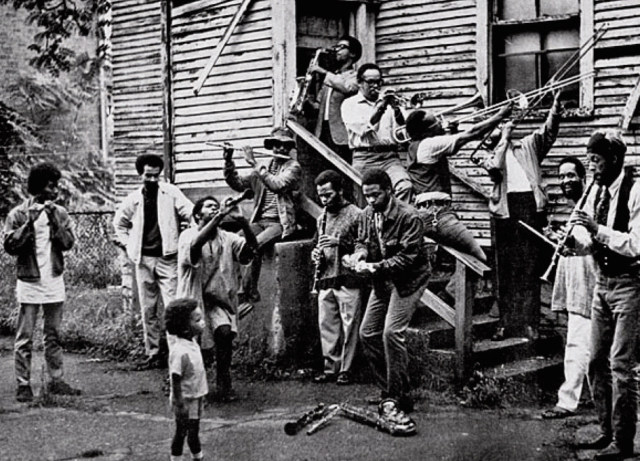
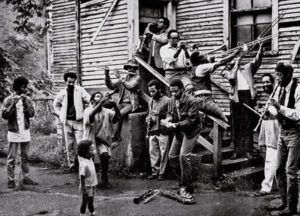
Image: AACM circa 1968: group photo in Wadsworth Jarrell’s back yard, Chicago. [Musicians t/k[ From George E. Lewis, A Power Stronger than Itself: The AACM and American Experimental Music (Chicago: U Chicago P, 2008).