March 3, 2024
Document 103: Avant-Gardes @ Zero Hour
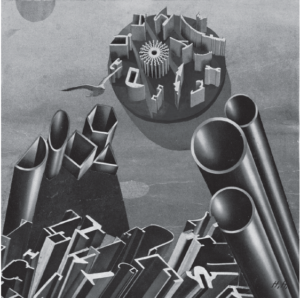
“Avant-Gardes @ Zero Hour:
Destruction, Displacement, Emergence”
CALL FOR PAPERS/MULTI-SESSION PROPOSAL
SUBMIT BY MARCH 15, 12:00 P.M. CET
“Avant-Garde and War”
9th Conference of the European Network for
Avant-Garde and Modernism Studies (EAM)
Jagiellonian University, Kraków, Poland
September 17–19, 2024 / pdf here … More

February 11, 2024
Document 102: Note on Conduit
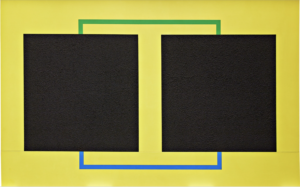
“Conduit” (“Kanal svyazi”)
trans. Arkadii Dragomoshchenko and Vladimir Feshchenko
Vsealizm (Moscow), 11 February 2024
From Moscow, for the second week in a row, comes a new translation of my work into Russian—here, “Conduit” into “Kanal svyazi”—in preparation for a bilingual edition to appear, one hopes, later this year. This work, brought forward over decades and across continents, truly stands as a conduit in the distressed conditions of communication, between the “territories of the East” and the rest of the world assuredly, but more generally as “what we live.” As I wrote on receiving word of this wonder:
There was a line from a Poets Theater play, Third Man by Carla Harryman, early 80s, spoken by Eileen Corder: “Go ahead, Moscow—I’m listening!” That was transgressive in the Reagan Era; in the current moment, one listens carefully to say the least. And now this translation of my poem “Conduit” has appeared—it is all about receiving messages, and not letting them stand as commonplaces or placeholders but as samples of “systematic distortion.” It’s about the “systematic distortion” of communication as communication itself, which we experience every day.
January 27, 2024
Document 101: Loyal to Many Flags

And loveliness?
Death has an understanding of it
Loyal to many flags
And is a silent ally of any country
Beset in its mortal heart
With immortal poetry.
—Laura Riding, “The Poet’s Corner
From Moscow, under conditions of global duress, comes the online publication of Flagii (Flags), double issue, numbers 16/17. Clicking on this link gets the issue, and for those without Russian, using Google translate or its equivalent yields a sense of the incredible poetic activity going on right now, with an intent to find “allies of any country.” Also breaching the gap are a number of texts with visual properties, in a selection introduced by Vladimir Feshchenko with work by Jackson Mac Low, Bernadette Mayer, Larry Eigner, Robert Grenier, Hannah Weiner, Rachel Blau du Plessis, Susan Howe, and myself (“Introduction to the Letter T”). I am also represented by an interview with Vladimir Koshelev and a translation of a section of Under Erasure by Lisa Kheresh, linked here, as well as the note on a little-known collage by Sylvia Plath that I wrote about on this site in 2010 (here), with commentary in Russian (here). It is not only a real honor to be included in this work but an example of what we should be doing now, connecting across the greatest distances possible, aspiring toward the horizon of “this time we are both.” … More
January 21, 2024
Entry 57: Am I That Name?

COMPLETE RETRACTION!

I write this entry at a moment of reflection, ten years after being asked to write a series of weekly articles as guest poet/critic for the online journal Jacket2. This was offered and accepted in good faith; I would gladly accept such a task in a minute, any time. Somewhat at a loss for where to begin, I took up the question of “presentism” in relation to the state of the present that was most compelling at the moment—a grim January freeze in Detroit, with its attendant affective states. This was ironic, as the distinction between presentism and historicism I was engaged in thinking through was propelling me toward the essays collected in Questions of Poetics—for some of my use of the term, click here. Let’s say the “presentism” at the moment was history at a standstill, wondering which way it would go—and what the consequences would be. Those consequences, it turned out, were immediate—a three-ring circus of attacks by designated officers of the poetic Left. Here, I am not naming names—but the triumvirate was ready and took the opportunity to stage a bloody attack on my public stance in the discourse of poetics. … More
January 5, 2024
Entry 56: A Poetics of Encounter
A Poetics of Encounter:
Dialectic of Outside with the Beats
Read at “Can We Teach the Beat Generation?”
Discussion organized by Erik Mortenson and Tony Triglio
Session 228, 5 January 2024, 10:15–11:30 AM, Loews 3rd Fl.
Modern Language Association, Philadelphia“The transmission of poetry is a passion unlike any other.”
“I too have started a riot in the academy.”
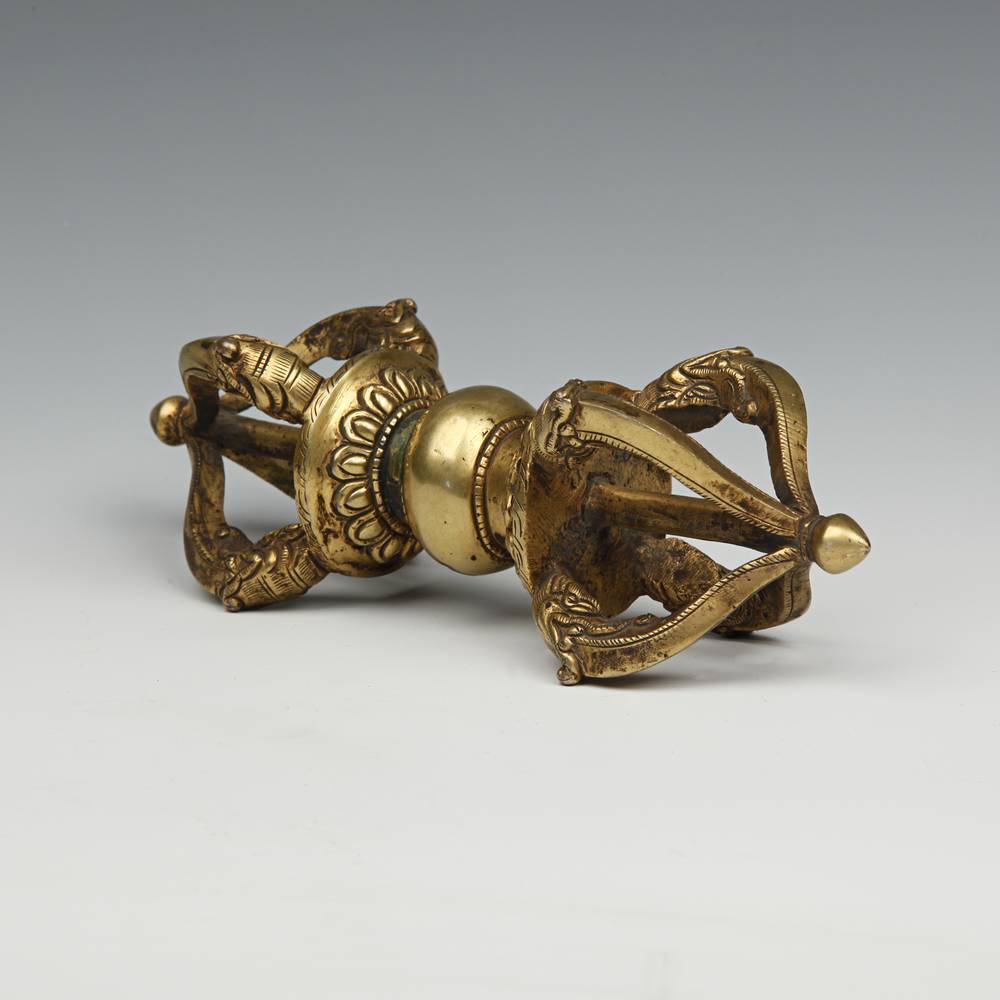
In this note, I want to call up certain moments of encounter that were, as with the visual image of a “diamond thunderbolt” or dorje, immediate, double-faced, and bivalent: outward in the transmission of poetry, from the Beats or New Americans and others; and inward, toward self-formation and a long process of professionalizing within the Academy. In charting such a poetics of encounter, I draw from my presentations at the “decades” poetry conferences at University of Maine, Orono, in the 90s and 00s that I, in the company of a shifting assemblage of poet/critics, took part in. I connect these moments to Steven Belletto’s genealogy of three early moments of encounter between Beats and the Academy: Jack Kerouac’s intervention at a symposium sponsored by Brandeis University in New York, 1958; Diana Trilling’s reaction to Allen Ginsberg’s being given an “unofficial” reading at Columbia, that same year; and Gregory Corso’s rebuttal to a symposium on the Beats in Wagner Literary Review, 1959. These are part of series of breakthrough moments: the Gallery 6 reading, San Francisco, 1955; Ginsberg’s appearance in Time magazine, 1959; the Vancouver Poetry Conference, 1963; the Berkeley Poetry Conference, 1965. What makes the first three definitively “Beat” aligns with two concepts from my essay on Michael McClure: antagonism and holism. In challenging the Academy’s scholastic pedagogy—I often thought of the English Department in the 60s or 70s as a kind of monastery, corridors filled with the brethren nodding to each other under hooded robes—the Beats took a position Outside that was, at the same time, subject to everything—“Is there a world?,” Kerouac asked; “Man does not exist,” opined Corso. The nature of this encounter between an unregulated Outside and a self-regulating Inside points to a dialectic of the Academy whose stakes are not only literary, pointing toward our volume’s significance not only for Literary but University Studies. … More
December 31, 2023
Entry 55: Beginning Again and Again

Scaffolding Repetition: Gertrude Stein,
Language Writing, Electronic Dance Music (online here)
eLyra 22, special issue on “Poetics and Politics
of Repetition,” ed. Bruno Ministro, 25 December 2023 (online here)
Abstract: This essay takes up the critique of repetition in Gertrude Stein, her claim to have written a “continuous present” that “begins again and again” and “includes everything” versus her later qualification that repetition is always shifting in terms of “insistence” and “emphasis”. Even so, Stein focuses on the unfolding of the verbal material primarily in a linear fashion, though resonances and overtones abound. In Electronic Dance Music, from Detroit to Berlin techno, one finds more vertical layerings and “scaffolding”—a term taken from Soviet psychologist Lev Vygotsky—as a way of building up sonic elements in pleasurable and meaning-bearing ways. Using these two contrasting models of repetition, I read three language-centered poets—Ron Silliman, Leslie Scalapino, and Marjorie Welish—in terms of their complex forms of temporality in poetic form, seen in terms of Stein’s often repeated framework of “beginnings, middles, and ends”. I conclude with a discussion of ”vital movement” in the electronic dance music of Berlin DJ Ellen Allien.
Keywords: Modernism, avant-garde, repetition, language writing, poetry, electronic music, American, Berlin
November 14, 2023
Entry 54: The Transmission of Poetry
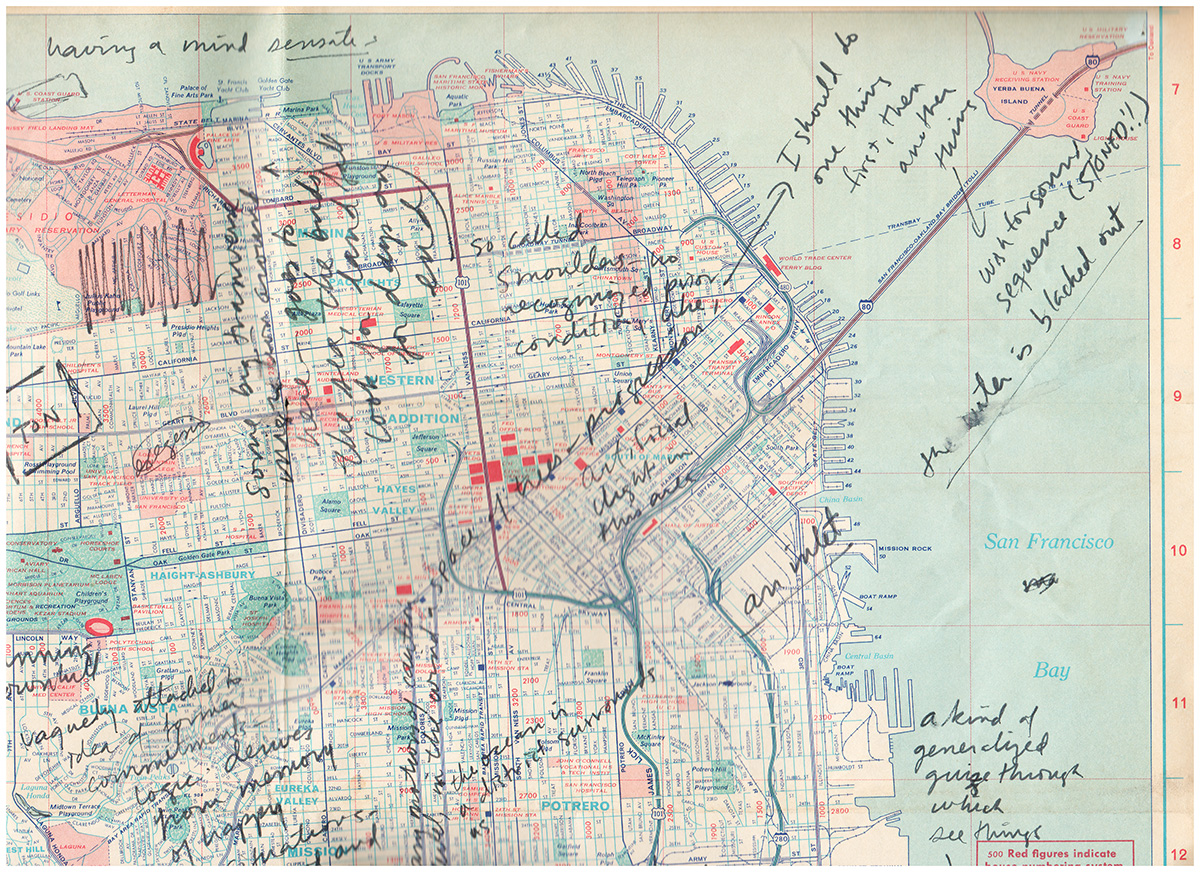
MATERIAL TRANSMISSIONS:
DEMOTIC SURREALISM/HIERATIC LANGUAGE,
SAN FRANCISCO, 1975–1980
Plunged each day into the fog of received ideas, man is led to conceive
of all things and to conceive of himself through a dizzy series of quickly
hidden stumblings, of false steps rectified as best as possible.
—André Breton, “The Automatic Message” (1933)
October 21, 2023
Entry 53: With Etel Adnan at Erquy
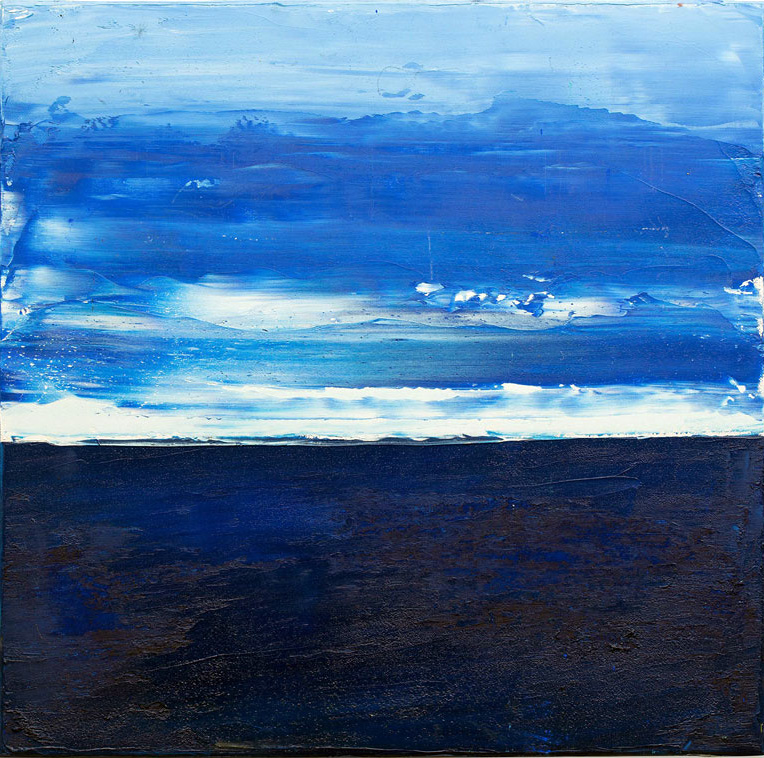 In July 2018 I traveled with Carla Harryman to visit Etel Adnan in Erquy, the beach town in Brittany where she kept an apartment with direct access to the beach, weather, and sunset. Simone Fattal was not present, while Etel was staying with a younger companion and gifted painter, Eugenie Paultre. I cannot locate photos from the period but Eugenie’s painting titled Mer, recalling the view from Etel’s balcony, suggests the drama and strangeness of this coast—while Erquy continues as a mid-tier vacation retreat, with small hotels, flea markets, parking, normative uses of the beach, hang gliding in the distance, strong tides.
In 2020 Etel published Shifting the Silence with Nightboat Books; the bio notes state that she continues to live in Paris though the work anticipates her death the next year. In terms of genre, the writing is a hybrid poetic meditation, a sentence-level nonnarrative that records states of being and mind, with the turn to language always present and exact. Time is marked at the level of the sentence, with only the sparest narrative motivation: “My thoughts drip, not unlike the faucet. They don’t let me know what they’re about. Other ones follow, strangers equally. / The daylight is getting dim. We’re not in winter, no, we’re somewhere in early July. The sunset will happen soon. Then it will disappear too” (5–6) Temporality emerges from the writing as a form of roughing out, coloring in, and smoothing over—and along with it rhetoric, perception, memory, affect, comprehension: … More
September 16, 2023
Entry 52: Magnetic North (V)
Tuesday, June 20
Martin Eder, Elysium
Galerie EIGEN + ART
I.S. Kalter/Yana Tsegay
Mountains Gallery

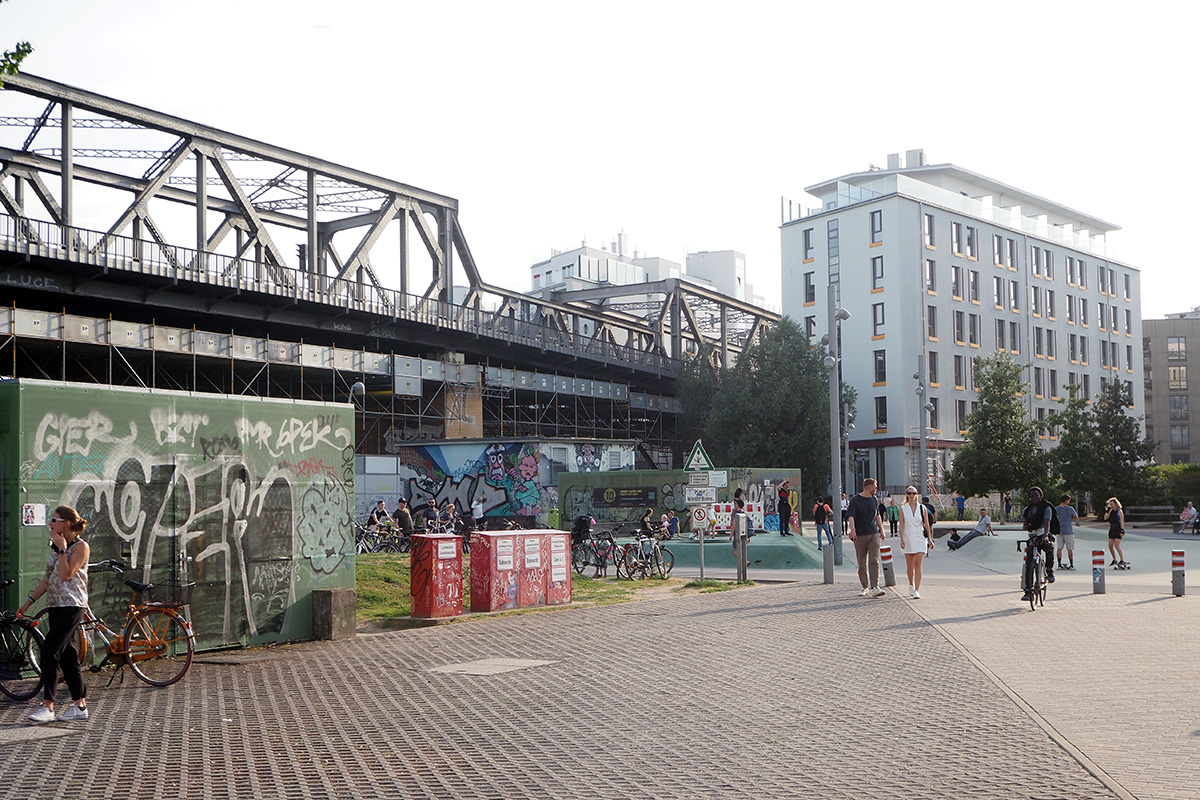
On this day we determined to meet poet Donna Stonecipher and spend some unstructured time with her. We would begin with Galerie EIGEN + ART, last hold-out of the gallery wave that defined Auguststraße as emergent art district twenty years ago and representative of the Leipzig School, notably Neo Rauch. Most of the galleries that traversed the merger from East to West have left—most recently the conceptual gallery Barbara Wien—but EIGEN + ART kept its original location while branching out. (A search to find out what happened to the former Waschmachine gallery yields no trace but ads for the Whiteware brand of washing machine and “Hot German girl fucks dildo on Waschmachine,” on Xhamster). Such references intersect, in their vulgarity, with the work on view: a theatrical series of hyper-post-consumer-utopian-quasi-religious-fantasy tableaux by Martin Eder titled Elysium. As the gallery handout reads: “Since there are no blemishes, no disease, no suffering, and thus also no death in Elysium, the fresh moisture on the figures’ skin must come from the dew on Paradise’s meadows. ‘Dewy,’ as the beauty tutorials in the Internet call it.” The stretch from the conceptual rigor and ideology critique the gallery brought to Berlin, to the cynical avowal of kitsch grandstanding as having somewhat the same effect, defines the times we are in. Not much comment to make, so we proceed to a late lunch and walk a mile across Linienstraße to Pro QM Buchhandlung, nearby the always-beating heart of Left Berlin of Rosa-Luxemburg-Platz, the Volksbühne, Babylon Mitte, and the headquarters of Die Linke. After the surrealists’ calling as “specialists in revolt,” Pro QM sells books for “specialists in transformative urbanism,” from the psycho-geographical dérives of the situationists to current architectural studies and city guides, such as the one I brought back on Eisenhüttenstadt. It is home-in-exile on an intellectual plane that shows why we came here in the first place: to map the excitement of Berlin’s evolution as a city onto critical and creative projects. It is a source of thinking the city as one is within it.
Poetics
The Grand Piano