“Particularity, Nonnarrative, and Global Poetics:
Critical Regions of Cultural Transmission”
CALL FOR PAPERS/MULTI-SESSION PROPOSAL
SUBMIT BY OCTOBER 2, 12:00 P.M. PST
American Comparative Literature Association
Palais des congrès de Montréal
February 26–March 1, 2026 /submit proposal here
This seminar will focus on recent, innovative poetic, hybrid, and nonnarrative literary works and other artistic forms in terms of their transmission across global regions. In so doing, it questions the privileging of the integrating, progressive, and universalizing genre of the Bildungsroman as global formal “dominant.” After Viktor Shklovsky’s remark that Tristram Shandy is the “most typical novel in world literature”—an anti-Bildungsroman in its refusal of narrative development and centering on language—this seminar will identify an open series of works that emphasizes particularities of form, interrogations of narrative, and differences between language and reference in works of art that are globally translated and disseminated. In poetry, the foregrounding of language and disruption of narrative is common to language-centered writing in numerous literatures, from Language writing and other experimental poetries to Russian conceptualism, meta-realism, phenomenological, and documentary forms to more lyrical and hybrid forms in European literatures. Radical particularity is also found in works of global conceptualism (for example, Ai Wei-wei) as nearly a global lingua franca. We are witnessing the emergence of exophonic forms of writing in which the gap between languages precludes any totalizing horizon (Yoko Tawada, Uljana Wolf, or Mia You, for example). Diasporic literatures frequently work between dominant and emergent languages, as when Edward Brathwaite revisioned his work in the “nation language” of Kamau Brathwaite, placing the colonizer’s language under erasure and inaugurating the globally transmissible idiom of dub poetry. Adania Shibli’s Minor Detail, for political reasons, likewise foregrounds radical particularity in her global anti-Bildungsroman. Seminar presentations may take up the development of new literary and artistic forms that defer or critique formal completion or narrative teleology; and they may address the cultural motives for transmissibility across global regions. For example, a recent online reading organized by Russian poet Ivan Sokolov presented two dozen translations of Language writer Lyn Hejinian. How do motives for translating her anti-Bildungsroman My Life differ from the post-communist world (Poland, Russia, China) to the cosmopolitan West (Germany, France, Nordic countries)? What new genres of poetry or novel are being introduced into English translation, as with Korean and Japanese authors such as Kim Hyesoon, Han Kang, or Ito Hiromi? The cultural transmission between global regions will be as significant as the cultural work these works do in their original contexts. The overarching question is: Why are we witnessing such an increasing interest in translating global refusals of telos or totality?
Notes and links
Submit proposals to ACLA from August 26–October 2: here
List of seminars: here; seminar abstract: hereFor more information contact:
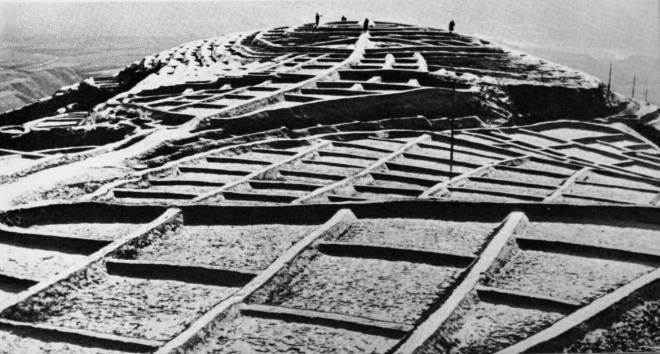
barrett.watten@gmail.com or lramey@exchange.calstatela.eduImage: “In Architecture without Architects (1964), Bernard Rudofsky explores communal architecture: primitive human-made structures honed from centuries of experience exemplifying vernacular richness and respect for the land”; Léa-Catherine Szacka and Véronique Patteeuw, “Critical Regionalism for Our Time,” The Architectural Review (22 November 2019), here