In the Zone, there is no beginning, middle, or end—they have been erased. But there is a before, during, and after—they are activated. Zone is the space between text and world that productively activates them.
—Introduction to reading from Zone: correlations (1973 2021), 15 March 2026
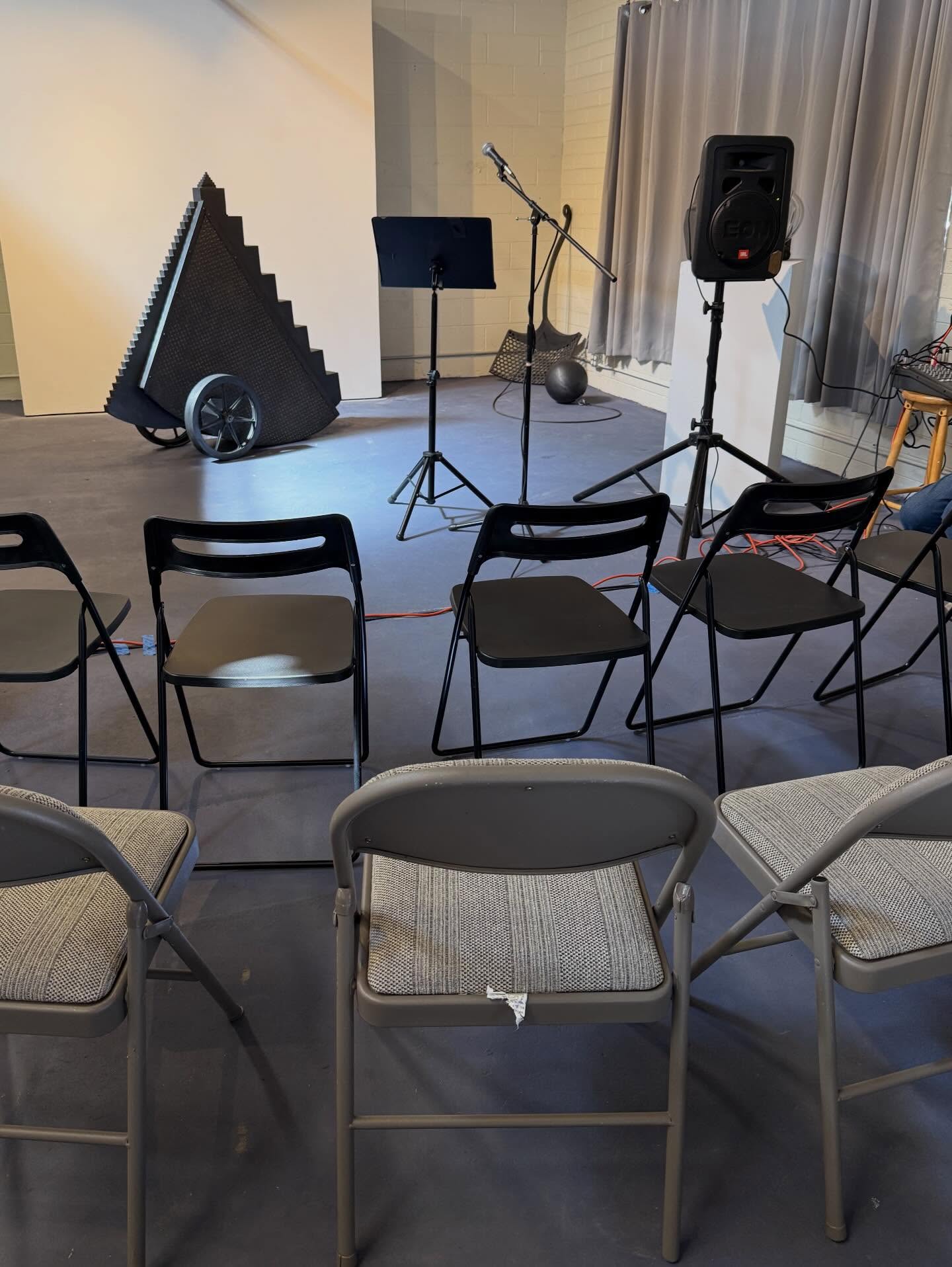
For my reading from Zone, I prepared a score made by randomly sampling and sequencing selections from across its twelve separate works, a continuous presentation without individual titles and with little or no comment, with the exception of an occasional nod to an audience member (George Lakoff, Brian Ang) mentioned or inferred in the text, and on one occasion to interact with loud street music coming from outside the gallery space. This is a strategy I have deployed on a number of occasions, and it suggests or “rhymes” with the modular construction of most if not all the works in Zone, each built up by differing versions of sampling and sequencing. Brian Ang noticed this strategy in a reading I gave at Kelly Writers House in 1999 (here). In dialogue with Ang’s account, I documented two readings from 2013, in Nuremberg and Amsterdam, for their sampling and sequencing strategies (Nuremberg here; Amsterdam here).
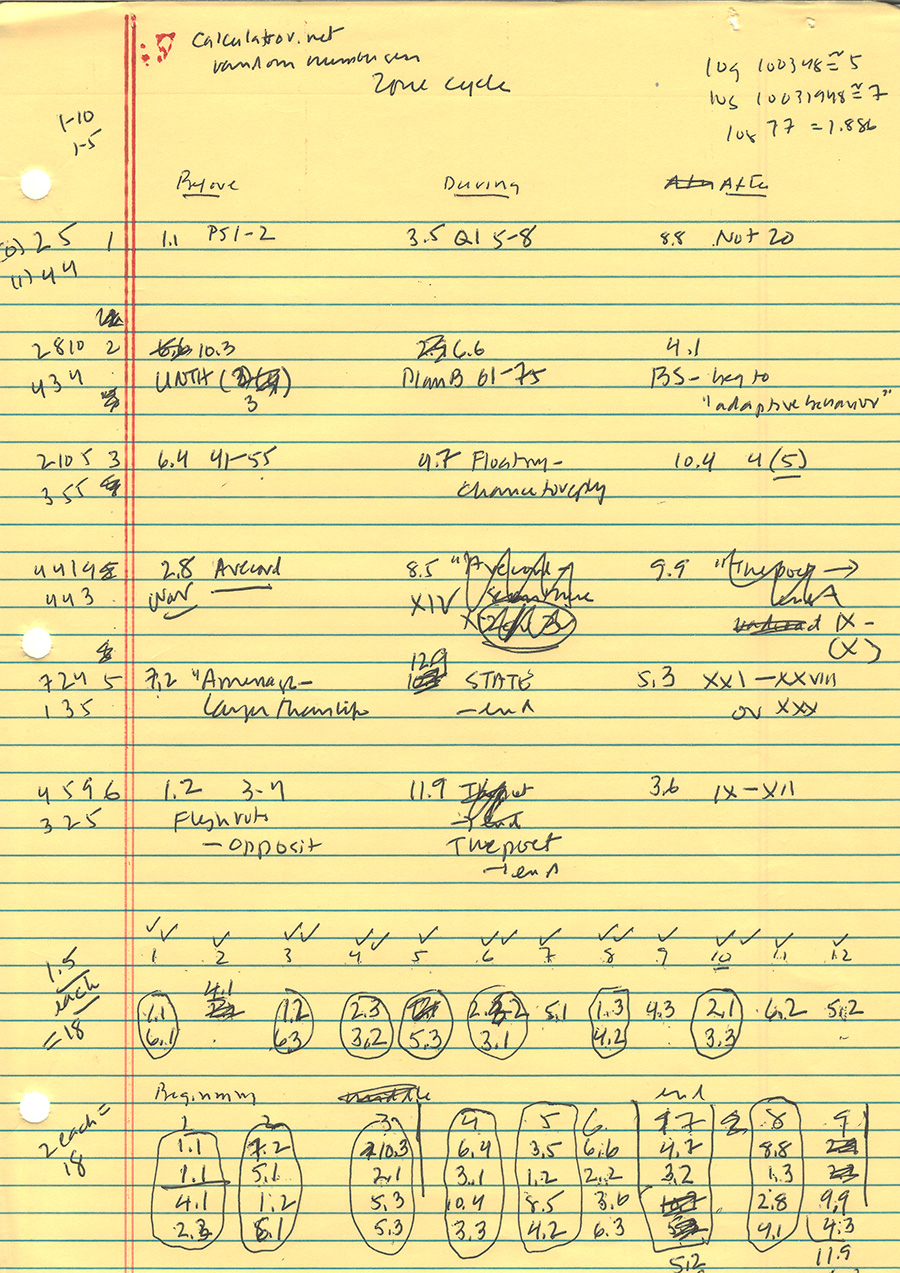
 Continuing the practice, I made a decision structure for the March 15, 2026 performance in Oakland. On the day of the event, I accessed an online random number generator (here) and laid out a table of the twelve works in Zone, with a subordinate scale of nine degrees of location to specify where in the work I would search for a sample (three degrees each of beginning, middle, and end). I cycled through the entire work, starting with the first poem, “Period Style,” with the first degree of “beginning.” The random number generator would tell me how many works to advance to obtain a sample, and what part to sample. Say after the first poem “2” and “4” came up: I would turn to the third work in Zone, “Question of Interpretation,” and select from roughly the middle of the poem (here, stanzas 5–8 of a 12–stanza poem). I then generated two more random numbers and proceeded to the next sample—my own private algorithm. My plan was to distribute the twelve poems over eighteen samples, having estimated the length of the performance I wanted. As a result, six poems would be sampled twice and six only once, an important constraint.
The random number generator worked flawlessly, in every instance proceeding to the right sample in the sequence (or so it seemed retrospectively). The experience of reading the work this way had the advantage of bypassing habitual associations that come from the long labors of writing, editing, typesetting, proofreading, and publishing, allowing one to read the work for new meanings. I highly recommend this method.
Cycle 1
[1] “Period Style,” two boxed sections, from “‘Not what it once was. Deliberately” to “Perfect pitch, falling to the ground.”
[2] “Question of Interpretation,” stanzas V–VIII, from “See, they return—to a point of departure” to “Loaded with cargo for El Dorado.”
[3] “Notzeit (After Hannah Höch),” section XX, from “Everyday one more, an increment” to “And if they coincide?”Cycle 2
[4] “Unthought,” section 2, from “Terrifying thoughts. Each more terrifying than the next . . .” to “Anonymous flux. Forms of life that insufficiently address their illusion of being there . . . .” [I chose not to continue the sample to section III, which begins, “Assailed me, thoughts.” The poem channels quotes from Stanislaw Lem’s science fiction masterpiece, Solaris.]
[5] “The Annotated ‘Plan B,'” lines 61—75, from “In organized state of denial” to “And publicly humiliated.” [I did not read annotations below the three-line stanzas.]
[6] “Blue States (After Fearing),” from “Marilyn Monroe found alive, the headline on the tabloid read” to “What is the most immediate and available form of adaptive behavior.” [I did not read the samples from Kenneth Fearing.]Cycle 3
[7] “Annotated ‘Plan B,'” lines 41–55, from “Domination follows competition” to “Of dark, polluted streams.”
[8] “Blue States,” from “Floating from anxiety, lifting from fear” to “You will not be given another chance to reply.” [Again, I did not read the samples from Fearing.]
[9] “Unthought,” section 4, from “Taking definite shape. There was a scandal in the academy and all the members knew of it . . . .” [I chose not to read the next section, beginning “I no longer believe.”]Cycle 4
[10] “War of Position,” two sections alternating between lines from my poem “Position” and paragraphs from Tolstoy’s War and Peace: from “A record of / all that remains” to “The huge courtyard of the Rostov’s house was littered with wisps of hay and with dung from the horses, and not a soul was to be seen there.” [I did not continue with further sections due to length.]
[11] “Notzeit,” section XIV, from “‘The fatalism by which incomprehensible death was sanctioned in primeval times has now passed over into utterly comprehensible life . . .” (from Theodor W. Adorno, Negative Dialectics) to “Accelerated obsolescence and advancing age render the far side of a bell curve into disposable imbeciles, waiting for my substitute to come.”
[12] “The Meridian as Archive,” section IX, from “The poem offers itself up to an interlinear version, reading the space between lines; he begs you to understand these empty lines between verse and verse as spatial and temporal—a serial unfolding,” to “Everywhere what cannot be spoken is energetic and alive, working its way through the archive into the light of the poem, radioactive.” [The poem reads and reflects on the variorum edition of Paul Celan’s lecture “The Meridian.”]Cycle 5
[13] “Media Literacy,” section 1, stanzas 3–8, from “A message goes out to the fandom” to “A frame lights up horizons / to lead forward, larger than life.” [The poem alternates between “Radio,” written about 1980 and using lines from Tristan Tzara, in italics, with updates from our current media ecology.]
[14] “Some / Ruins,” fifteen two-word poems beginning with “VICTORIA / Negritude” and ending “LIKE / Language.” [The reading was delayed, interrupted, improvised, and then resumed after loud boombox music passed by the gallery on the street; several audience members remarked on this episode and found it meaningful.]
[15] “Zone (Correlation),” sections XXI–XXV, from “In democratic form, content seeks its own level by / the force of its displacement from the absent norm / which it is in the process of creating” to “Fitfully awake, we see into the depths of structure.” [I did not read the samples from William Carlos Williams’s Paterson, book 1.]Cycle 6
[16] “Period Style,” two boxed sections, from “Flesh rots off the bone, now standing revealed” to “Causes a tentative movement outward, changes into its opposite.”
[17] “Orphée in Translation,” sections XCI—C, from “C’est la non-identité en soi” to “And their lives in translation.”
[18] “Question of Interpretation,” stanzas IX–XII, from “What is belief?” to “Knowledge at the core. It is not I.”
Thus a “new” work is made through a process of recomination, refunctioning—just as a new world might be—out of the recombined elements of the old.
Notes and links
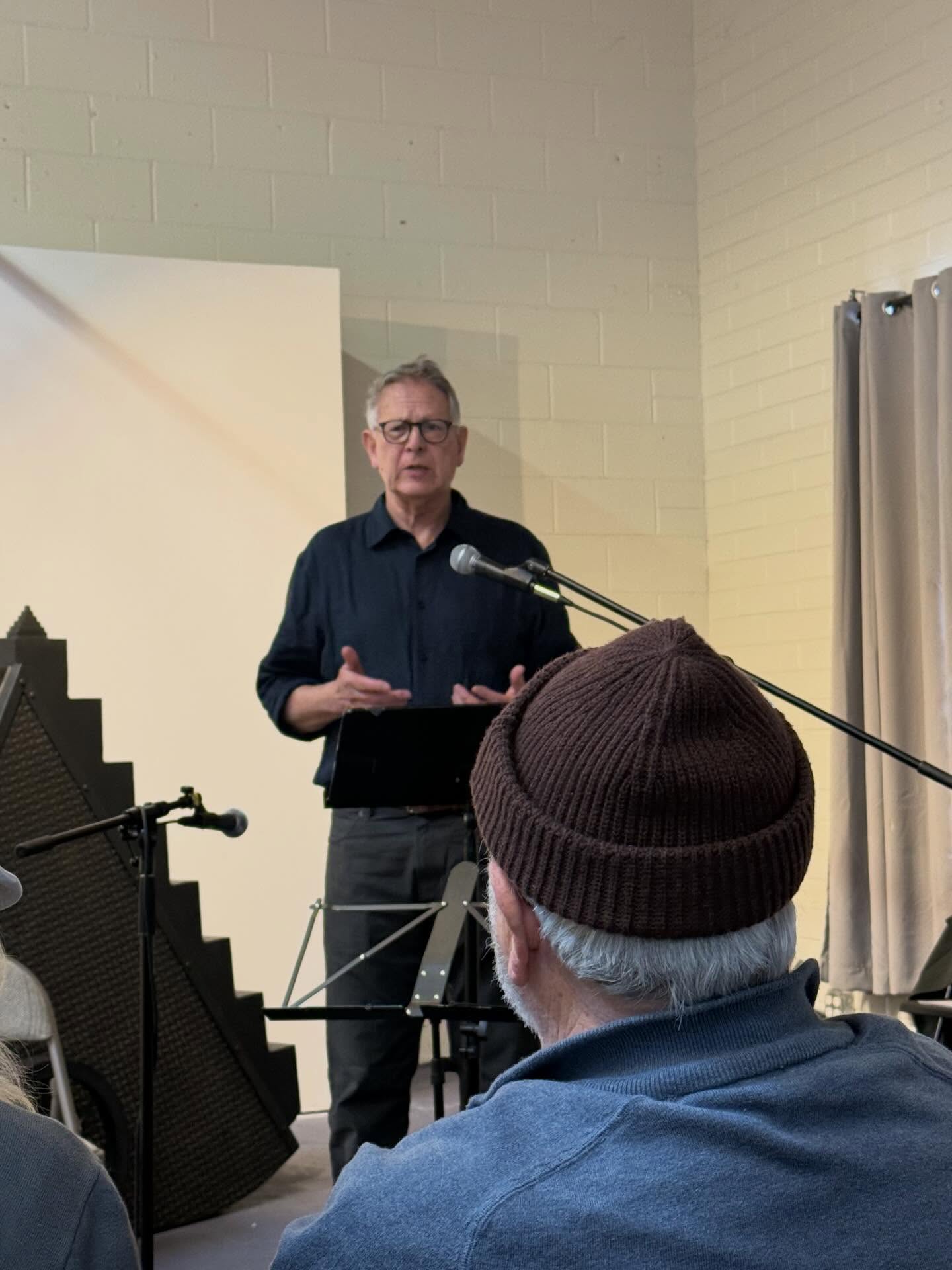
Photos: François Luong; Jan Watten
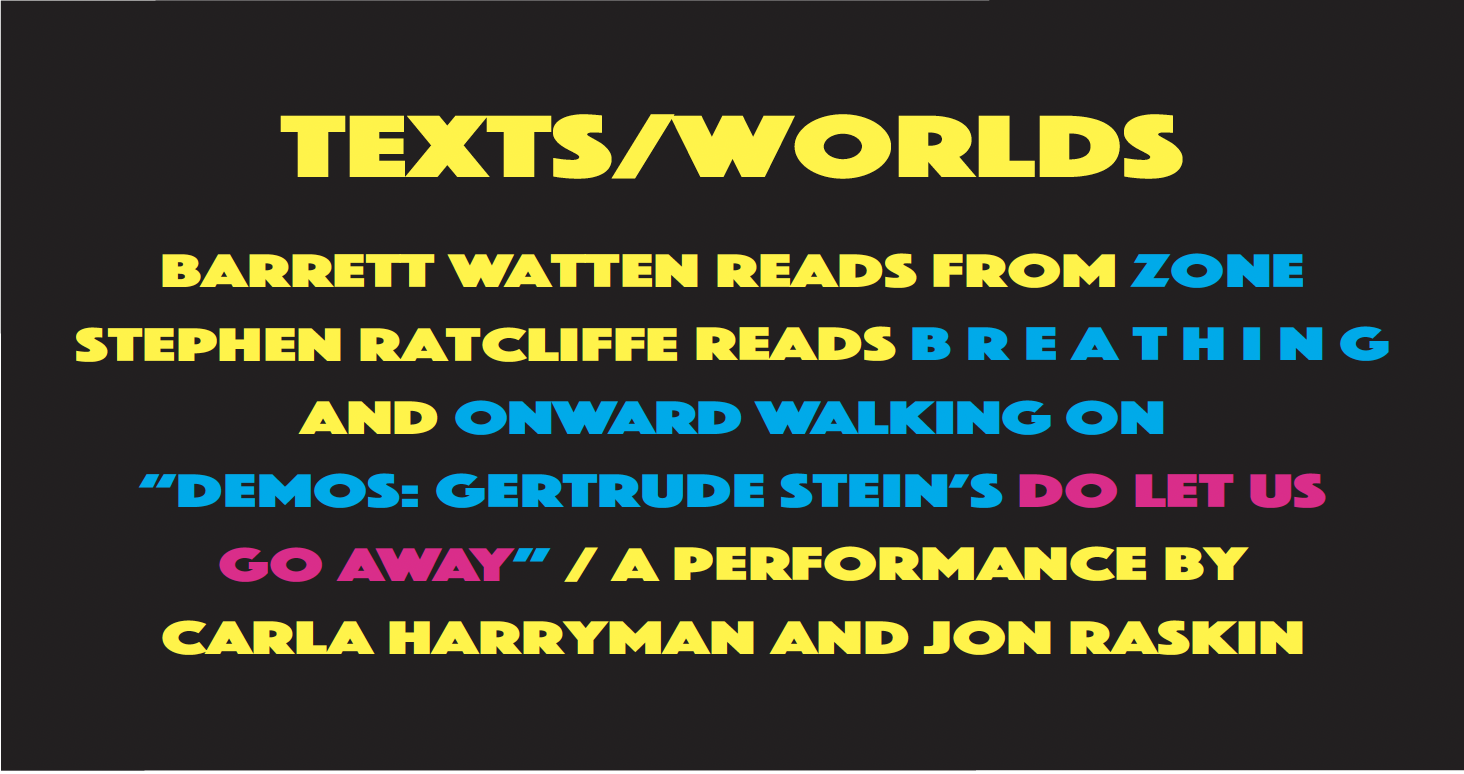
Reading publicity: hereZone: correlations (1973 2021) press release: here
Zone order page from Chax Press: hereEntry 17: Reading @ Nuremberg: here
Entry 18: Reading @ Amsterdam: here