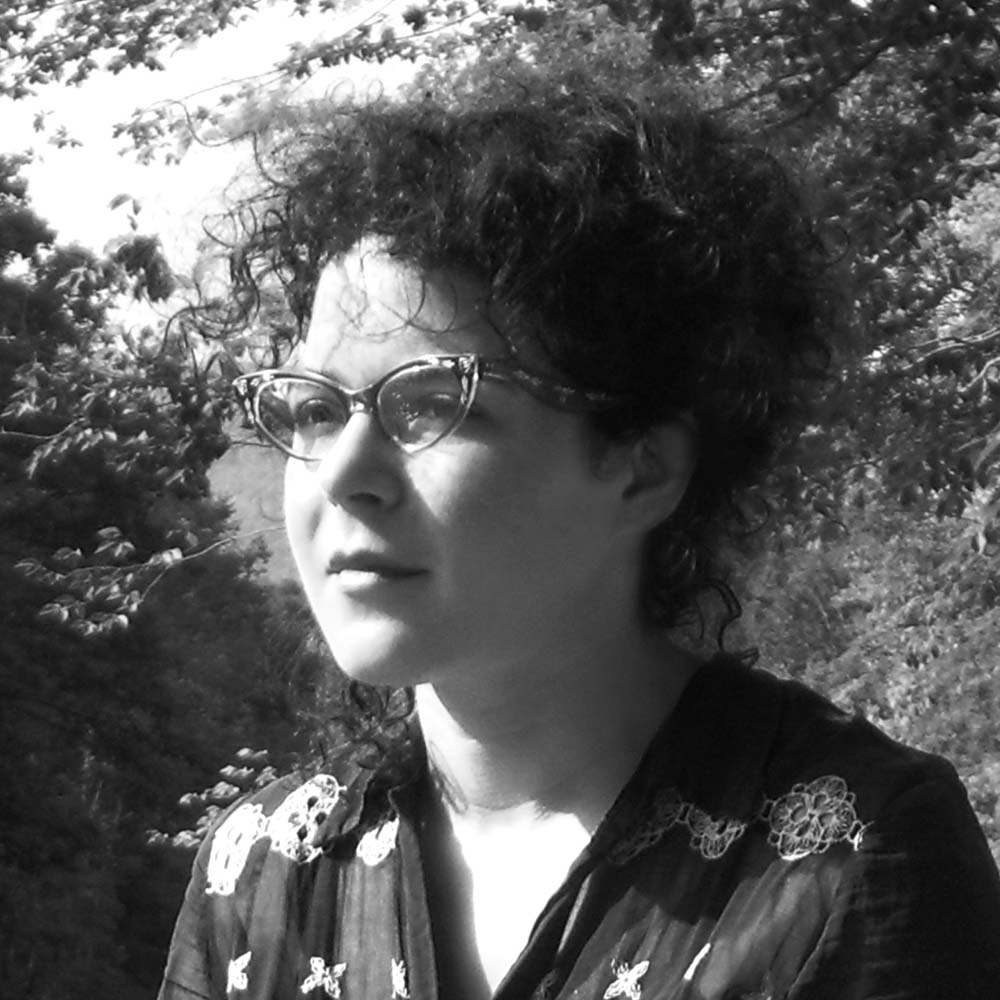
 On May 29, Iris Cushing wrote the Pete’s Candy Store mailing list with news of dear friend and former student Cole Heinowitz’s drowning in the Yuba River, Northern California, on Saturday, May 25—Memorial Day Weekend. This page records a series of dates; I first learned of the terrible fact on Tuesday, May 27, just arrived in San Diego for several days work in the UCSD Archive. It is now Saturday, July 5, as I write this, six weeks to be precise from the initiating date. Thus I am making a memorial within the confines and limits of memory, as a memorial in itself. On June 6, Iris wrote again, inviting me and a number of writers close to Cole to read at a memorial event on June 13. I have found that memory works in a series (a nested stack) of distinct but mutually supporting frameworks. There could be no doubt about my wanting to participate and attend. First there is the durational spread that gives us the illusion of living in the present; then short-term memory, lasting through the day and likely as long as a weekend. My decision to attend and book a flight and lodging was made in that frame, and was implemented over the next few hours. As I move forward, through ever longer spans of duration, I reach the proximate limit of a time span of about three weeks. It was within this initial three-week time span that the memorial was scheduled and took place; it is now three weeks from that date. I am writing, then, before its temporal proximity shifts and the event, and all that it articulated, is further displaced.
Friday, June 13
Delta 1669 DTW > LGA
Memorial for Cole Heinowitz
Pete’s Candy Store, Brooklyn
Iris Cushing
Maria Damon
Nada Gordon
Drew Gardner
Sean Cole
Vincent Katz
Carla Harryman
Felix Bernstein
[former students]
Halfway through this course of our life, with Iris and others, Cole was in the midst of a turn to poetry and the community it affords. The reading series at Pete’s Candy Store, an intimate dive bar where start-up entrepreneurs and cultural creatives work on their local credentials, with its small performance stage and dozen rows of seats four across, telegraphs its immediacy. The reading series was telling itself, an aesthetic present in its sequence of well-curated three-person, monthly events. I had no chance to attend the readings since the series began in 2024 (precise date here), but surely will return as it continues. The reading itself was a later instance of “gathering the limbs of Osiris,” the fallen attributes and intensities of a tutelary spirit (gendered F) being reconstituted in their absence. Aspects of Cole’s work—its linguistic brilliance, playful theatricality, direct line to the English romantics, researched anti-imperialism, work in translation from French and Spanish, and impactful instruction and mentoring—were given voice in turn by participants.
My contribution was to recall my early experience of Cole as my first over-the-top brilliant student when I was a visiting lecturer at UCSD in 1992. She was sixteen years old (perhaps fifteen), a rocket that simply took off on the prompt of language-centered writing, taking it to a limit of spontaneous association that, for some students, was a bit terrifying (“I hope she’ll be OK,” I remember one saying). Shortly after she became a student, and then close friend, of Carla Harryman after first meeting her at Naropa and in subsequent classes at UCSD, where she consumed the traces of poetic lineage but did not by any means fail to explore wider possibilities, ending with a Comparative Literature PhD at Brown and a tenured professorship at Bard. While she was still conducting research on the colonial Indies, Carla and I visited her in Sevilla, Spain, where Cole took us to her favored topoi—the Archive of the Indies itself, flamenco bar and hook-up street, and an ersatz Spanish Civil War road house or movie set where we were transported to a nonexistent past.
from “Unthought” (for Cole)
Erase machine. After their man-made catastrophe,
a turn to such explanations is marked . . .
Assassin suicides. Face turned upward, beseeching
the sky, this is the face of realism today . . .
L’amour fou. The destiny of woman is choice; all
human history descends from that fact . . .
Catachresis. An eidolon of desire both ways, stands
for all human needs at the same time . . .
Similar scale. The woman’s choice, in the event, was
to disappear from the face of the earth . . .
Saturday, June 14
Tribeca, Chelsea, Soho
Heryun Kim @ Bienvenu Steinberg & C
Kati Heck, Emily Sundblad @ Bortolami Gallery
Toshiko Takaezu @ James Cohan
Antonia Kuo @ Chapter NY
Rosana Paulino @ Mendes Wood DM
Adolph Gottlieb and Mark Rothko,
“The Realist Years” @ Pace Newberry
Pierre Huyghe @ Marian Goodman
Salman Toor @ Luhring Augustine
NO KINGS demonstration, Midtown
Jennifer Firestone/Thad Rutkowski
reading @ Bowery Gallery, Chelsea
Juan Uslé @ Galerie Lelong
Willem DeKooning @ Gagosian
Rosemarie Trockel @ Barbara Gladstone
Thalita Hamaoui @ Marianne Boesky
Noah Fischer
Casey Miller
Shall We Dance, dir. Masayuki Suo
Film Forum
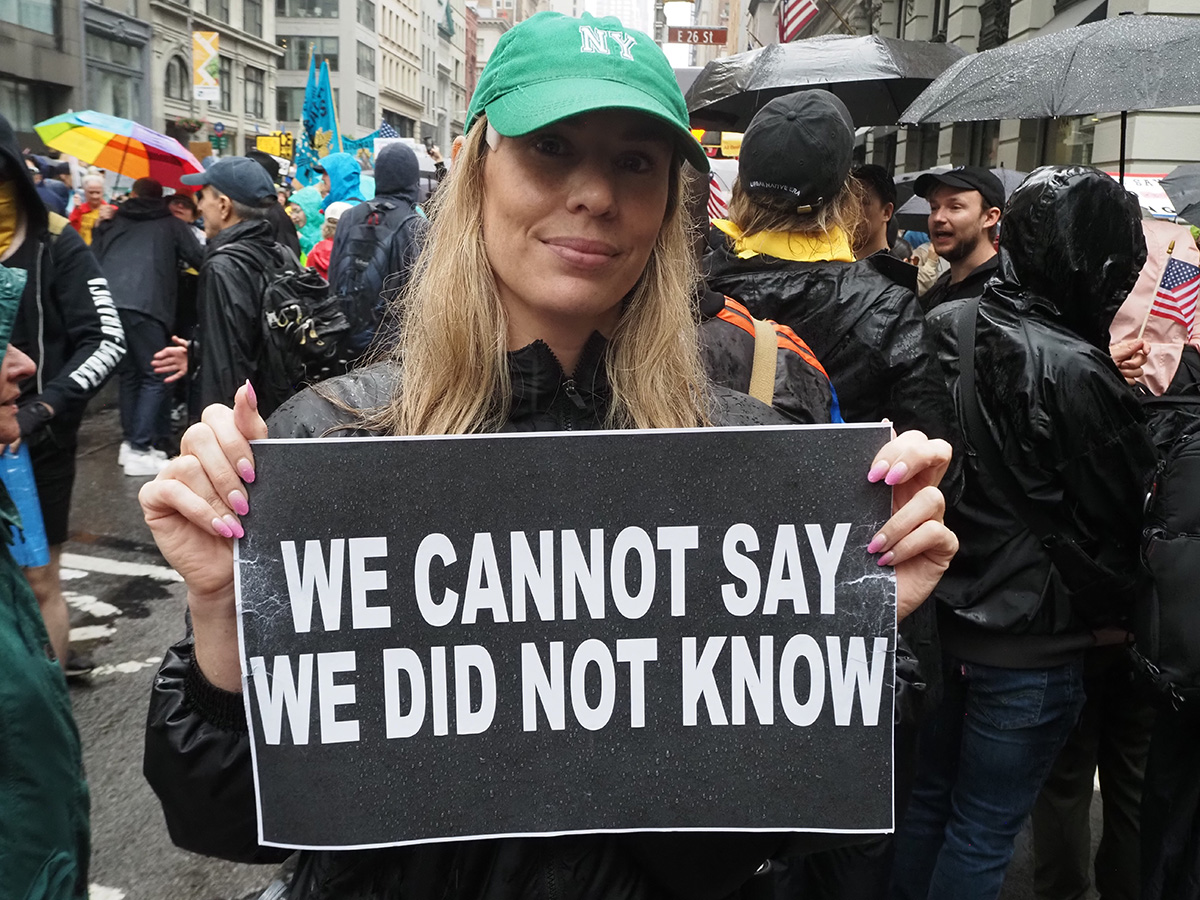
If there is to be art in New York, it must be interrupted by a massive popular uprising against the state of dictatorship we are living, before moving on to the aesthetic and its mystifying orders. To get to that point we would begin with a short tour of meaningful galleries in Tribeca, whose first impressions may have some chance of surviving over three weeks of memory. To guard against total erasure, I would record the hits on camera and take a copy of every press release and checklist, when available. The demonstration itself was memorable, but likewise needs to be renewed at least every three weeks before the news cycle destroys its effect—which is what precisely happened after we rained on the dictator’s parade, which he followed with his bunker-busting penetration of Iran. What was amazing were the proliferation of signs, and the persons carrying them—including Noah Fischer, artist and son of poet Norman Fischer. Art opportunities continued, with a reading of prose experiments by Jennifer Firestone and Thad Rutkowski, a short check-up on gold-star galleries in Chelsea so as not to miss anything, tapas at Tia Pol with former student and New York emigrant Casey Miller, and the luxury of state-of-the-art projection of the romantic classic Shall We Dance at Film Forum—adding up to what Dewey might call an “art experience.”
Sunday, June 15
Upper East Side, Soho
L’Express, 249 Park Avenue
Metropolitan Museum of Art
Ekaterina Derisheva and Ilya
We hosted Ukrainian poet-in-exile Katya Derisheva and her three-year-old son Ilya (performing the child behavior known as “the wrecking ball”) for a charming Lyonnais-themed brunch. Ilya stood on his high chair before he was fastened in properly but a catastrophic series of events did not occur. Conversation with Katya touched on as many areas of knowledge of poetry and Ukraine her emigrant’s perspective could provide. I spoke of recent translations of Yaroslav Hrytsak and Victoria Amelina—the latter the journalist assassinated by Putin to eliminate her as witnessing. Katya’s opinion was guarded, while I defended the form of the work as a cento of incomplete writing projects, a synecdoche of the ruined cities and lives it records. We spoke of Ukraine as a “political” form (not an ethnic nationality) in Hrytsak, to which I connected my work-in-progress on Alexei Parshchikov’s I Lived on the Battlefield of Poltava. Katya was more interested in the nation as palimpsest, as with the form of Parshchikov’s poem, than as an identity. I am impressed by Katya’s rigor in “staying with the trouble” of the kind of writing she intends to pursue, a phenomenological poetics. We spent the afternoon in the galleries of the Met, not memorable but good enough for a Sunday afternoon, before dropping Katya off at Penn Station and enjoying the rooftop bar at Arlo Soho, with its clientele of Gen Z’s with laptops and expense accounts, and heading to LaGuardia and our flight to Detroit.
Delta 1014 LAG > DTW
Notes
Texts: from “Unthought,” in Zone: correlations (1971 2021), forthcoming from Chax Press in September.
Victoria Amelina, Looking at Women Looking at War: A War and Justice Diary (St. Martin’s, 2025)
Yaroslav Hrytsak, Ukraine: The Forging of a Nation (Public Affairs, 2023)
Alexei Parshchikov, I Lived on the Battlefield of Poltava, trans. Donald Wesling (Cherry Orchard Books, 2023)