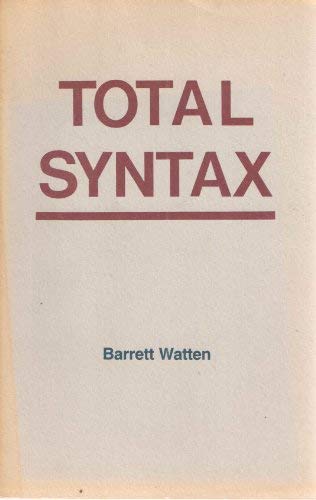
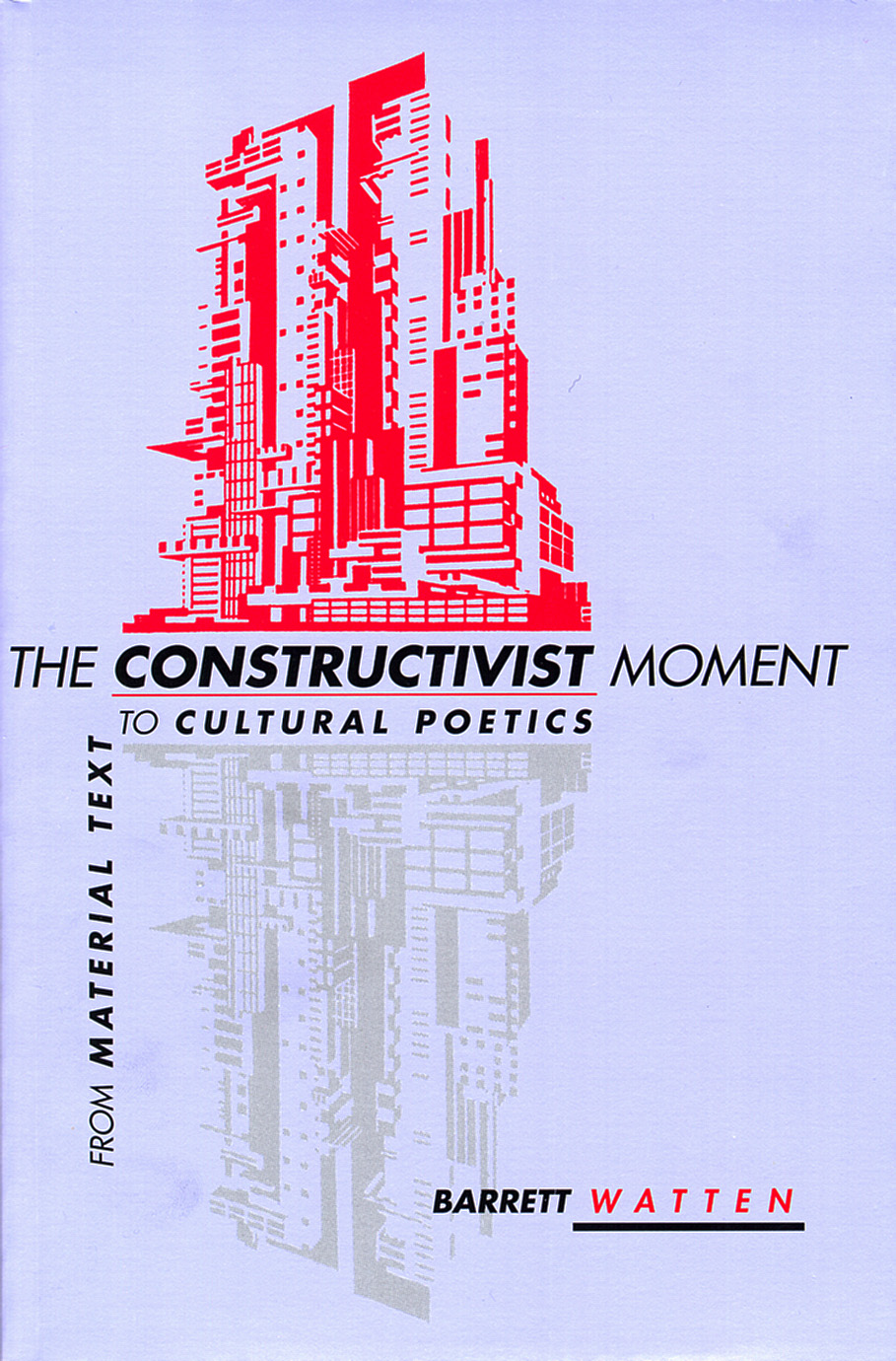
 A recent post by Vladimir Feshchenko, Russian linguist and scholar of language-centered writing, raised a question of the historical reception of Language writing—as a history of its own making. Language writing’s historicism is in this sense double—not only a question of its publications, influences, reception, contexts, but the way its formal and theoretical or explorations lead to the future unfolding of new meanings. One thus can trace the historical (real-time) reception of Language writing in relation to these aspects of its “constructivist” poetics, in the sense I develop in The Constructivist Moment. That was 2003, “midway through Language writing’s journey,” and the results keep coming in. They continue in a line that extends to Lyn Hejinian’s later theory of allegory, in Allegorical Moments (2023), pluralizing “moments” in dialogue with that “moment.”
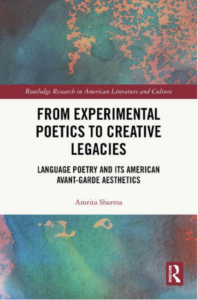
The recent title that crossed Feshchenko’s desk was the 2026 publication of From Experimental Poetics to Creative Legacies by Amrita Sharma, a younger scholar from India who benefitted from a Fulbright to the University of Notre Dame. Due to the high cost of the Routledge hardcover ($200), I have not yet seen or read the work, but will likely accede to the $45.59 Kindle price soon. Catalogue copy gives an overview:
From Experimental Poetics to Creative Legacies: Language Poetry and its American Avant-Garde Aesthetics offers a comprehensive account of Language Poetry, tracing its origins, evolution, and enduring influence. It demonstrates how a movement that emerged from American experimental writing in the 1970s has become a creative legacy with lasting relevance for twenty-first-century poetics.
Beginning with the modernist transformations and counterculture that reshaped poetic form in the early twentieth century, the study charts the formation of the Language community. While combining literary history, textual analysis, and cultural inquiry, it examines the editorial networks, defining aesthetic principles, and ideological debates that animated the School’s practice. Through the close analysis of major figures, including Charles Bernstein, Bruce Andrews, Ron Silliman, Barrett Watten, Lyn Hejinian, and Rae Armantrout, Sharma explores the movement’s material and conceptual concerns, as well as the persistence of its ideas in digital and post-digital environments.
Written within Indian academia, this text expands the global contexts, poetic as well as academic, in which Language Poetry holds significance today. This book is a valuable resource for graduate students, teachers, and scholars of Literary Studies and American Literature, while also serving as a clear guide to the evolution and contemporary resonance of American experimental poetics for readers beyond academia.
There is much of interest here, beginning with the global framework of being “written within Indian academia.” While there are numerous links between Language writing and global literatures—as with UK, Irish, French, Spanish, Italian, German, Greek, Scandinavian, Japanese, Chinese, Russian and Eastern European connections—the Indian subcontinent has not been one of them until now. The sense of “global” thus reads as a project of aligning the progressive development of Language writing with a holistic, global horizon—one that writing from India may represent as much as any other global region. The horizon of globality in this sense—rather than a more point-by-point mapping of Language’s reception, for instance in the French or Russian cases—is hermeneutical, in an unfolding of horizons à la Hans-Georg Gadamer‘s work. A short precis of Gadamer may help with the “horizon work” here:
For Gadamer, interpreting a text involves a fusion of horizons (Horizontverschmelzung). Both the text and the interpreter find themselves within a particular historical tradition, or “horizon.” Each horizon is expressed through the medium of language, and both text and interpreter belong to and participate in history and language. This “belongingness” to language is the common ground between interpreter and text that makes understanding possible. As an interpreter seeks to understand a text, a common horizon emerges. This fusion of horizons does not mean the interpreter now fully understands some kind of objective meaning, but is “an event in which a world opens itself to [them].” The result is a deeper understanding of the subject matter. [Wikipedia, s.v. “Gadamer”]
The historical reception of Language writing can be seen as an “event” in this sense. It is significant that the series begins, in terms of single volume monographs devoted to the school, with George Hartley’s Textual Politics and the Language Poets (1989; see the pdfs uploaded on the author’s website). While the academic or scholarly reception of Language writing started a few years earlier with high-profile debates by Marjorie Perloff, Jerome McGann, Andrew Ross, Charles Altieri and others, it was based without question (to an extent of being a critical reaction to troubling ripostes by unruly poets) on the auto-theoretical self-making of Language writers themselves, in the early ephemeral publications by key figures; in L=A=N=G=U=A=G=E (1978–82) and Poetics Journal (1982–98). Hartley’s 1989 account was thus a “fusion of horizons” in exactly Gadamer’s sense: on the one hand, a working within the Marxist structuralism of Fredric Jameson, Terry Eagleton, and Louis Althusser, on the other the “radical particularity” or materialist poetics of the work itself. What resulted was a definitive account of Language writing within the horizons of Western Marxism. In “Late Capitalism and Language Writing” (Questions of Poetics, 2016), I discussed Hartley’s “turn” thusly:
George Hartley’s Textual Politics and the Language Poets (1989), the first full-length account of the Language school not written by one of its members, affirms this central [political] commitment of Language writing, apart from questions of language and form. Hartley organizes his discussion around a series of issues common to Left critique of the time: the politics of the avant-garde tradition, poetry as ideology critique, reification and the material signifier, the critique of representation in the turn to language, and the syntax and praxis of writing in the world. The book begins by quoting Silliman’s “Let us undermine the bourgeoisie” . . . and ends with Bruce Andrews’s dictum, “To politicize—not a closure but an opening”. . . . Hartley’s argument sets forth a set of key issues concerning author and theory, text and poetics, while bracketing or deferring significant aspects of the movement: its relation to identity politics and race, gender and sexuality, new narrative forms, performance poetics, visual and musical art forms, everyday life, and historical contexts. (81)
Hartley’s position is hermeneutical: an evolving synthesis of at least two orders of meaning, in the process of their mutual reinterpretation. What followed in Language writing’s reception, though, was hardly restricted to that reading; as I wrote, “The reception of the Language school has been otherwise, moving from the first articles and books from a Marxist formalist criticality to a literary formalist ‘return to language’ by the end of the 1980s” (82). (One contribution, pointed out by Greek poet/scholar Panos Bosnakis, I missed altogether: Geoff Ward’s Language Poetry and the American Avant-Garde [British Association for American Studies, 1993]). In my 2016 chapter, I trace the vicissitudes of that struggle, which led to a productive and open series (pp. 82–84). The series continues in works such as Sophie Seita’s textual materialist Provisional Avant-Gardes: Little Magazine Communities from Dada to Digital or Daniel Scott Snelson’s digital theoretical The Little Database: A Poetics of Media Formats (both 2019). Hejinian’s Allegorical Moments as well extends a larger hermeneutics, while Feshchenko’s 2023 Russian and American Poetry of Experiment fuses horizons of two global avant-gardes, Russian and American. The question on the table is how Amrita Sharma’s monograph will stand as a new global horizon in this sense. All this is pushing me, finally, to the expense of at least a digital copy!
Notes and links
This entry follows three posts on my Fall 2025 seminar on “Language Writing and Beyond” at Wayne State University; I have yet to write a conclusive account of the seminar, but will sometime soon following the above prompt.
Entry 67: “Language Notes I” here
Entry 68: “Language Notes II” here
Entry 69: “Language Notes III” here
Document 107: “Archive Seminars” here