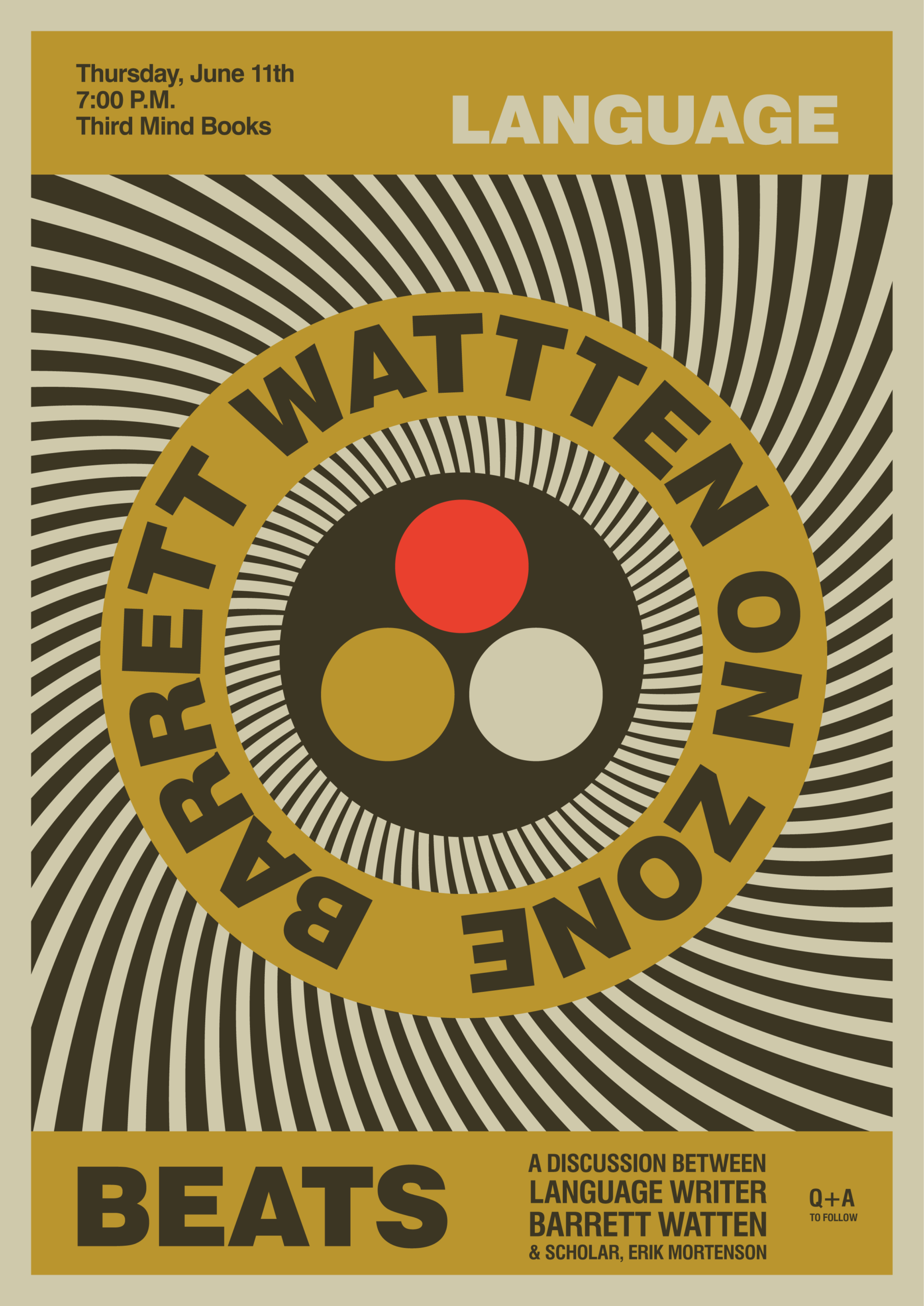
 Language/Beats
Book event & discussion
Barrett Watten: Zone:
correlations (Chax Press)
Erik Mortenson: Allen Ginsberg
in Context (Cambridge UP)
Third Mind Books
118 E. Washington, Ann Arbor
June 11, 2026, 7:00 P.M.
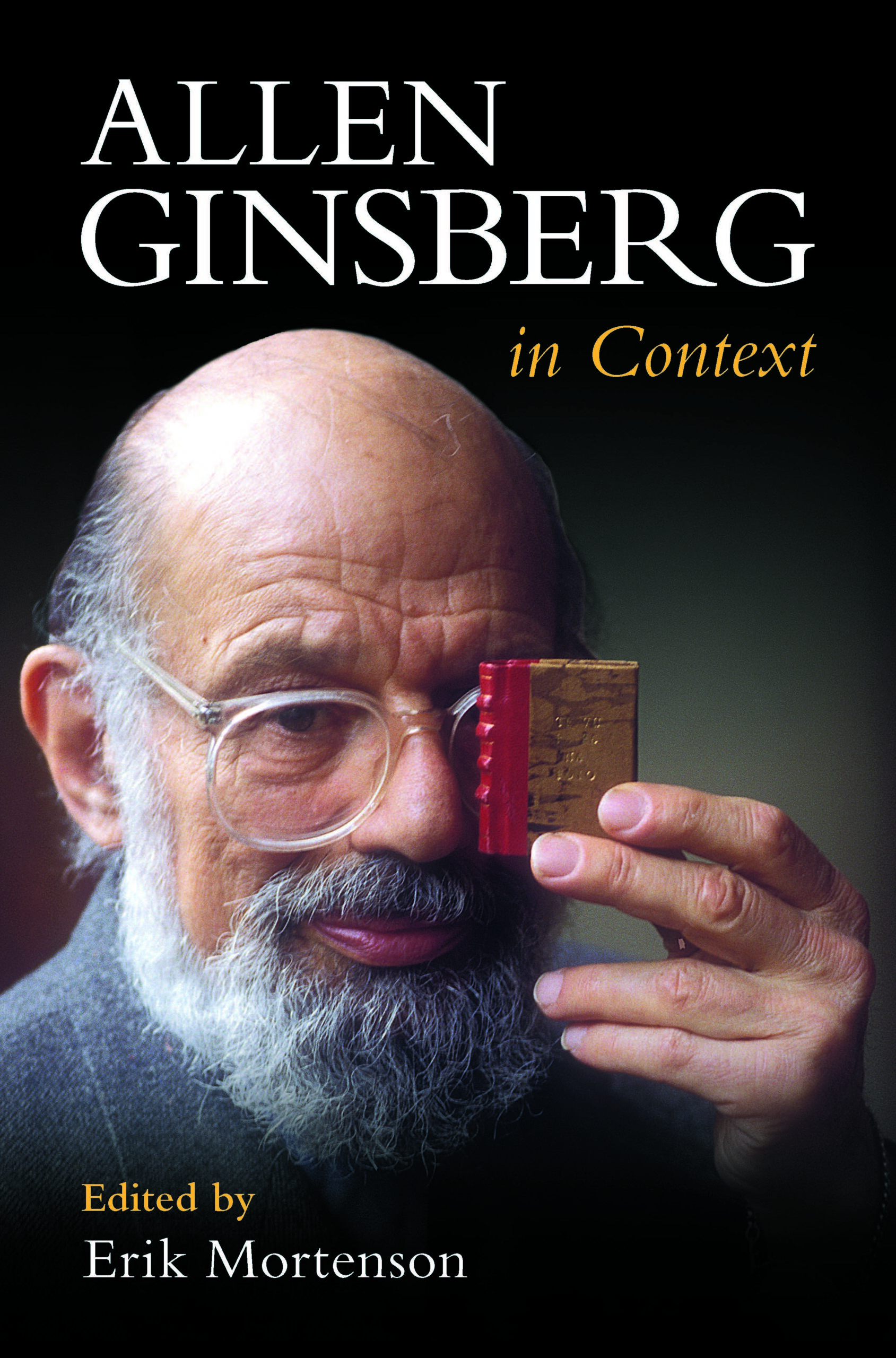
On this day, Erik Mortenson and I took the stage to present and reflect on recent work, literary history, and our work together, which stretches back two decades since Erik was my first Ph.D. advisee at Wayne State University. His project was exemplary, on its own merits and in terms of what I wanted to direct: a comprehensive, revisionist, culturally reflexive account of the Beat movement. What resulted was his first book, Capturing the Beat Moment: Cultural Politics and the Poetics of the Present. I cannot stop recommending this book: it is “cultural poetics” as it should be: a synthesis of historical and contextual readings, revisionist expansion of the canon, and focused attention to form and media—with strong readings of key figures in a larger field of authors, history, genre, and meaning. Not only should his work be better known; it should be taught and emulated. And there is strong evidence that the range of poetics it takes part in continues, not least with Erik’s current edited volume, Allen Ginsberg in Context. It was the occasion of his publication and my own Zone that brought us to this “moment” of continuation.
 Over a couple of Zoom meetings, we mapped out an event. I would begin with a key point about Language and the Beats: they are not often spoken of together, in fact seem to represent opposing poetics—from embodied, expressive, real-time to conceptual, theoretical, and composed, at least to begin, with on the page. As with bad accounts of Hegel’s dialectics (thesis, antithesis, synthesis) one needs to take a closer look: there are deep psychological and historical forces at work, not only our occasional surface resemblances. One such surface connection would be a mutual interest in Dada cut-up technique, used as a generative procedure by William S. Burroughs, most strikingly in his novel Dead Fingers Talk. While Wikipedia claims that the novel only existed in a U.K. edition (John Calder with Olympia Press, 1963, which I read), there was a 1977 paperback edition (W.H. Allen) that turned up at John K. King Books in Detroit in 1998, before it was republished in 2020 with archival material (here). The cut-up method was pursued by many Language writers from the 70s on, from Clark Coolidge and Bernadette Mayer (in their collaboration “Karstarts” [1973], a direct predecessor of Ron Silliman’s Ketjak and the New Sentence) and by Kit Robinson, Steve Benson, and Bob Perelman in the “Brat Guts” moment, discussed thoroughly in The Grand Piano. The forces deeper than stylistics at work with the cut-up, however, are many: critique of the unified subject; literary and stylistic transgression; psychosexual sources of surface language. Kit Robinson, in a reflection on the tradition of cut-up in the first Poetics Journal (1982), distanced himself from the Beat project (and in a way endorsed surface transmission) in these terms:
What had changed? For one thing, the sense of relation between self and work. A distrust of the dictatorial ego as manipulator and a desire to open the work out to greater possibilities as an event in which reader and writer might participate more equally called for a new distance on the materials. Poets began to see the inner voice as restricted by its own programming, the determinate psycholinguistic circuitry of the language user. Thus external restrictions, limits, and procedures might actually free the mind from habitual repetition of received ideas, sentiments, and literary predisposition and allow it to experience something unanticipated. Restricting vocabulary by means of a given source could extend the possibility for expression beyond the limits of the internal. [“Bob Cobbing’s Blade,” Poetics Journal 1 (1982): 74]
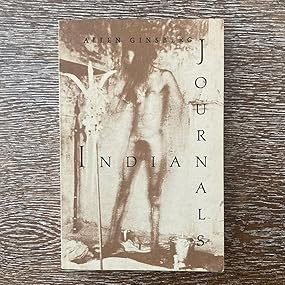 Robinson is calling for a surface that cancels depth, but there is a deeper motivation. To locate it, I turned to another text of the Beats that was psychoactive at that time, Allen Ginsberg’s Indian Journals (Auerhahn Press, 1970), with its striking cover of a naked Hindu saddhu or monk on its cover. The journals chart Ginsberg’s descent into a confrontation with mortality and the limits of knowledge, best figured in his exacting descriptions of cremation of bodies by the River Ganges. It is clear that the issues he is processing stem from his mother’s mental health tragedy, for which he may partly have blamed himself (see Steven M. Weine’s Best Minds: How Allen Ginsberg Made Revolutionary Poetry from Madness; here), and her recent death as eulogized in “Kaddish.” What fascinated me as a young poet was not biography but the intersection between the dark quest of the knowable and writing itself as the means for asking that question. Ginsberg as well saw a conjunction between the biographical and poetics precisely at the crux of writing, as a time-based event of disclosure that is both objective and self-reflexive. Thus madness could be represented as outside the body in the abject personhood of Kali Ma, herself a living body on the street, while writing may instantiate the embodied mind. The poetics that follow are described by Ginsberg to a Marxist Literary Conference in Calcutta (December 1962):
1) The reason for changes—increased depth of perception on nonverbal-conceptual level. / a) Spontaneous natural visionary / b) Organized experiment in consciousness: / 1. thru jazz ecstasy & mantras / 2. thru that Electronic machinery / 3. thru drugs / 4. tantra & Zen meditation. / Consequences in poetic composition: an attempt to include more simultaneous perceptions and relate previously unrelated (what were thought irrelevant) occurrences. . . . [continuing to stylistic aspects; Indian Journals, 93]
Ginsberg’s lecture on poetics is an accurate summary of the writing he engages in, but without any depth or contextual framework. It is as if the forces motivating him are anticipating or flowing through the writing, but not reducible to specific terms. This opens Ginsberg to a psychoanalytic reading, not only theoretically but informed by his successful talk therapy while undergoing psychiatric treatment (see Weine). The sexual or morbid or scatological material everywhere in his journals thus are, to begin with, a true depth psychology. No wonder, then, that Ginsberg stops short of the possibility of “language-centered writing,” which he discusses at a moment of artistic self-assessment:
Now poetry instead of relying for effect on dreaminess of image or sharpness of visual phanopoeia—instead of conjuring a vision or telling a truth, stops. Because all visions & all truths are no longer considerable as objective & eternal facts, but as plastic projections of the maker & his language. So nobody can seriously go on passionately concerned with effects however seeming-real they be, when he knows inside all his visions & truths are empty, finally. So the next step is examination of the cause of these effects, the vehicle of the visions, the conceiver of the truth, which is: words. Language, the prime material in itself. [Indian Journals, 38]
 There in a nutshell is the turn to language—which Ginsberg cannot take. Rather, he is “attached” as Buddhists would say to body and image, and for better or worse must find answers there. But he is also aware of the literary experiments that have taken that turn, from Stein and Ashbery to Burroughs, and there would be more to come (he does not mention Jackson Mac Low). This “negative poetics” of body, image, and experience is one I both absorbed and distanced myself from, writing a series of prose poems clearly influenced by Ginsberg’s journals:
Perceptions which end in atomization. Perception atomizes. Perceptions atomize. The atoms melt into lead—and it sits there, a lump of solid grey—material. Material contradiction, its essence, it’s written, means that a piece of matter somehow separate from another piece interacts with it, resulting in a displacement of both, a new description if someone were there to record it.
This may be going a bit far, but—the insides of a bird are a kind of granular cheese, moved by wings attached from one location, a tree, to another. An active intelligence in dissipation—kids running around in a circle “We want back, we want back.”—OK a catalogue. All varieties of living arrangements. Tension. I found her—cold, it was cold in the apartment, but she was easy to talk to, I found her right away.
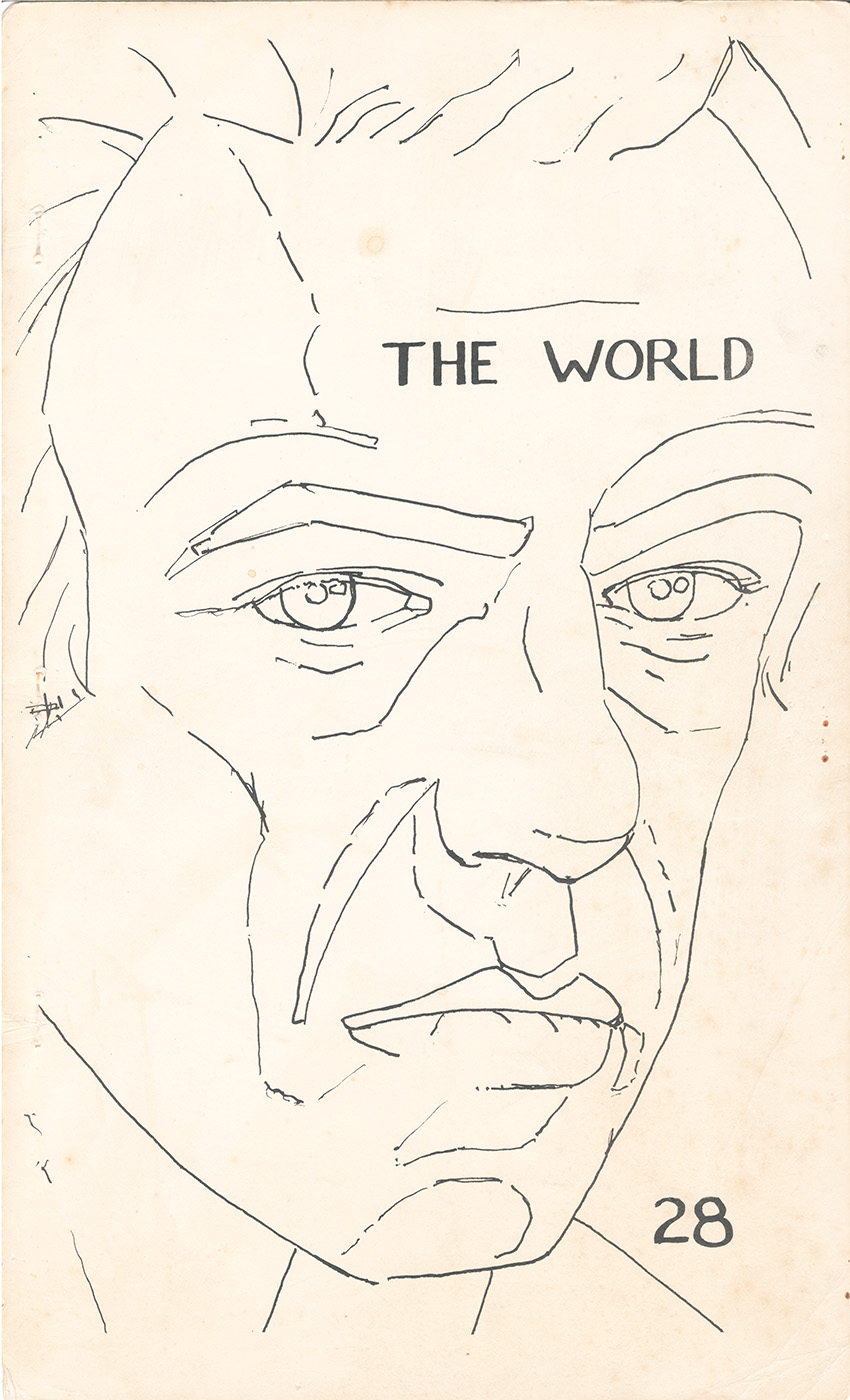
Oh yes, a large and lonely man—a condition of paranoid shock. The crowd flinches in unison as blocks of fog break off the main mass to cover the park. All of a sudden a horizontal condition, looking out from under this mass at the serious, squinting, troubled and nervous outline of buildings by the bank—the bank buildings downtown, a new billboard for KENT at least 30 feet, can see it here over a mile away. The clouds are sweeping people out of the park—clouds like disjunct concrete blocks in an open field. A scream and a crash. A sigh. I was troubled to find I was inside. . . . [“April 5,” in The World 28, “Autobiographical Issue,” ed. Lewis Warsh (May 1973), 32]
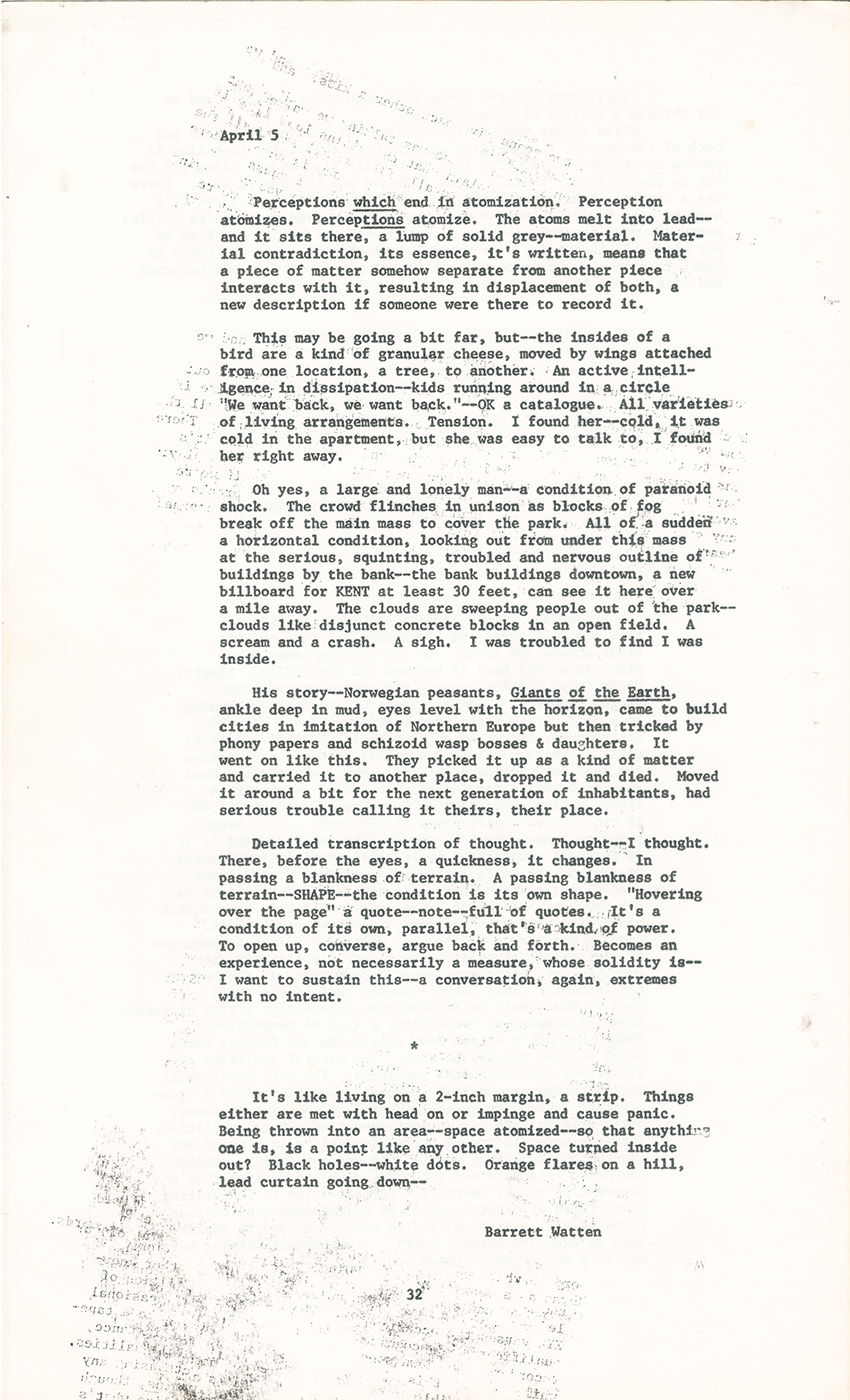 From radical self-consciousness to vulnerable disclosure—the work was difficult to read in the event, and I did not reprint it in Opera—Works (1975), though I will in a future edition should there be one. This was my approach to a “limit experience,” after Bataille and the existentialists, as writing in and for itself. Writing in that manner, however, would come to another limit—aesthetic as much as biographical—about 1975, when I concluded my first volume (published by Big Sky Books with its blood red cover) by writing that cut up, rearranged, and sequenced its material:
The white pill spins. Take the context of the green glass-topped table. The contours marked to give the eyes finish. Green studies, for production of spin state on glass. “For education.” The clock is without a spring in England. Winter studies of 1973, for production of state behind glass. The classic state is a function never lighted up. Which is thinking behind glass. The classic state shatters, a clock without a spring, splinters. Brown directionless arrows, pull back ahead. The key to this is a picture of the Horsehead Nebula. Objects seen as through glass. Which is thinking. A function pulls, worldbackwards, the key slips. Ask a simple question, obscured in clouds of dust and remote opaque gas. There are relatively few background distinctions. A brief manifestation to trace, and recognize 50 light-years hence. . . . [“Worldbackwards,” in Opera—Works, 59; Frame (1971–1990), 322).
This is where my influence from Ginsberg stops: in the equivalence of the sublime itself with a picture postcard of the Horsehead Nebula, in fact the inception of the piece. Also entailed is a historical critique of the English romantics, seen from “50 light-years hence”—maybe about now. Locating the traces of the sublime event or limit experience, however, in the works collected in Zone is not difficult if one knows where to look. I concluded my presentation with a sampling of six passages from Zone that each may be unpacked through what I saw in Ginsberg’s writing:
[1: 168] “The Meridian as Archive,” section V, from “Meine Damen und Herren” to “drunk with kisses.”
[2: 178] “Unthought, section VI, from “As in a dream” to “our discontinuous prompts . . . .”
[3: 203–5] “Orphée in Translation,” sections LXXI—XC, from “In our world no one is named” to “It could even be Heurtebise.”
[4: 65–67] “Blue States (After Fearing),” from “Marilyn Monroe found alive” to “What is the most immediate and available form of adaptive behavior” [without samples from Fearing].
[5: 63] “Question of Interpretation,” stanzas IX–XII, from “What is belief?” to “It is not I.”
[6: 120–25] “The Annotated ‘Plan B,'” from “It’s a Mongolian Sausage!” to “As if nothing happened . . . .”
In the event, I digressed after “Question of Interpretation” to tell the story of my cousin Martin, a deep practitioner of Tibetan Buddhism who was well known around Ginsberg’s circle at Naropa. He is my personal connection to the question of mortality Ginsberg raised, which he performed as an act of devotion or puja. Then it was on to Erik, who spoke movingly about our experience of working together and then presented a conceptual framework where aspects of my work in Zone and Ginsberg’s writing might converge—or diverge. They were, in my recall:
- Negativity, my reading of Adorno and Ginsberg’s focus on abjection.
- The gap, radical juxtaposition to create a space for interrogation.
- The line, Ginsberg breath- or image-based lines versus Language textuality.
- Transcendence versus immanence, holism versus radical particularity.
- Language as act, from Wichita Vortex Sutra to “Plan B.”
- Activism: how does the act of language result in change?
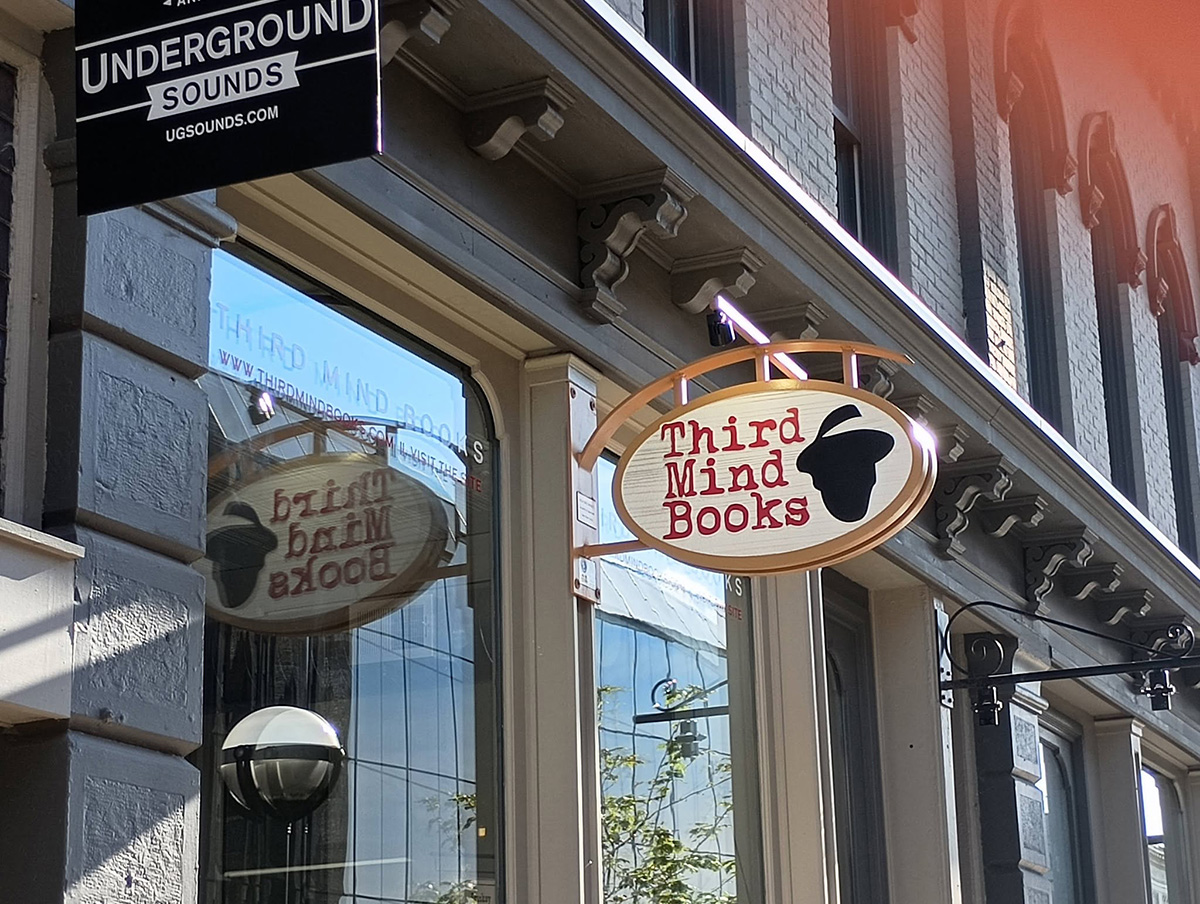 These frames set up the terms for the discussion, notably a back-and-forth with Arthur Nusbaum, owner of Third Mind Books, on the question of transcendence, seen as either an embodied state or a philosophical principle. As an example of transcendence, Erik recalled Ginsberg’s line “I declare the War is over”; as immanence, he cited my poetic use of the double projection of The Shining as a performance, where simultaneous forward and reverse screenings on a single screen collapse into a fleeting single moment. I followed by claiming that “mediation” is the important term, the one that leads to a politics derived from writing. The evening had done its work; we had opened some new questions; what remains is to see where they will take us in the history of poetics.
Notes/Links
Event publicity: here
Images: poster for Third Mind event
Cover of Allen Ginsberg in Context
Cover of Indian Journals
Cover of The World 28 by Alex Katz
BW prose poem in The World 28
Third Mind Books. Photo Kennedy BowlingOn Zone and earlier sampled performances:
Brian Ang, “Barrett Watten, 1999”: here
Entry 17: Reading @ Nuremberg: here
Entry 18: Reading @ Amsterdam: here
Entry 70, Performing the Zone: here
Entry 72: Zones (Paris and Berlin): here