 Zone (New York)
@ Torn Page
435 W. 22nd Street, New York
September 20, 2026
with Steve Benson
and Marjorie Welish
hosted by Carla Harryman
and Lee Ann Brown
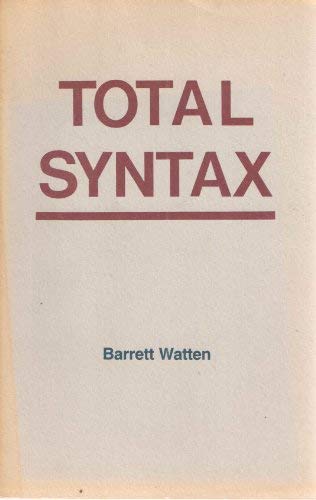
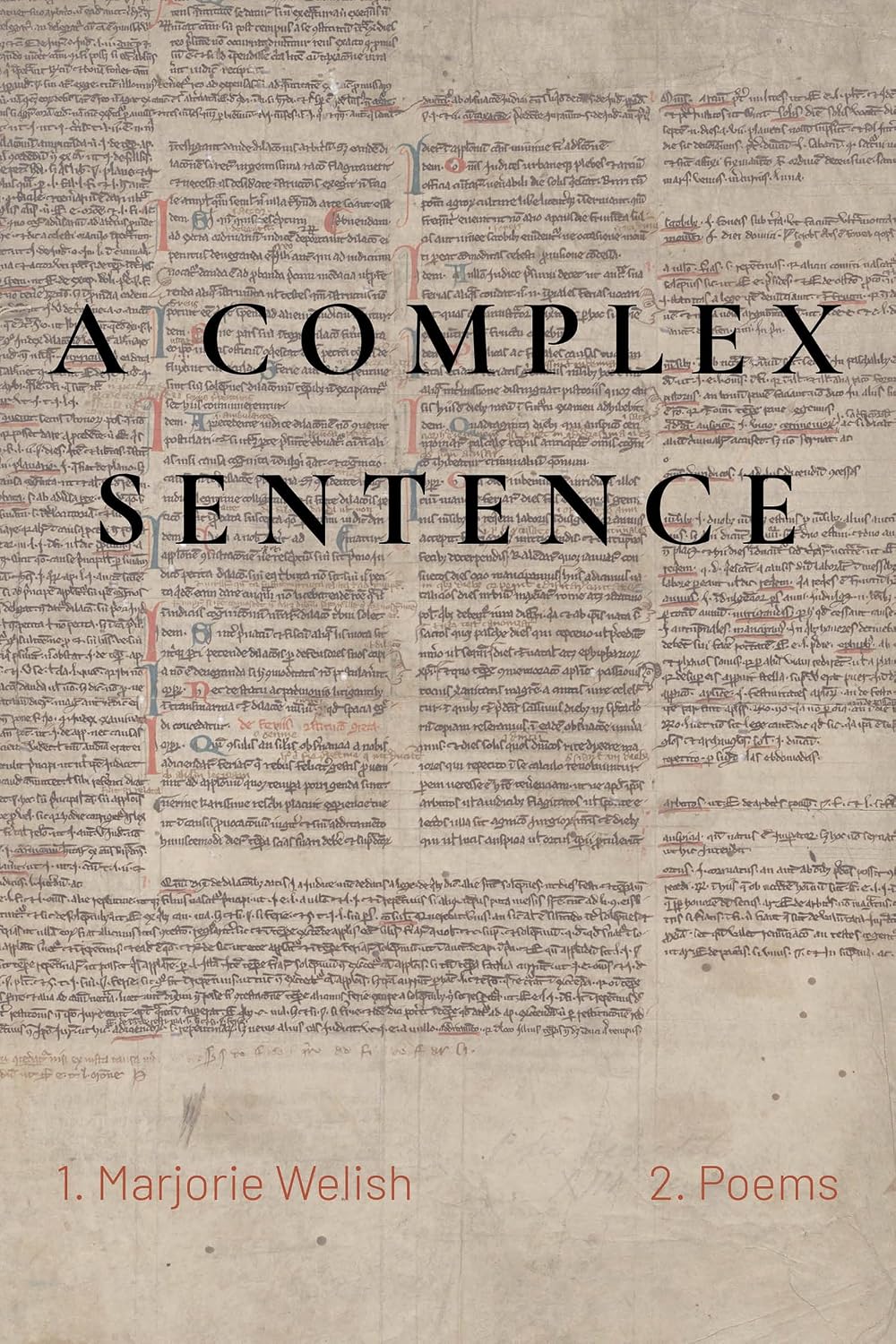
On the right day, New York is about openings. On that day, Lee Ann and Carla organized an event to launch Zone: correlations (1973 2021) in New York, in the company of two long-time collaborators and close allies in poetry, Steve Benson and Marjorie Welish. As a member of the Grand Piano, Steve has been a significant part of an imagined poetic unity since meeting about 1974 in Santa Barbara, followed by his emigration north to join the community then converging. I first encountered Marjorie a decade later, about 1989 when she published a review of my book Conduit in the San Francisco Chronicle titled “Exposed Wires of an Electronic Age.” This review, edgy but positive, followed the disastrous series of poetic kneecappings that attended Total Syntax and the resistance it inspired among the philistines, which I have returned to past the point of recall. Nothing short of an anti-philistine Poetic Front has characterized our solidarity since then, as Marjorie explicitly confirmed in introducing her reading. Her magisterial A Complex Sentence (2021) stands as a charter document of that movement’s core values.
 For the reading I decided to sample the twelve works in Zone once but with the addition of a thirteenth sample, which would serve as interpretive (non)closure. To begin I queried, “How goes it with the Zone?,” channeling Heidegger’s one-liner (“How goes it with the nothing”); the Zone, while a delimited and bounded space of something actually existing, including language, is “rifted with negativity,” or as I put it from an earlier talk:
The concept of “zone” has a history of multiple usages. For many, Apollinaire’s 1913 poem is the prime literary reference; while the “zones” of Pynchon’s Gravity’s Rainbow (1973) or Tarkovsky’s Stalker (1979) compete. The zones of divided Germany, and Berlin, of course, are the major political example. Trying to nail down the concept in an essay linking Pynchon to Berlin’s industrial zones, I wrote: “Thanks to the dictionary, a zone is “a region or area set off as distinct or adjoining parts” and “an area or territory created for a particular purpose” (Webster’s Ninth). . . . Zones have boundaries, yet it is central to their purposes that they are not fixed or determined; the boundary of a zone is always a bit arbitrary, not yet there, to be decided. Zones have location, but they are dynamic rather than static; a continuous throughput characterizes the zone, transforming material from state A to state B. Zones are positive spaces, and produce positivities, but they depend equally on what they are not—presence in the zone is always underwritten by, rifted with absence. The resulting duality of the zone appears as an ontological flicker between existence and nonexistence, utopia and dystopia, freedom and constraint, site and mobility—recalling the work of art in its purposive purposelessness but also partaking of the energetics of Kristeva’s productivité and the regularity in dispersion of Foucault’s heterotopia.” —”Zone Elektropolis: Refunctioning Sites of Production” (presented at ASAP Tartu, 2016)
As with the earlier Zone readings, the sampling, sequencing, and refunctioning of the original material creates just such a Zone. Below listed are the “parent” texts and the excerpted passages; for this reading, I decided to include the original samples of quoted texts from Kenneth Fearing, Williams Carlos Williams, Leo Tolstoy, and Stanislaw Lem, and to read as well three annotations to “Plan B” to emphasize their political moment:
[1: 62] “Question of Interpretation,” sections V–VII, from “See, they return” to “loaded with cargo for El Dorado.”
[2: 98–100] “Zone: Correlation” (with samples from Williams), sections LIV–LX, from “Rigor of beauty is the quest” to “by which it is disclosed.”
[3: 106–109] “The Annotated ‘Plan B,'” stanzas 23–34, from “There is no comprehension” to “To a predicted measure,” including annotations to stanzas 23, 30, and 34.[4: 120–31] “Media Literacy, lines 33–62, from “Interests diverge” to “Two eyes blinking through a door.”
[5: 27–28] “Period Style,” from “Illustrations distort” to “One step beyond fear is space.”
[6: 165) “The Meridian as Archive,” section I plus section II, sentences 11 and 12, from “‘The Meridian,’ Paul Celan’s speech” to “a word that appears outside the text.”[7: 200–202] “Orphée in Translation,” sections LXIX–LXXX, from “You never mention Eurydice—” to “Materialists of the opposition.”
[8: 71–72] “Blue States (after Fearing)” (with samples from Fearing), correlations 28–32, from “Does he think that he is the only one?” to “walking forward to that moment in which he was.”
[9: 156–60] “Notzeit (After Hannah Höch),” section XXII, from “Imagine I am consulting the present” to “but to no avail.”[10: 31–32] “War of Position, correlations 1–4, from “The monument speaks correctly” to “impatiently awaiting his notice.”
[11: 173–74] “Unthought” sections I–II (including epigraph from Stanislav Lem), from “What was the use?” to “address their illusion of being there.”
[12: 230–32] “Some/Ruins,” text boxes 85–96, from “CODDLE / Precosity” to “CANCEL / This.”[13: 171–72] “The Meridian as Archive,” sentences 89 and 90 from section IX plus section X, from “The card which is the / four of hearts” to “a poem that does not exist!”
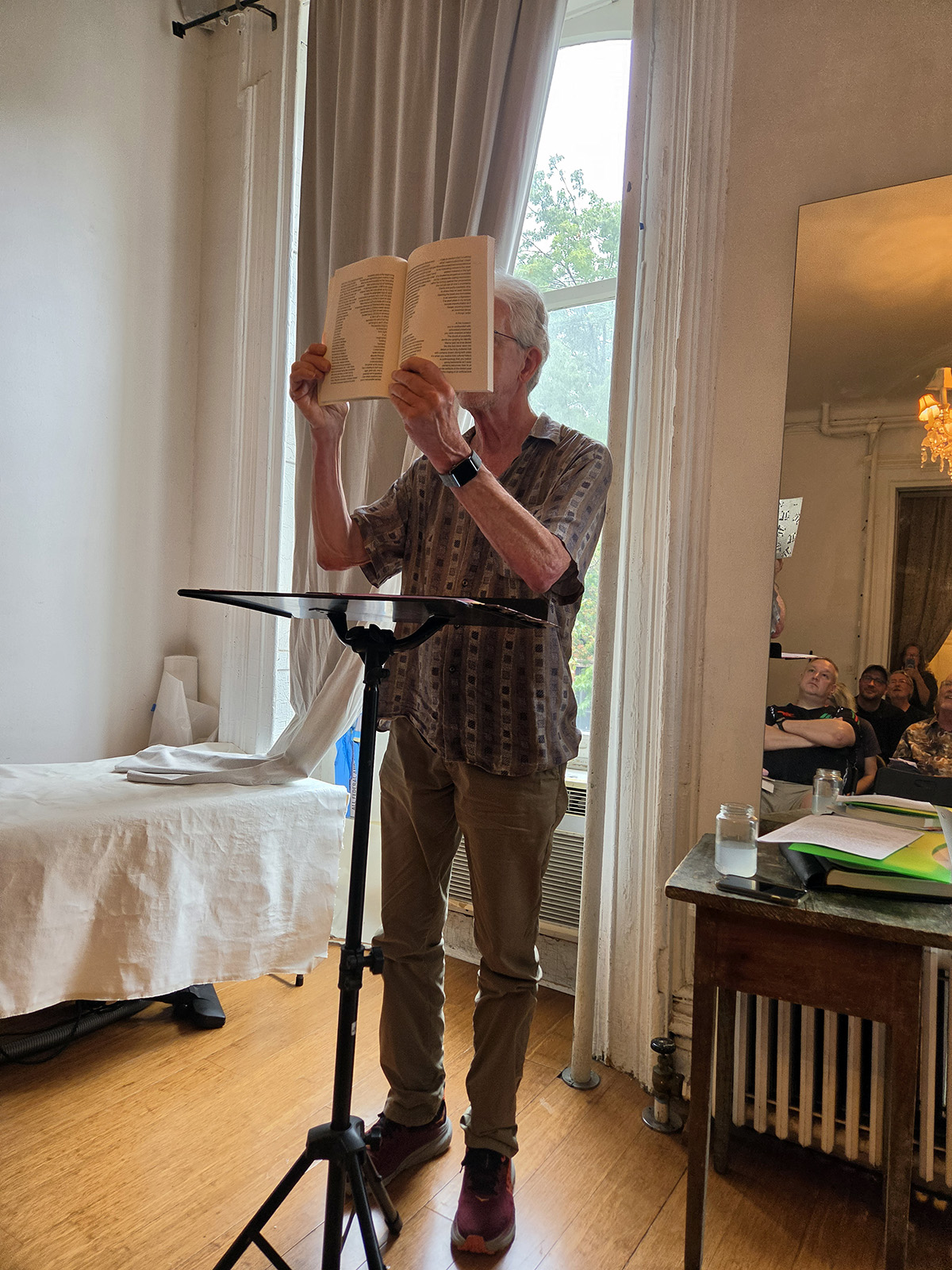
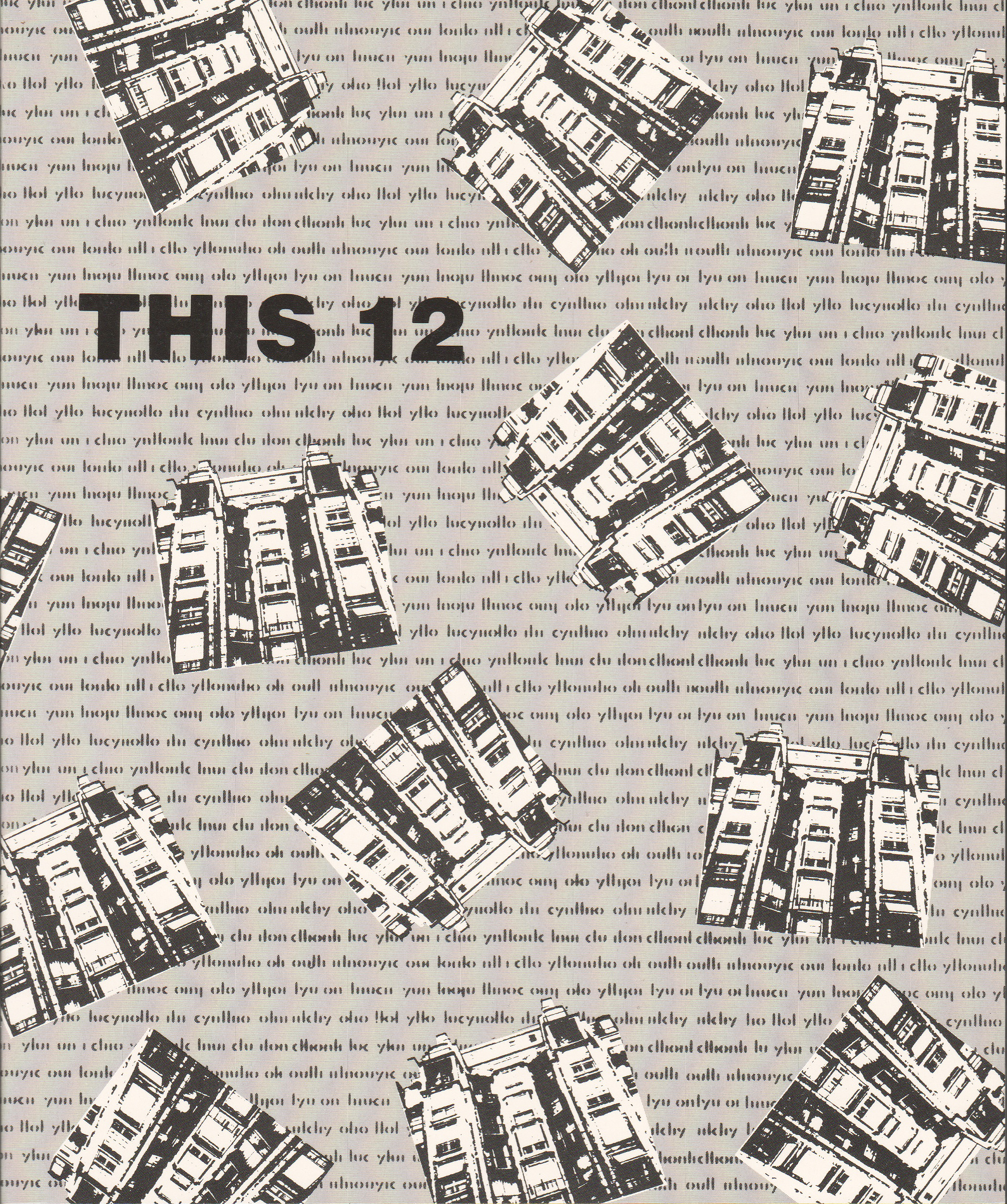 Thus summoning the Nothing in the Zone, the set veered from metaphysics and outrage to conceptual writing and lyric theory. It was followed by Steve’s performative demonstration of a text traversing the Nothing, figured in the blank spaces that were a standout typographic feature of his work from This 12 (1982). Reading across the blanks introduced an element of physical difficulty in the event, as it was not entirely clear where the line would continue (a clinamen that Steve emphasized). This introduction to his methodology was followed by readings from torn-up and overwritten fragments of text, more recently produced, that elicited a similar sense of difficulty, with a final section returning to This 12 to bracket the excursion into contingent meaning. Marjorie’s reading began with a declaration of solidarity in unlikeness and continued with several works from A Complex Sentence, creating a vertiginous cascade of expectation and deferral that was sometimes anchored by classic modernist touchstones and often blurred to the point of hallucination through various devices of repetition. The Zone here was textual, but it set up a narrative piece, shifting scenes to her career as visual artist and residency at Muzeum Stzuki in Lodz, Poland. The precisely detailed observation of the distressed material spaces of the city, decades after the crimes of war, genocide, and occupation, were fittingly activated by the material text. To conclude the afternoon, Lee Ann, Carla, and David Siller staged a three-person reading of Apollinaire’s “Zone” in French and Beckett’s English translation in case there was any doubt about the serious intentions at large. The event was well attended, including these luminaries and hosts, annotated in the spirit of “I Met,” transferred to the zone of the aesthetic:
Bruce Andrews
Sally Silvers
Adeena Karasick
Fiona Templeton
Larry Price
John Mason
Lytle Shaw
Brenda Iijima
Ed Friedman
Mark Turner
Andrew Levy
Tony Torn
Lee Ann Brown
Carla Harryman
& others
Notes and links
Images: Steve Benson, reading from This 12. Photo: Carla Harryman
Covers for A Complex Sentence and This 12On Zone and earlier sampled performances:
Brian Ang, “Barrett Watten, 1999”: here
Entry 17: Reading @ Nuremberg: here
Entry 18: Reading @ Amsterdam: here
Entry 70, Performing the Zone: here
Entry 75, Zones (Paris and Berlin): here