>> Entries <<

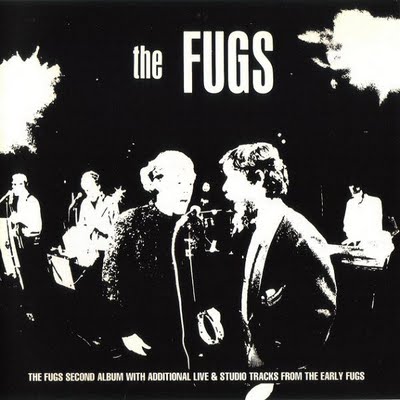
Fugs Second Album.

Recent threads on The Fugs have brought to mind my early encounter with their music, and the band itself, during my first visit to the St. Mark’s Church-in-the-Bowery, November 1965. When asked for a short statement on the Poetry Project for Anne Waldman’s anthology Out of This World: An Anthology of the St. Mark’s Poetry Project, 1966–91, I wrote:

Thinking back on the Poetry Project, I am reminded of an absurdist question posed by Gerard Malanga to Charles Olson in The Paris Review: “A school is place where one can learn something. Can a school lose by giving away its knowledge?” From my first involvement with it in about 1972, The Poetry Project seemed a place where a school of poetry—the New York School—was physically embodied in a group of writers who felt free to develop in the confidence of their mutual (and contending) assumptions, and I certainly learned something from that. … More

Document 09: A Propos Frame

from Frame

Multicolored piles of gravel on black asphalt
behind rows of aluminum sheds.

We put frames around anything we wish.

In one version, wild dogs go for each other’s
throats (they assume the optimal to exist).

Unoccupied territory between opposing sides.

Matter of interest unfolds as a story.
Conflicts put on the table for debate.

Frame: 1971–1990, 260         

The parergon stands out [se détache] both from the ergon [the work] and from the milieu, it stands out first like a figure on a ground. But it does not stand out in the same way as the work. The latter also stands out against a ground. But the parergonal frame stands out against two grounds [fonds], but with respect to each of those two grounds, it merges [se fond] into the other. With respect to the work which can serve as a ground for it, it merges into the wall [on which the painting is hung], and then, gradually, into the general text. … More

In a FaceBook post today, Bay Area artist Scott MacLeod began a thread that concerns me directly and which I will paste here, along with an explanation and answer to his query:

Scott MacLeod: Complete the following: “Displaced agency in social space becomes nearly filmic in its sutured continuity—and the meaning of this temporal autonomy of signification is _____________.” [Barrett Watten]

Miekel And: screen burn

Jakub Calouseque: sequestering of dour libido

Barrett Watten: the Dream Cruise.

… More

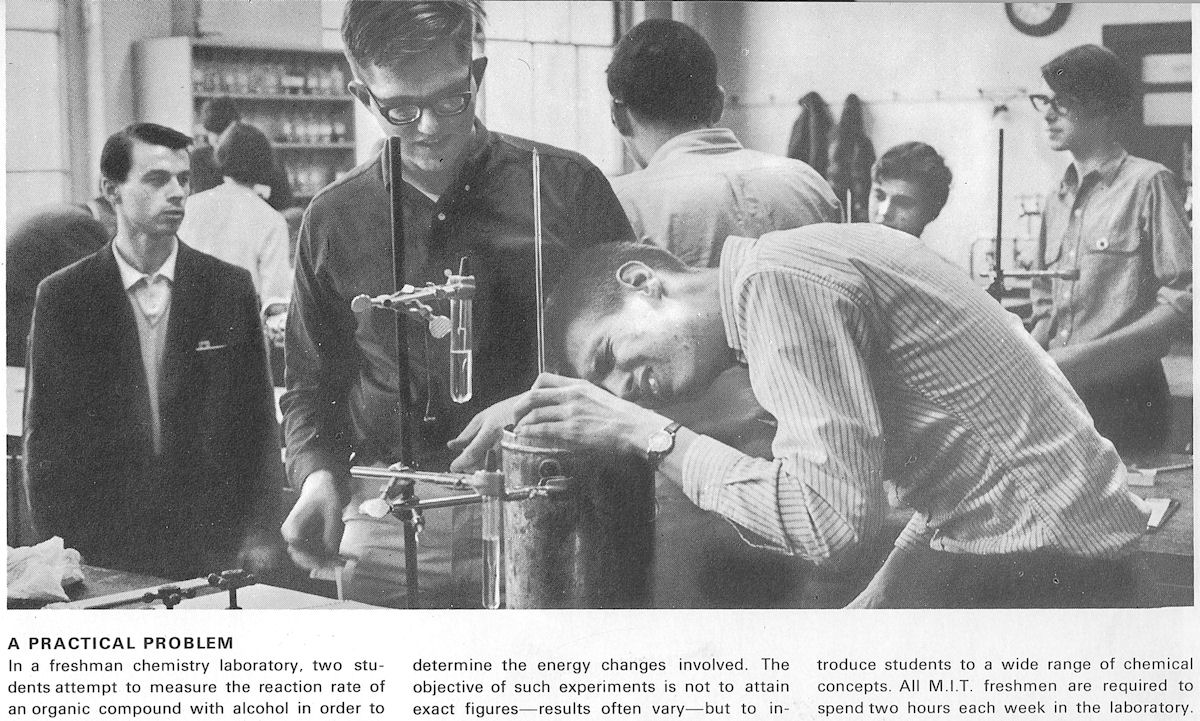
Life magazine commissioned a series of photodocumentary essays for the “Life Science Library” in the mid 60s. I discovered this image quite by accident, several years after it was published and I had left MIT for Berkeley. That is the 17-year-old present author at far right.

From The Engineer, Life Science Library (New York, 1966), 89.

(In memory of Jeanne Alderton Watten Agnew, 19 April 1926–28 January 1990.)

The details are all in this performance of John Cage’s 4′ 33″ for large orchestra, conducted by Lawrence Foster, the Barbican Center, London, 2004. Thanks to Joseph Coates for the link.

 John Cage, 4′ 33″

Document 08: Laura Ulewicz

Stephen Vincent, in response to my entry on Sylvia Plath [Entry 06: “Sylvia Plath’s Collage”], sent a poem by little-known California poet Laura Ulewicz. Ulewicz, who was born in Detroit, spent the early 60s in the U.K., where she met Plath, returned to San Francisco in the late 60s, then lived in Locke, Calif., where she died in 2007. Vincent is editing a selection of her work. His note follows the first section of the poem (which is set in Detroit). Of particular interest to me is the narrative/sentence interface, between confessionalism and the New Sentence:

from Nightmares to Be Born

I. Reality

Elizabeth Barrett hunched up in a book
While the foxes in my head ran round a tree
The foxes in my head ran round a tree
Under the ether. The nurses joked together,
“Freud at five.” Everyone (my father
And mother) disapproved. Baba, I cried
Because they’d bury the foxes that were so happy.
I hid the foxes alive inside my crying.

The Brontë sisters—But my own real friends.
Detroit a sex machine. Joey
And I, thirteen, peddling into Duns Scotus.*
Trees. Sanctuary for birds, God.
But then she was racing, racing. The boys put a stick
In my spokes. Falling I hit them. Hit them old
As the naked man in the basement who pumped his head
And lied. Oh, if I should grow up Beatrice.

… More

Document 07: L’événement

Non-Events I

Morning turns inside out. The engine
        is diseased, as it floats along
        approximate ice. High contrast
geometry of persons straightens out from
        meandering road. Desperate focus
never looks back. Progress makes possible
        a paralyzed attendant, set apart
        an end to himself (moral noise).

 —Frame: 1971–1990 (Sun & Moon, 1997), 13

Avenue Poupelard in the center of this devastated city pulses with life and reeks of death almost two weeks after the earthquake. Before what Haitians call “the event,” it was a chaotically bustling street of lottery kiosks and cybercafes, gated homes and shacks, churches and schools. Now, a coffin maker spends the day hammering wood as fast as he can get it, while the body of a 6-year-old boy decomposes in the ruins of a school. … More

The astonishment (aftershocks) bordering on terror (tremor), the (tin) horror and awesome shudder (shaking), which grip the spectator in viewing (victims) mountain ranges towering to (of) the heavens, deep ravines (research) and the raging torrents in (to) them, deeply shadowed wastelands (Wednesday) inducing melancholy reflection, etc. (but), is in view of the safety (shaken) in which he (we) knows himself to be, not actual (agency) fear, but (and) only an attempt (article) to involve (injured) ourselves (otherwise) in it by means of the (not) imagination, in order to (be) feel the power of (by) that very faculty, to combine (crumbled) the movement (measures) of the mind (more) thereby aroused with its (her) calmness (collapse), and so to be superior (seismic) to nature within us, and thus (toll) also that outside (ongoing) us, insofar as it can (who) have an influence on our feeling (fearing) of well-being.

—Kant, Critique of the Power of Judgment, trans. Paul Guyer (152);
“Fierce Quake Devastates Haitian Capital,” New York Times, 13 January 2010

Document 05: Haiti and Ideal

To Toussaint L’Ouverture

 Toussaint, the most unhappy man of men
   Whether the whistling Rustic tend his plough
   Within thy hearing, or thy head be now
Pillowed in some deep dungeon’s earless den;
O Miserable Chieftain! Where and when
   Wilt thou find Patience? Yet die not; do thou
   Wear rather in thy bonds a cheerful brow:
Though fallen thyself, never to rise again,
Live, and take comfort. Thou hast left behind
   Powers that will work for thee; air, earth, and skies;
There’s not a breathing of the common wind
   That will forget thee; thou hast great allies;
Thy friends are exultations, agonies,
   And love, and man’s unconquerable mind.

—William Wordsworth

… More

Link 05: Plasma in Italian

“Plasma,” the lead poem in Plasma/Paralleles/”X” (Tuumba, 1979), has been translated into Italian by Gherardo Bortolotti in the online journal G A M M M (joining previous translations into French, Dutch, and site-specific sculpture). The text and link are provided below. The next thing for me to do, clearly, is to attempt a homophonic translation!

Plasma

Un paradosso è mangiato dallo spazio che gli sta attorno.

Ripeterò ciò che ho detto.

Far diventare una città una stagione è come indossare occhiali da sole dentro un vulcano.

Non dimentica mai i suoi sogni.

L’effetto della mancanza d’effetto.

… More