Event 48: The New 1–10

The Other Fabulous Reading Series
The Long Haul Infoshop
Berkeley, California
2 January 2015; info here
with Brian Ang, Patricia Murphy, and Chelsea Tadeyeske

“The New 1–10”

Introduction, Questions of Poetics (MS)
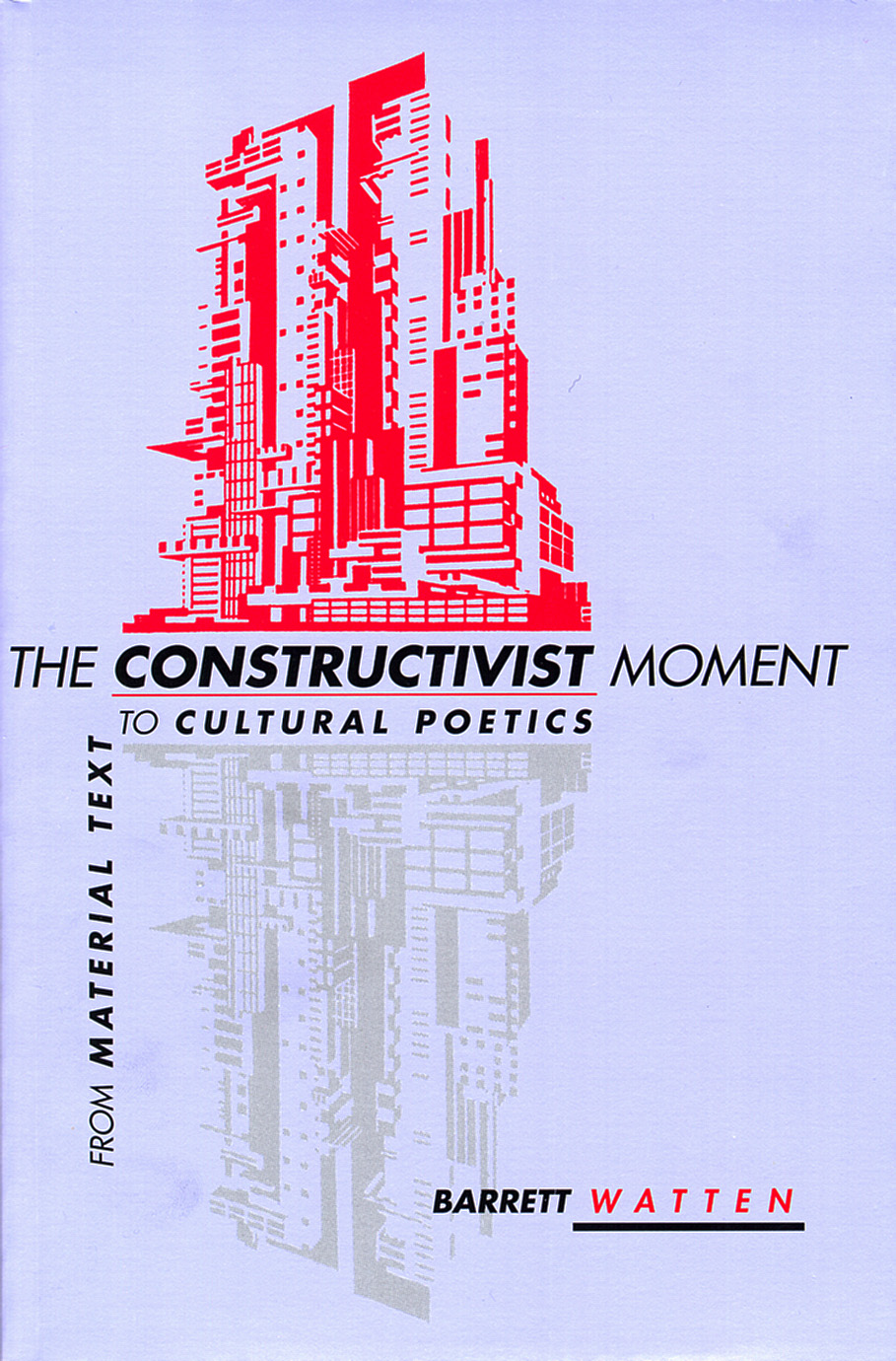
Zone LI (in Armed Cell 7) + The Grand Piano 10, 000–00
Zone LII + The Grand Piano 9, 000–00
Zone LII + The Grand Piano 8, 000–00
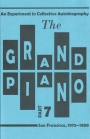
Zone LIII + The Grand Piano 7, 000–00
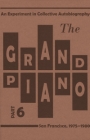
Zone LIV + The Grand Piano 6, 000–00
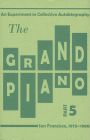
Zone LV + The Grand Piano 5, 000–00
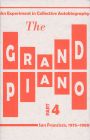
Zone LVI + The Grand Piano 4, 000–00
Zone LVII + The Grand Piano 3, 000–00
Zone LVIII + The Grand Piano 2, 000–00
Zone LIX  + The Grand Piano 1, 000–00

(Thanks to Brian Ang for his reading of “Barrett Watten, 1999“)


Modernist Studies Association
University of Pittsburgh
6–9 November 2014

“Modernism @ Stunde Null: Lee Miller, Hannah Höch, and A Woman in Berlin”

This presentation is a part of a larger project on the intersection of literary and visual modernism with the “moment” of destruction that ended World War II: Stunde Null or Zero Hour. A range of modernist poets—Eliot, Pound, Williams, H.D., Breton, and later Olson, Plath, Duncan, and others—interrogated universal ethical and aesthetic values through this “moment.” In this presentation, I read the literary and visual testimony of three women caught up in the moment of destruction as witnesses, victims, or even perpetrators. Lee Miller’s war journalism, published in Vogue through the war, is complemented by the traumatic record and reparative work of her war and Holocaust photography. Hannah Höch, the dada painter and collagist, emerged from internal exile outside of Berlin to participate in the first modernist exhibitions in the destroyed city after Stunde Null; these early exhibitions set the stage for the recuperation of modernism after its banishment and humiliation under Nazism. Finally, the anonymously authored A Woman in Berlin, documenting the survival strategies necessary in a climate of mass sexual predation by Soviet troops immediately after the defeat, may be read in relation to search for or skepticism about universal values in modernism. In each case, writing or art not only add their testimony to history but posit and test new ways of being during and after the experience of trauma—they are prospective and retrospective.

European Network for Avant-Garde
and Modernist Studies
University of Helsinki, Finland
29–31 August 2015

“Language Writing’s Concrete Utopia: From Leningrad to Occupy”

Language writing has a differential, both concrete and critical, relationship to the horizon of utopia—which, we should remember, is a “nonplace,” an alternative time and space that is only momently (or eventally) possible as lived experience. “Language” itself offers an expansive and holistic medium for poetry as a ground for combinatorial fantasy and potential agency that simultaneously invokes radical particularity, material opacity, spatial alterity, and temporal deferral; “language” is a poetic nonsite that may be powerfully transformative, if not finally utopian, in its radical potential. In this paper, I will chart the relationship of Language writing to the horizon of utopia at four specific moments: 1) in its development of poetic practice in radical formal terms, as a social formation, and as a collective practice (seen in terms of the material history of its publications and performances); 2) on the occasion of four Language writers’ participation in a conference on avant-garde poetics in Leningrad, in the former Soviet Union at the end of Perestroika (1989), and our subsequent multi­auth­ored account, Leningrad: American Writers in the Soviet Union (1991); 3) with the completion of the multiauthored The Grand Piano: An Experiment in Collective Autobiography by ten Language writers who met in San Francisco in the 70s (2006–10); and 4) after the performance and reception of The Grand Piano in a series of readings in the Bay Area during the Occupy movement of 2011 and the convergence of certain tendencies of the Occupy movement with avant-garde poetries such as Language writing. The convergence of Language writing with the events of Occupy, and their continuation as a radical democratic, anticapitalist politics, is an exemplary instance of concrete utopia.


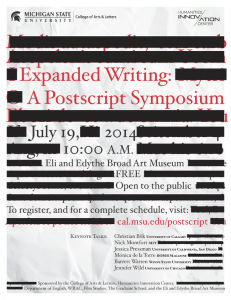
Expanded Writing:poster
A Postscript Symposium
19 July 2014
(after On Kawara)

Jessica Pressman
Nick Montfort
Monica de la Torre
Jennifer Wild
Christian Bök
Laura McGrath
Elizabeth Floyd
Justus Nieland
Yesomi Umolu
Marcus Merritt
… More

OLYMPUS DIGITAL CAMERA

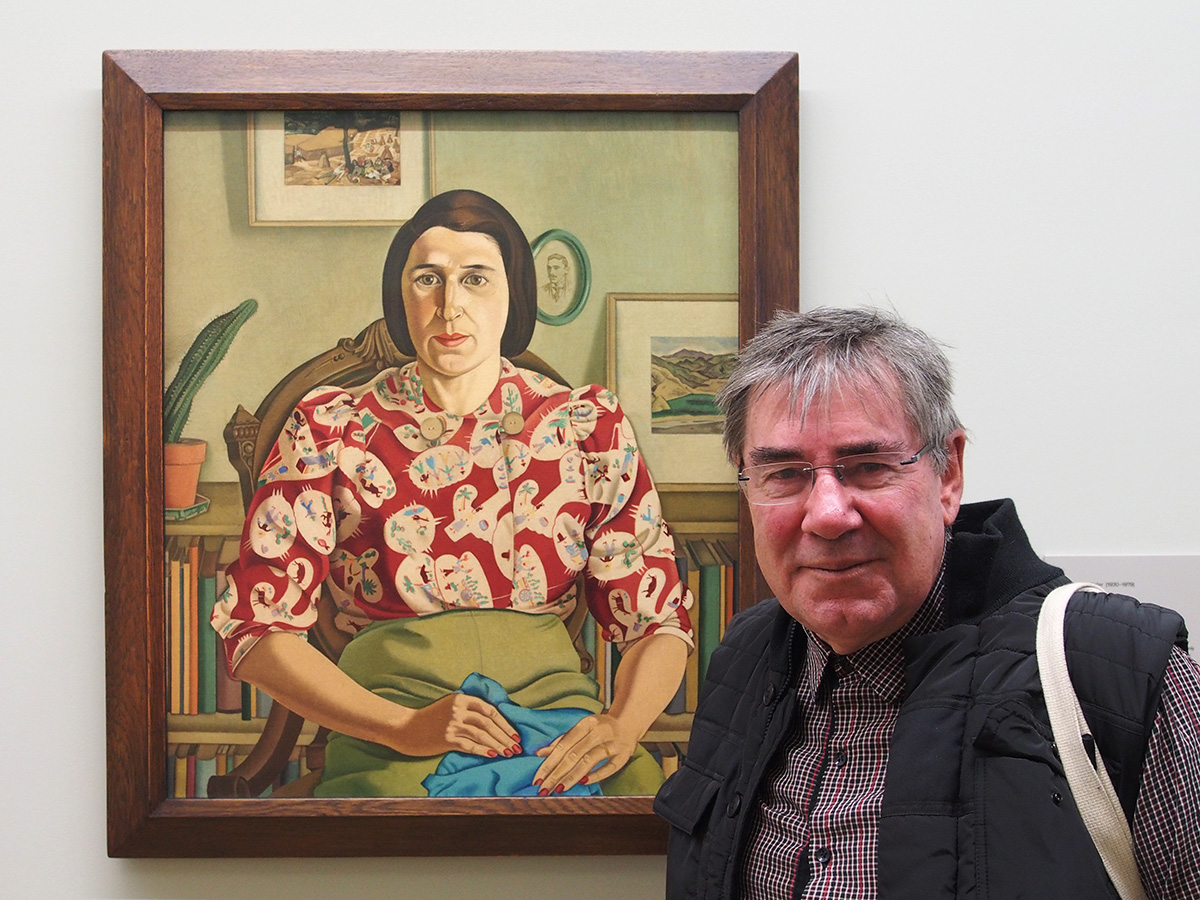
Wystan Curnow and Portrait of Betty Curnow by Rita Angus, 1942, Auckland. Photo: BW

University of Otago, Dunedin
University of Auckland
9–15 July 2014
(with Carla Harryman)

Jacob Edmond
Sally Ann McIntyre
Campbell Walker
Kim Pieters
Catherine Dale

Murray Edmond
Michelle Leggott
Wystan Curnow
Roger Horrocks
Greg Kan
Ya-wen Ho

Kate Lilley, Chinese restaurant, Sydney. Photo: BW

Kate Lilley, Sydney. Photo: BW

Experimental: A Symposium
on Experimental Writing
University of Sydney
7–8 July 2014
(with Carla Harryman)

Luke Harley
Karen Burckhardt
Kate Lilley
Melissa Hardie
Lyn Hejinian
Kate Fagan
Ann Vickery
Andy Carruthers
Astrid Lorange
Pam Brown
… More

China

Ancient Chinese Ceramics Gallery. Museum catalogue. Shanghai: Shanghai Museum, n.d.
Chen Haiwen, ed. Old Industries in Shanghai. Shanghai: Shanghai People’s Fine Arts Publishing House, 2010.
Childhood Friends Getting Fat: Moving Image of Liu Xiaodong, 1984-2014. Exhibition guide. Shanghai: Minsheng Art Museum, 2014.
Chinese Calligraphy Gallery. Museum catalogue. Shanghai: Shanghai Museum, n.d.
Huang Yan. Yan Ink: Ink Research Series. Exhibition guide. Shanghai: Leo Gallery, 2014.
Huang Yaping. Sun Yat-Sen in Shanghai. Trans. Pan Qin. Shanghai: Shanghai Century Publishing Co., 2010.
Köppel-Yang, Martina, ed. Advance through Retreat. Exhibition guide. Shanghai: Rockbund Art Museum, 2014.
Li Dong. Beginner’s Chinese Dictionary. Tokyo: Tuttle Publishing, 2004.
Ming Yang Pei, ed. Chinese Propaganda Poster Collection. Shanghai: Shanghai Propaganda Poster Art Center, 2013.
Shanghai Lady Postcards. Shanghai: Shanghai Propaganda Poster Art Center, n.d.
… More

OLYMPUS DIGITAL CAMERA

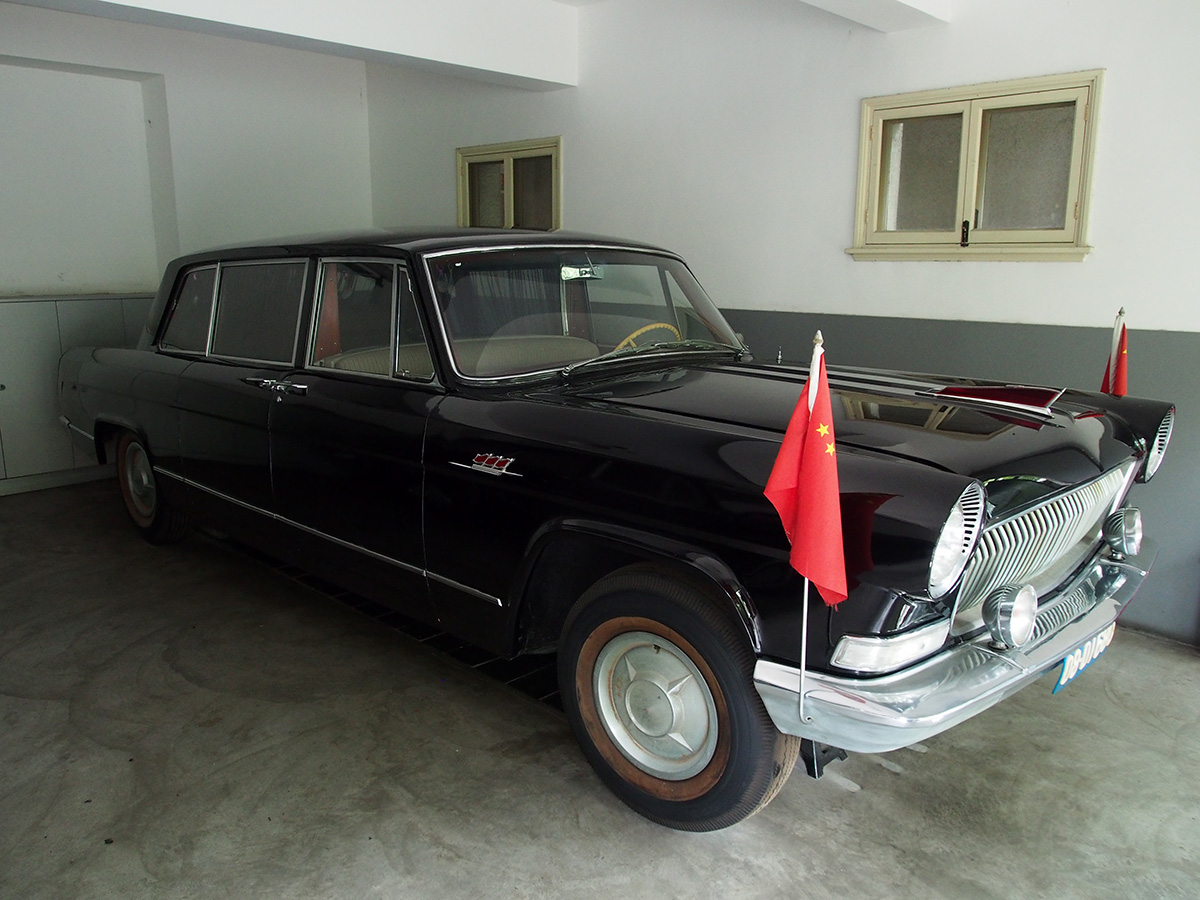
Soong Ching-ling’s Soviet sedan. Photo: BW

From 24 June to 2 July 2014, I was in Shanghai, attending an academic/arts conference and seeing as much of the city as possible when not otherwise engaged. The meetings took place at Shanghai Jiao Tong University; jiao tong means “transportation” but is the equivalent of “polytechnic.” Many of the early technical universities in China were concerned with various forms of transportation. In the case of Shanghai Jiao Tong University, the major focus was maritime engineering; there is a massive rusted iron anchor in a courtyard between classroom buildings where there might be the statue of a humanist or political figure in another context. Shanghai, of course, is built on maritime traffic on the Yangtze River, the scale of which was evident in the massive materiality of the anchor. There were many such confrontations with massive scale in Shanghai, from its population of 23 million to the waves of public housing and corporate building that extend outward in all directions to its burgeoning infrastructure, particularly elevated highways and metro system. Jiao tong seems to have been an important concept. Now, it is being reinterpreted to include more liberal forms of scholarship, as witness the arts and humanities program that was our host. A canny citation of Confucian scripture permits this broader, more inclusive reading.

*****

… More

ASAP 6 (Association for the Study
     of the Arts of the Present)
Shanghai Jiao Tong University

27–29 June 2014
(after On Kawara)

Brian McHale
Esther Gottlieb
James Steintrager
Jonathan Eburne
Matthew Hart
Amy Elias
Liu Kang
Wang Ning
Jacob Edmond
Earl Jackson, Jr.
Yu-Chieh Lee
… More

OLYMPUS DIGITAL CAMERA

Ai Wei-wei, Moon Chest, 2008. Photo: BW


ASAP 6 (Association for the Study
     of the Arts of the Present)
Shanghai Jiao Tong University

27–29 June 2014 [here]

Regions of Avant-Garde Practice: Asia
Jacob Edmond, “Critical Translation”
Earl Jackson, Jr., “‘Asia’ from Variable Proximities”
Barrett Watten, “Negative Globality in the Chinese
Avant-Garde”
11:30 AM–1:00 PM, Friday, 27 June

… More