Yesterday was the first day since beginning this project that I was unable to add daily content. My initial plan had been to add “something” on a daily basis, and to make the necessity of doing that at such a frequency part of determining what “something” is (see Entry 07, “Is This Anything”). I remain interested in the exterior, conceptual dynamics of such a frame—after On Kawara’s “I Got Up” project as a task of daily self-understanding, over the long run. Yet I also recognize, in refusing conceptual dogmatism, that there are other exigencies. … More
February 4, 2010
Document 10: Girl Scout Nation
Sampling a fragment from Yedda Morrison’s Girl Scout Nation (Displaced Press, 2008); cf. trauma in the previous post. In Morrison’s work trauma is distributed, refunctioned, “naturalized.” Poet and ideal reader become identified the inviolable/violated figure of the Girl Scout who must see behind nature’s naturalization, where she finds:
in that stalker suit you’re hard to see
tracking prey against the wind
song of the bludgeoned Killdeer
oft empty twang
(we didn’t see it)
one looks for clues in the natural world
when girls go missing
for example the hair wad smells woodsy
February 3, 2010
Link 08: Reznikoff Reads Holocaust
from Research
A number of Jews had to drink seawater only
to find out how long they could stand it.
In their torment
they threw themselves on the mops and rags
used by the hospital attendants
and sucked the dirty water out of them
to quench the thirst
driving them man.
—Charles Reznikoff, Holocaust, 9–10
How might such a poem be read?
http://writing.upenn.edu/pennsound/x/Reznikoff-Holocaust.php
February 2, 2010
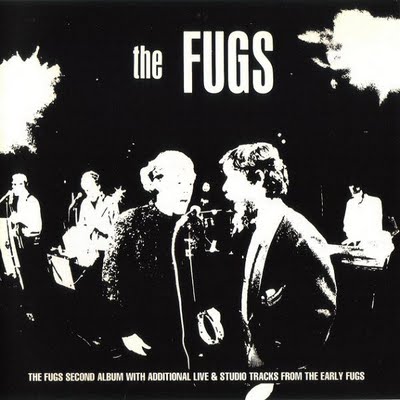
Entry 08: Homage to Lee Crabtree
Recent threads on The Fugs have brought to mind my early encounter with their music, and the band itself, during my first visit to the St. Mark’s Church-in-the-Bowery, November 1965. When asked for a short statement on the Poetry Project for Anne Waldman’s anthology Out of This World: An Anthology of the St. Mark’s Poetry Project, 1966–91, I wrote:
Thinking back on the Poetry Project, I am reminded of an absurdist question posed by Gerard Malanga to Charles Olson in The Paris Review: “A school is place where one can learn something. Can a school lose by giving away its knowledge?” From my first involvement with it in about 1972, The Poetry Project seemed a place where a school of poetry—the New York School—was physically embodied in a group of writers who felt free to develop in the confidence of their mutual (and contending) assumptions, and I certainly learned something from that. … More
February 1, 2010
Document 09: A Propos Frame
from Frame
Multicolored piles of gravel on black asphalt
behind rows of aluminum sheds.
We put frames around anything we wish.
In one version, wild dogs go for each other’s
throats (they assume the optimal to exist).
Unoccupied territory between opposing sides.
Matter of interest unfolds as a story.
Conflicts put on the table for debate.
—Frame: 1971–1990, 260
The parergon stands out [se détache] both from the ergon [the work] and from the milieu, it stands out first like a figure on a ground. But it does not stand out in the same way as the work. The latter also stands out against a ground. But the parergonal frame stands out against two grounds [fonds], but with respect to each of those two grounds, it merges [se fond] into the other. With respect to the work which can serve as a ground for it, it merges into the wall [on which the painting is hung], and then, gradually, into the general text. … More
January 29, 2010
Event 05: Poet/Critic in Expanded Field
“The Expanded Object of the Poetic Field; or, What Is a Poet/Critic?”
Keynote address, Poetry and Public Language, University of Plymouth, U.K., March 2007; in Poetry and Public Language, ed. Tony Lopez and Anthony Caleshu (Exeter, U.K.: Shearsman Press, 2007). Publicity flyer/ordering information here; the essay can be accessed in pdf here.
In March 2007, Lyn Hejinian and I were invited by U.K. poet Tony Lopez to lecture at a poetics conference at the University of Plymouth (see links above). My talk addressed transformations in the nature of the poem as object, and employed in terms of the relation of poet and critic, using a series of works from my own oeuvre. The claim that one could speak as both poet and critic proved to be controversial in England, where distinct roles must be perserved as, respectively, object-producing and value-conferring. … More
January 28, 2010
Image 06: Portrait of the Artist as Engineer
(In memory of Jeanne Alderton Watten Agnew, 19 April 1926–28 January 1990.)
January 27, 2010
Link 06: 4′ 33″ for Large Orchestra
The details are all in this performance of John Cage’s 4′ 33″ for large orchestra, conducted by Lawrence Foster, the Barbican Center, London, 2004. Thanks to Joseph Coates for the link.