January 18, 2010
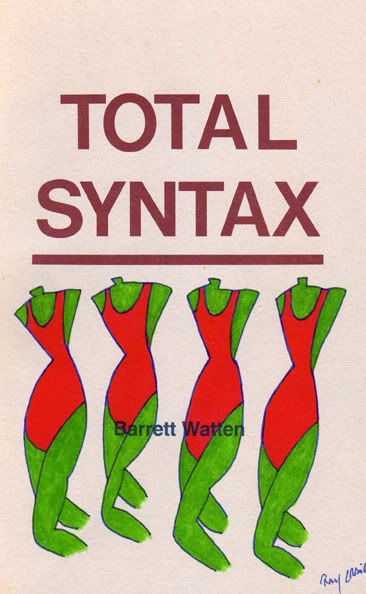
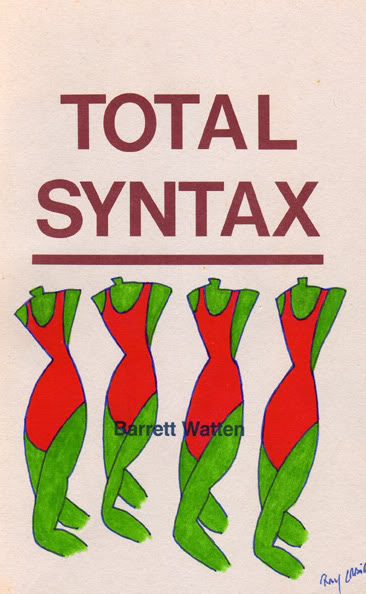
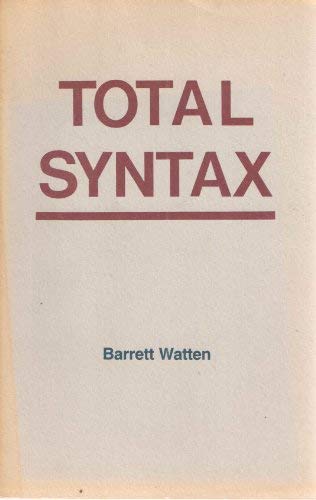
Image 05: Total Syntax Détournement
January 17, 2010
Event 04: Johnson County Courthouse
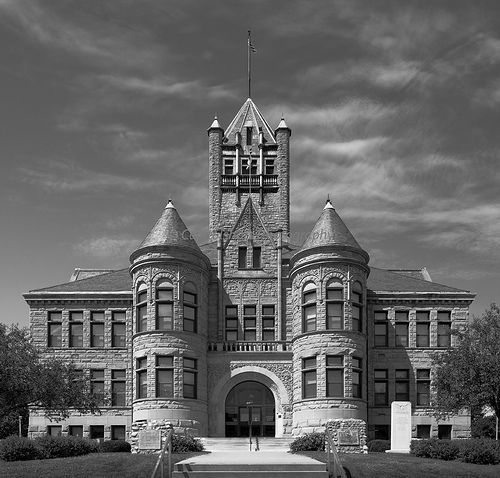
Johnson County Courthouse, Iowa City.
I am reminded by Rod Smith’s move to Iowa City of my own arrival in January 1970. I had driven a driveaway Buick from California with several other students; stopped over in Iowa City to drop off my things and just miss an encounter with Alice Notley, then moving to New York; and brought the car to its owner near Kosciusko Boulevard in Chicago, returning by bus. That first night in Iowa City I slept in the car in front of the Johnson County Courthouse, a building renowned for its stolid but eerie architecture. In the morning, when I awoke, I saw farmers dragging fox carcasses up the stairs of the courthouse for bounty. … More

January 16, 2010
Entry 06: Sylvia Plath’s Collage
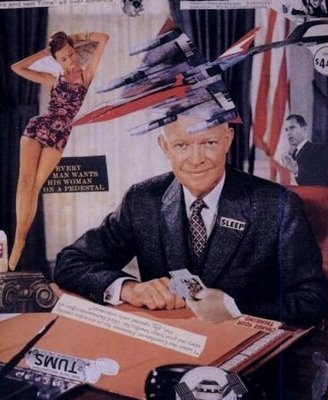
Sylvia Plath, collage, 1960.
Like many who identified with the epochal chasm between The New American Poetry and mainstream verse of the 50s and 60s (whose benchmark anthology was Hall, Pack, and Simpson’s New Poets of England and America), I have been skeptical about Sylvia Plath; the cult of her suicide; the Plath, Sexton, Lowell, Berryman quadriviate; and any kind of confessionalism. As mainstays of workshop writing, these figures set in place terms for the personal lyric that is as close to a norm for verse culture as we have had—to the point that it becomes a cultural norm. But in the period since Plath’s mainstream and feminist reception in the 60s and 70s, much has changed. Lyric poetry has come under pressure from Language writing, and revisionist contextual and gendered readings have opened up Plath’s poetics, allowing one to see her negativity as critical and cultural, not simply formal and expressive.
January 15, 2010
Image 04: The Author as Site
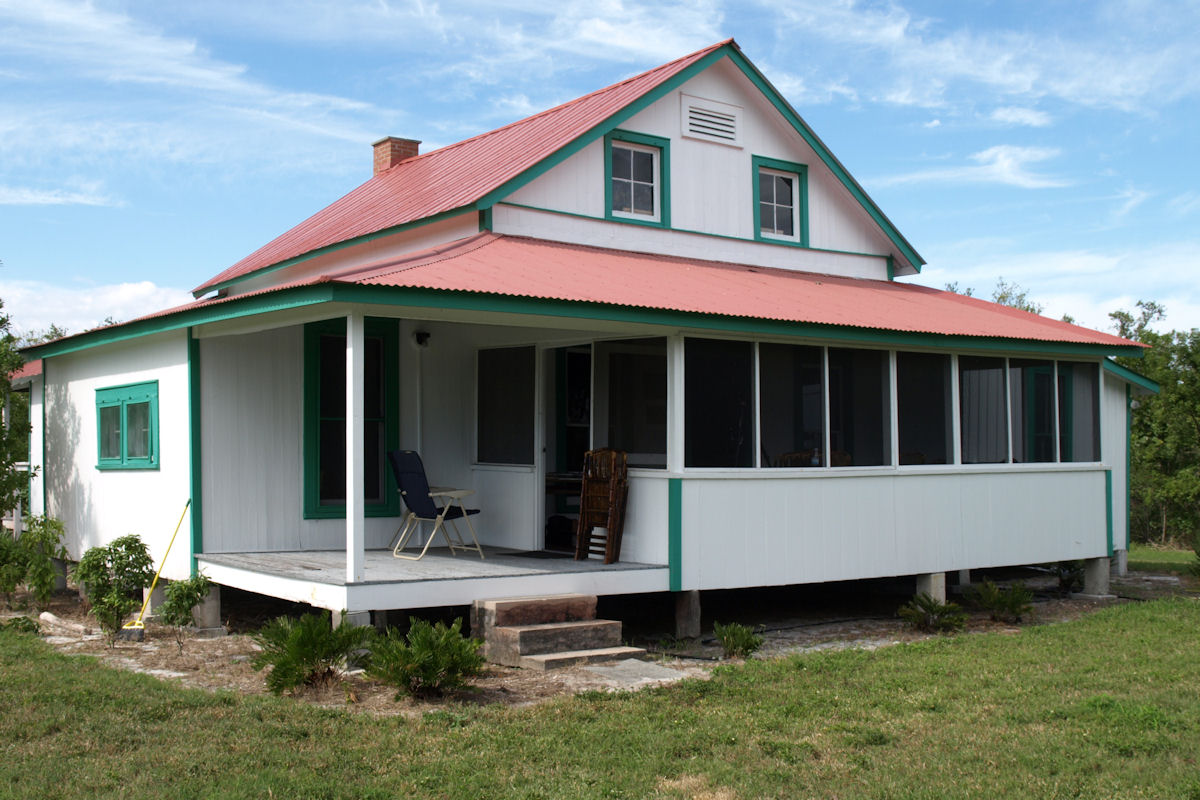
Laura (Riding) Jackson Home, Orchid Island, Fla. Photo (c) Barrett Watten 2009.
- At various points in my lectures on Laura (Riding) Jackson last November, I suggested that her work could be compared to the literal monument that the LRJ Home Preservation Project had displaced and transported from its original site in Wabasso, across the Intercoastal Waterway to Orchid Island. (Riding) Jackson’s work on language suggests an overarching project of meaning as “site,” with the act of rational definition, perhaps, plotting its contours. … More
January 14, 2010
Entry 05: Criticizing the Poet/Critic
In today’s mail came the current Critical Inquiry (36, no. 2; Winter 2010), which I earlier noticed would contain an essay on George Oppen (John Wilkinson, “The Glass Enclosure: Transparency and Glitter in the Poetry of George Oppen”). I had been looking forward to that discussion with interest, in terms of Oppen but also of where poetry criticism seems to be going in CI, after some recent questionable efforts. “Poetry” itself is still a tarnished critical category, with the New Lyric Studies and Conceptual Writing failing to provide direction.
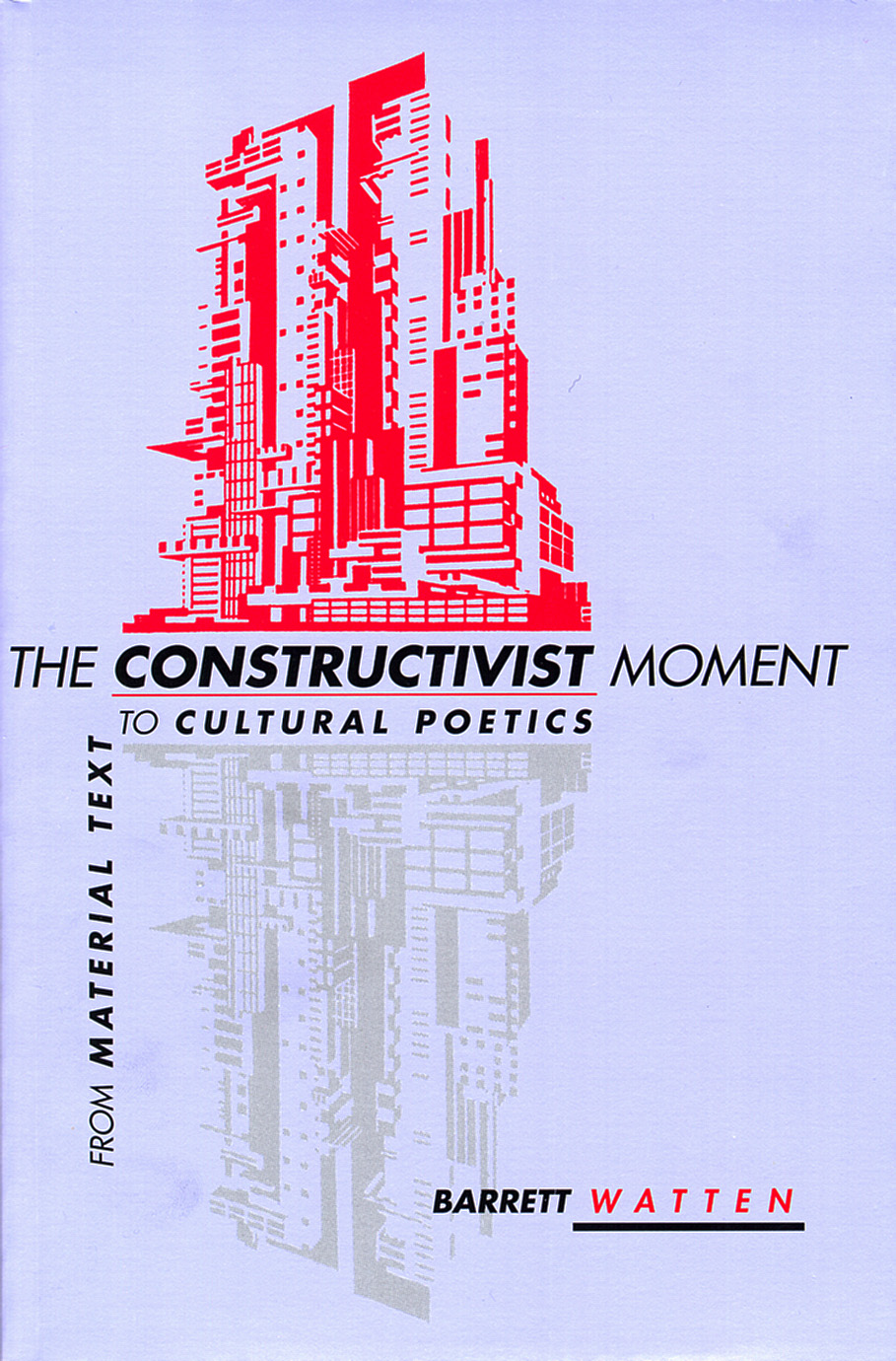
Flipping through, as one might likely do, scanning footnotes and catching the drift, I came up short at the penultimate paragraph: a strained mention of my Constructivist Moment in the service of—what point? That the split between Oppen’s poetics of “integrity” and his Left politics remains problematic, pointing to a tendency in American poetics to presume a convergence of politics and form that collapses under scrutiny? This is the quote:
The fantasy entertained by Barrett Watten of an American “constructivist moment” seeks to arrogate William Carlos Williams and Vladimir Mayakovsky as dialectically linked forefathers for Language Poetry. Watten seems ignorant of the two poets’ meeting in an apartment in East Fourteenth Street in Greenwich Village on 19 September 1925. Mayakovsky’s reading was a profound experience for Williams, according to his biographer—a touchstone for epic revolutionary art exposing the bombast of Carl Sandburg, even if its influence cannot be discerned directly in Williams’s poetry. But Williams continued to publish both poetry and prose through the Depression and the period of the Cultural Front . . . . (237–38).
January 13, 2010
Event 03: Laura (Riding) Jackson Home
“The House of Language: Laura (Riding) Jackson’s Rational Meaning
and the Truth of Experience”
10 AM–12 PM, Wednesday, November 18, 2009
Laura Riding Jackson House/Environmental Learning Center, Vero Beach, Fla.
Sponsored by Florida Atlantic University and the Laura (Riding) Jackson Foundation
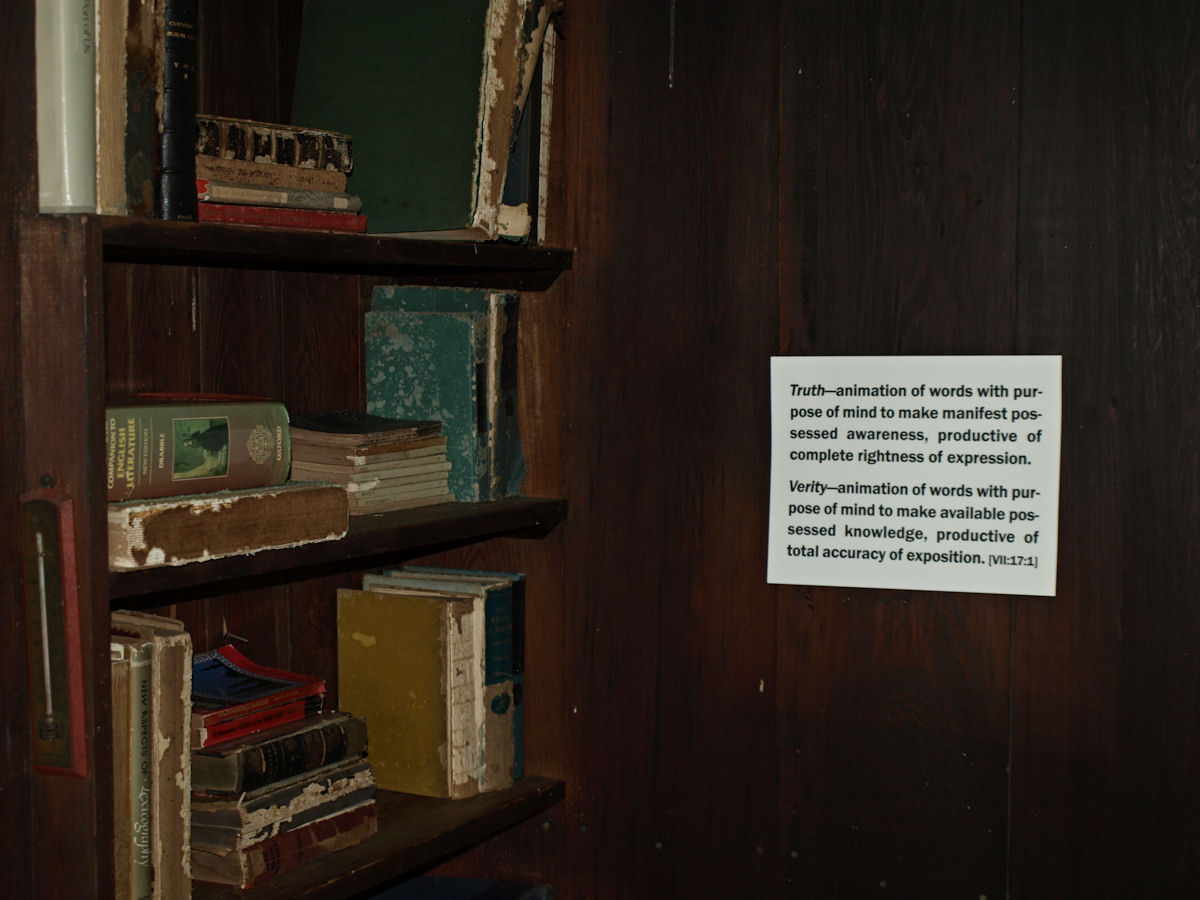
Installation of text from Rational Meaning at the Laura (Riding) Jackson House, Orchid Island, Fla., November 2009. Copyright (c) Barrett Watten 2009.
On 18 November 2009, I lectured on Laura (Riding) Jackson’s culminating work, Rational Meaning, which she wrote with Schuyler B. Jackson until his decease and then finished herself. … More
January 12, 2010
Entry 04: Computer Visualization
One should inscribe the letter A on the heart of one’s shadow.
[Next], without blinking, one should gaze fixedly at the latter A [drawn] at the heart [of the shadow],
And focus one’s awareness upon [the letter A].
Then, once the eyes have grown numb [through strain],
One should look up into the center of the cloudless sky,
At which time one’s own form should become visible in the sky.
One should then know that if the head and body of this [reflected image] are intact, and [the image] is pale in colour,
This is an auspicious sign that there will be no obstacles and that one will not die [imminently].
—Tibetan Book of the Dead, trans. Gyurme Dorje (159)
GLOSS: in the midst of computer malfunction, visualization exercizes restore a sense of well being. Computers are machines for visualization exercizes, but these must not be accepted as automatic. The letter A stands out beyond the dysfunctional interface. One should stare at the computer until the eyes grow numb and the screen itself disappears. When the screen disappears, one’s own form is made visible. This is the letter A on the heart of one’s shadow.
January 11, 2010
Link 02: Harryman’s Adorno’s Noise
From Stephen Cope at Essay Press: Carla Harryman discusses Adorno’s Noise and more in an interview recently published in [Inter]sections—the American Studies journal from the University of Bucharest, Romania:
http://www.americanstudies.ro/?article=55
Links to other reviews of Adorno’s Noise:
Rain Taxi review by Kit Robinson (posted on EMU Creative Writing Blog):
http://cw.emuenglish.org/?p=204
Jill Darling’s review in HOW/2 special feature “Reading Carla Harryman”:
http://www.asu.edu/pipercwcenter/how2journal/vol_3_no_3/harryman/darling.html
January 10, 2010
Event 02: MLA Offsite Reading 2009
Thanks to Aldon Nielsen for posting links to the 2009 MLA Offsite Reading. Here is the YouTube video of my section, one section of Grand Piano 9, preceded by Eric Selland’s reading of translations from the Japanese:
http://www.youtube.com/watch?v=9GwV4QSeQSQ
For all the videos of the reading:
http://heatstrings.blogspot.com/2010/01/mla-off-site-reading-2009-video.html
January 9, 2010
Link 01: This at Wikipedia
This, the literary magazine I co-edited with Robert Grenier from 1971–74 and continued to edit and publish until 1982, now has a Wikipedia entry: http://en.wikipedia.org/wiki/This_Press. This is how the entry currently reads:
This (magazine)
- For the Canadian political magazine, see This Magazine.
This is a poetry journal associated with what would later be called Language poetry.
First three issues edited by Robert Grenier and Barrett Watten (1971-1973); subsequent nine issues edited by Watten (1973-1982) who also published monographs under the imprint This Press (1974?-1986?).
External links
-
Barrett Watten, comp., “This 1-12 Index” (Oakland, CA: This Press, 1983). Digital facsimile edition published by Eclipse.
Poetics
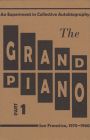
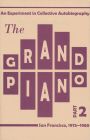
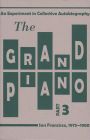
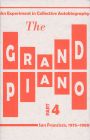
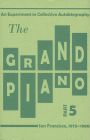
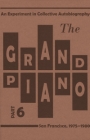
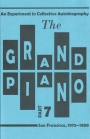
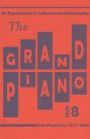
The Grand Piano