CALL FOR PAPERS

Refunctioning Poetics

The Louisville Conference
on Literature and Culture After 1900

University of Louisville, February 20–22, 2020
Organizer: Barrett Watten / contact by September 16

This is a call for one or two participants for a session on the “refunctioning” of literature (focusing on poetry and poetics in terms of “the making of the work” but including other genre possibilities). Recent texts suggesting such a “refunctioned” poetics include Lyn Hejinian’s Positions of the Sun; Kevin Killian’s amazon.com writings; Eugene Lim’s cyber-novels; and others proposed by panel participants. The concept of “Refunctioning” (Umfunktionierung) comes from Walter Benjamin, via Bertolt Brecht, in his keystone essay “The Author as Producer” (1934). How can new forms and genres of poetics be seen as “refunctioning” the aesthetic as political, given that Benjamin’s world has been “refunctioned” in the “new presentism” we live and suffer? Returning to Benjamin’s 1934 essay, in the context of the struggles against fascism but also in contestation with socialist realism, the panel asks, what does “refunctioning” authorship, and the literary and cultural work, mean in the present? Participants may approach this question by rethinking the status of the author; theorizing poetic making from a gendered perspective; seeing material production and digital reproduction as central for rethinking poetics as “the making of the work”; and reading new genres of experimental writing, after the Millennium, that incorporate its precarious presentism.

… More

CALL FOR PAPERS

Modernity @ Zero Hour: 
The Question of the Universal
and the Origins of the Global Order

American Comparative Literature Association
Chicago, March 19–22, 2020

This seminar will address the relationship between literary modernism (traditionally seen as having its end date at 1945, but expanded to include work in genres not usually associated with high modernism) with the Zero Hour of the end of World War II (seen as a crisis of modernity that decisively set in place processes of globalization). Seminar participants will read works of modernism, from American, European, and non-Eurocentric sources, that imagine and constitute while they challenge and critique “the universal” as an entailment of modernist forms (which are often seen as characterized by forms of parataxis and the foregrounding of particularity that suspend any notion of the universal). In the process of critiquing modernist particularity, we will also interrogate the vertical, idealist, and even authoritarian aspects of mid-century modernism and their entailments for the post-1945 order. High modernist authors could include Eliot, Woolf, Williams, Pound, Breton, Stein, Beckett, and so on in the Eurocentric tradition, but these figures may be placed next to lesser-known and nonliterary figures, movements, genres, and works. We would then try to connect the aesthetic “universalist” aspect of these authors and works with political claims for universal ethical and aesthetic values, in historical frameworks that range from the Nuremberg Trials, on the one hand, to the rise of abstraction as a universalist aesthetic, on the other. Finally, we will move from the Eurocentric constructions of universals to query their possibility in “alternative modernities,” represented at 1945 by Russia, China, and India as non-Western states and cultures, along with the decolonizing world, as anticipating non-Eurocentric frameworks for the emergent global order that must be taken into account in any notion of the “universal.” The seminar will expand the implications of modernism for global and transnational pedagogy; should interest students of modernist, transnational, and postcolonial literature; and will engage theoretical concerns of Critical Theory and the gendering of modernity whenever possible.

Submit proposals to ACLA by Monday, September 23
For the ACLA portal: click here
Contact b.watten@wayne.edu or barrett.watten@gmail.com

For nearly all our originality comes from the stamp
that time impresses on our sensibility.
—Baudelaire, “The Painter of Modern Life”

My title is an oxymoron, as there is no “absolute” in the process of “psychohistory.” But to recall Philippe Lacoue-Labarthe and Jean-Luc Nancy’s The Literary Absolute, there is a historical relation of the psychohistorical to the emergence of the literary as an unfolding horizon of meaning, which they describe in the use of the romantic fragment in The Athenaeum. That tradition leads to Hegel’s preference for romantic art as best because it is always incomplete, thus demanding completion, and on to the hermeneutics of Hans-Georg Gadamer and the Konstanz School, with Hans-Robert Jauss and Wolfgang Iser. The concept of horizon, which is everywhere in my critical work (and in the title of my UC Berkeley dissertation Horizon Shift), unites an historical openness of interpretation with the ground of the events of psychic history. Today, for instance, is Martin Luther King’s birthday, and in an online post I recalled hearing the news of his death: “I was in sociology class, junior year, UC Berkeley, taught by Robert N. Bellah, when Martin Luther King’s assassination was announced in class—an event that would puncture the world view of liberals like him. He was, however, eloquent in tribute and memorable.” The meaning of that event was both historical and psychic, and it unfolds, for me and arguably all of us, in a horizon at once open and changing. It was, in short, psychohistorical; it remains so, and the way that it does grounds the horizon of its further interpretation.

… More

ashbery w jarrett earnest

Barrett Watten, “Ashbery Alpha and Omega: Presentism, Historicism, and Vice Versa.” Journal of Foreign Languages and Cultures (Changsha, China), no. 3 (2019): 87–93. For pdf, click here.

Abstract: This reading of a single poem from the last collection of verse John Ashbery published before his death in 2017 sees it as an example of a concept of “presentism” that differs from modernist or postmodern accounts of the “present” associated with abstraction or immanence. Rather, Ashbery’s presentism is historical in being based on overlapping and discontinuous linguistic and experiential frames. Ashbery’s poetic use of the content of experience is always mediated through its presentation as information, ranging from high to low values and often employing “low-mimetic,” pop cultural elements. What results is a suspension of certainty in which meaning is structured and informed by its status as information. Thus leaving open questions of knowledge, Ashbery’s poetry does not represent a fully present consciousness but relies on forms of cognition and information processing that are nonconscious, operating in the background and informed by decades of his practice as a poet. A brief comparison with the late paintings of Willem de Kooning, who experienced cognitive disability at the end of his life, points out similar nonconscious forms of cognition such as motor skill and even aesthetic judgment. The reading is thus informed by information theory, cognitive science, and neurophysiology in showing how Ashbery’s late style makes a present that is historical and structured on his entire oeuvre.

Keywords: Poetics, the New York School, information theory, cognitive science, late style

Headnote: This paper was given in a session titled “Social Readings of John Ashbery” at the Louisville Conference for Literature and Culture After 1900, University of Louisville, Feb. 2018. Thanks to Alan Golding and panelists Sandra Simonds and David Kellogg.

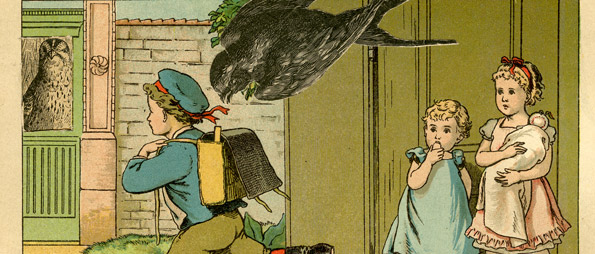
Image: detail from John Ashbery, Late for School, c. 1948. Collage, 12 1/2 x 8 inches. From “John Ashbery with Jarrett Earnest,” Brooklyn Rail (3 May 2016); link here.

Document 77: Reviews of QP

There is now a good handful of reviews of Questions of Poetics: Language Writing and Consequences (and a recent theoretical article on Language writing that discusses my early work), from remarkably different perspectives. When time permits, I hope to continue the dialogue on the issues raised and texts discussed in the book. For now, I am grateful to the authors for the time and commitment it takes to write critically on others’ work.

2019

Jeanne Heuving, review of Questions of Poetics: Language Writing and Consequences and Intricate Thicket: Reading Late Modernist Poetries by Mark Scroggins. American Literature 91, no. 4 (December): 905–7. PDF here.

Timothy Kreiner, “The Politics of Language Writing and the Subject of History.” In Annie McClanahan, ed., special issue on “Deindustrialization and the New Cultures of Work.” Post45 no. 1 (1 January). Link here.

Tyrone Williams, “Examples Of: On Barrett Watten’s Questions.” Review of Questions of Poetics: Language Writing and Consequences. Jacket2 (18 January). Link here.

2018

Luke Harley, “Searchlight Intelligence.: Barrett Watten’s Critical Poetics.” Review of Questions of Poetics: Language Writing and Consequences. Journal of Poetics Research no. 9 (31 August). Link here.

Daniel Morris, “History and/as Language Poetry: Remembering Literary Community through Negation in Barrett Watten’s Questions of Poetics.” Talisman 46 (2018). Link here.

2017

Grant Matthew Jenkins. Review of Questions of Poetics: Language Writing and Consequences. ALH Online Review, ser. 14:1. Link here.

2016

Barry Schwabsky. “Reader’s Diary: Barrett Watten’s Questions of Poetics.” Hyperallergic (6 November 2016). Link here; for see the notice on Harriet link here.

Don Wellman, “Cows Nostrils Are Blue: An Essay on Practice with Comments on Barrett Watten’s Questions of Poetics.” Immanent Occasions (20 September); link here.

To order Questions of Poetics online, click here (discount options coming).

The New Presentism:
Interventions of the Ordinary Crisis

Our seminar, originally a panel session, has been expanded to include five presenters, listed below; an enrolled and a public audience; and the opportunity to circulate papers that will be discussed over the 2-hour seminar. As the ASAP registration portal for seminars has closed, if you would like to take part in the seminar please contact the session organizer, and you will be enrolled in the seminar and printed in the program. Please do so by September 1 to make sure you are included on the website and printed materials. Contact: b.watten@wayne.edu.

Featured participants: 

  • Danielle Pafunda (University of Maine)
  • Rodrigo Toscano (The Labor Institute)
  • Tyrone Williams (Xavier University, Cincinnati)
  • Barrett Watten (Wayne State University)

… More

bw tattoo 1200

Yesterday I joined many millions throughout the history of humanity and submitted to ritual scarification, of my own volition and free will: I got a tattoo, my first after many years of sworn testimony that I would never do so. Like any complex choice, there was a before and an after—I had been visually imagining and verbally debating such a decision for years, months, and days leading up to the act, which took place on August 11, 2018, in the company of two friends, at the hand of Zach Hewitt at Signature Tattoo on Nine Mile Road in Ferndale, Michigan. The consequences of this act after resonate across time, space, and my work as a writer, beginning now. … More

goodbye paris motel

Travels in France with Carla Harryman
(Languedoc, Burgundy, Paris, Brittany)
19 July–1 August 2018

Note: while my main purpose in making pages like these, often with a variation of the heading “I Met (after On Kawara),” is conceptual, indexical, linguistic—I am fascinated with the minimal representation of people, art, places, and events given simply by their names or locations or modes of transport—there is linked content as well, which awaits the visitor.

Thursday–Friday, July 19–20

Delta Airlines DTW > CDG
SNCF TGV > Nîmes
Service publique Occitaine transports/car > Valleraugue
Chez de Laroque / Hôtel Valleraugue

Carla Harryman
Françoise de Laroque
Juliette de Laroque
Mathieu Saunier

Saturday, July 21

Thomas Bouvrot
Eva-Léa Le Roux

Rive l’Hérault

Sunday, July 22

Rive l’Hérault

Car/Service publique Occitaine transports > Nîmes
Hôtel Amphitheatre, Nîmes

… More

no pessimism or negativity think positive stop negative thinking having pessimistic thoughts be positive and optimistic thinking makes you happy

no pessimism or negativity think positive stop negative thinking having pessimistic thoughts be positive and optimistic thinking makes you happy

Negativity, my fourth keyword from Questions of Poetics, is a rich term whose usage far outstrips its dictionary definitions or thesaurus synonyms. Searching for an image for this post, I encountered a raft of popular maxims on the disadvantages of negativity, on how negative thoughts, feelings, actions only hinder us in the quest for happiness, becoming a detriment to any sort of sociality or belonging. The first results for a Google Advanced Image search for negativity reveals: an image of a glass half full or half empty; “7 Signs That Someone’s Negativity Is Toxic“; a “no negativity” logo; a cartoon image of a fighting couple; “Don’t let anyone’s ignorance, hate, drama or negativity stop you from being the best person you can be”; “Good things happen when you distance yourself from negativity and those who create it”; a personal training manual for “Beating Negativity“; a cartoon image of three happy-faced “blocks” outweighed by a black, negative “block”; “5 Ways You Are Spreading Negativity Without Knowing It”; “How to Deal with Negativity (6 Mindful Strategies); “Negativity Is a Thief, It Steals Happiness,” and so on. While “the power of positive thinking” is as American as apple pie, this result shows nothing less than a cultural logic that forbids the expression of “negative” thoughts, emotions, or actions, insofar as they are seen as a threat to “our” forms of positivity. Negativity has become a social threat, a thought crime that may be punishable—a moment of social reinforcement that has everything to do with normalizing our current extreme circumstances.  … More

fv_williams

Throughout Questions of Poetics, I use radical particularity as a critical concept to discuss the making and interpretation of Language writing and other forms of art—but also its limits as a pre-given or “one-size-fits-all” concept. Language writing may be characterized, in almost every instance, by the foregrounding or highlighting of the “radical particular,” but this does not simply guarantee the success of its aesthetics or politics, nor does it distinguish its use of the radical particular from other art practices. I see the focus on the “radical particular” as common to the avant-garde, as having a critical potential that is the beginning, not the end, of its politics:

Radical particularity has a long history in avant-garde practice—indeed, it may be the formal feature most characteristic of the manifold histories of the avant-garde, from Dada’s cut-ups to surrealism’s found objects to imagism’s direct treatment to Language writing’s parataxis, continuing in myriad ways in present poetry and art. The priority of parataxis (or principle of equivalence) over hypotaxis (or principle of subordination) has, in itself, even been taken as the key principle of Language writing’s claim to a politics, as if the mere foregrounding of the materiality of language would overturn the Symbolic Order, mirroring or subverting the equivalence of the commodity form and exchange value by bringing material social relations to consciousness and thus negating them. What remains to be shown are the precise relations between materiality, signification, criticality, and form such that the agency of the work is not reduced to a universal effect, good for every occasion. (8)

… More