Event 76: Zone (New York)

Zone (New York)
@ Torn Page
435 W. 22nd Street, New York
September 20, 2026

with Steve Benson
and Marjorie Welish
hosted by Carla Harryman
and Lee Ann Brown

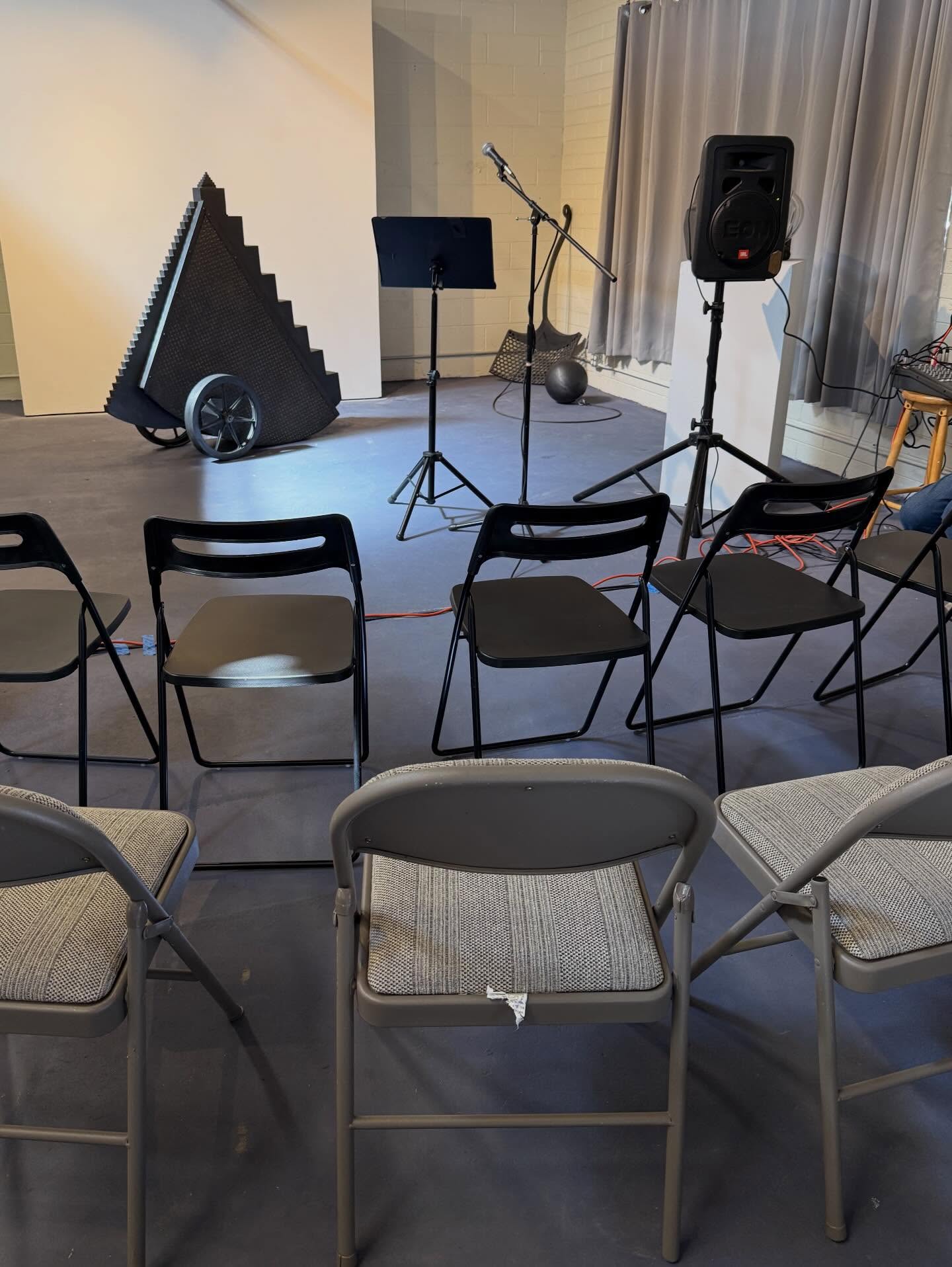
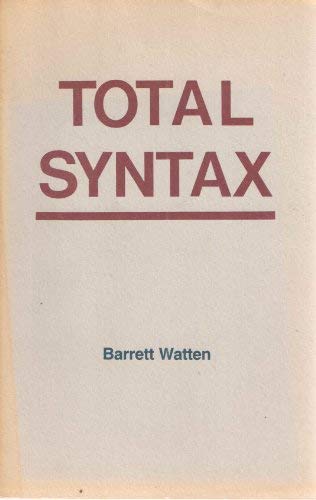
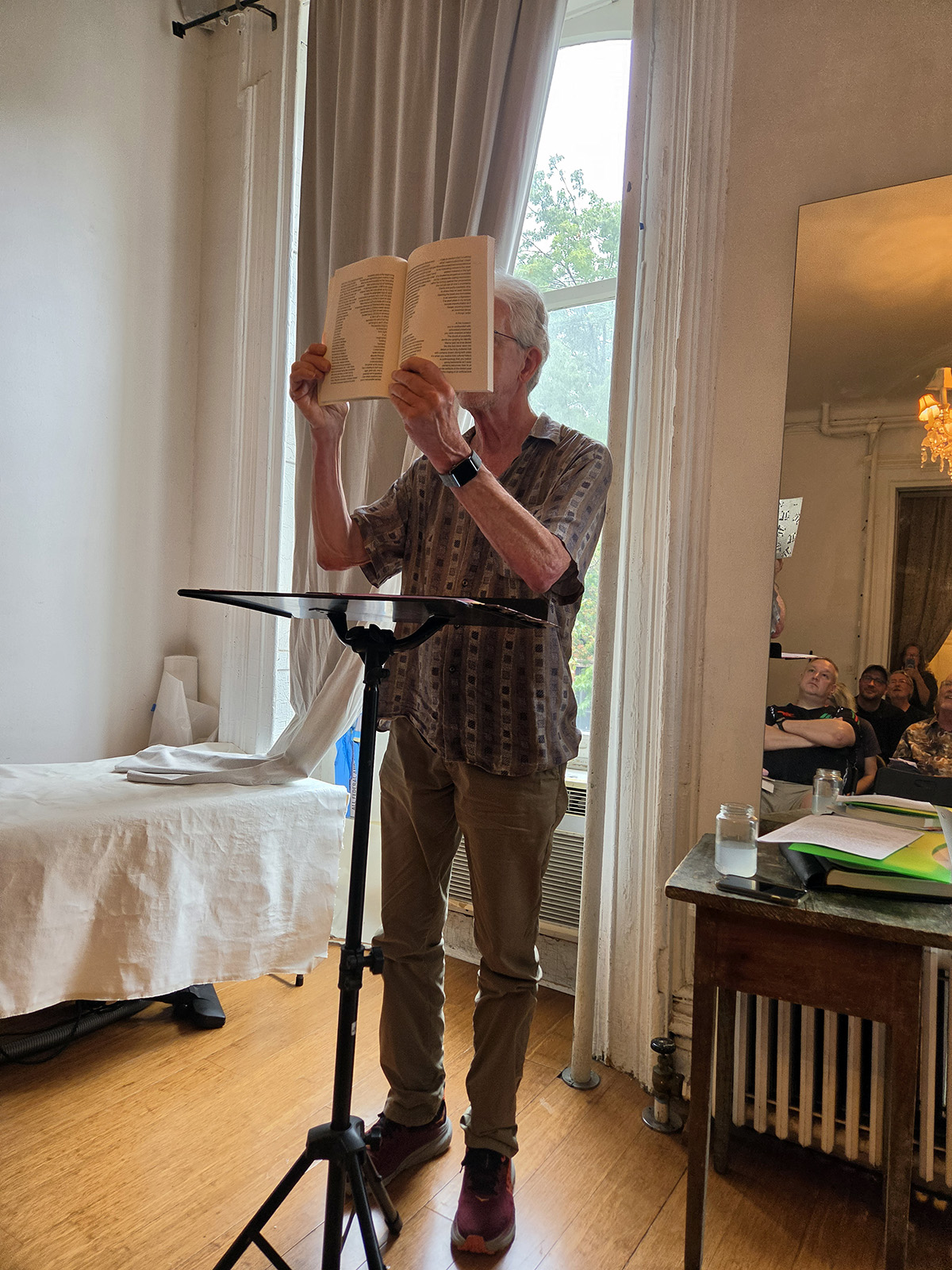
On the right day, New York is about openings. On that day, Lee Ann and Carla organized an event to launch Zone: correlations (1973 2021) in New York, in the company of two long-time collaborators and close allies in poetry, Steve Benson and Marjorie Welish. As a member of the Grand Piano, Steve has been a significant part of an imagined poetic unity since meeting about 1974 in Santa Barbara, followed by his emigration north to join the community then converging. I first encountered Marjorie a decade later, about 1989 when she published a review of my book Conduit in the San Francisco Chronicle titled “Exposed Wires of an Electronic Age.” This review, edgy but positive, followed the disastrous series of poetic kneecappings that attended Total Syntax and the resistance it inspired among the philistines, which I have returned to past the point of recall. Nothing short of an anti-philistine Poetic Front has characterized our solidarity since then, as Marjorie explicitly confirmed in introducing her reading. Her magisterial A Complex Sentence (2021) stands as a charter document of that movement’s core values. … More

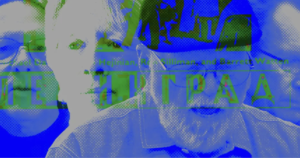
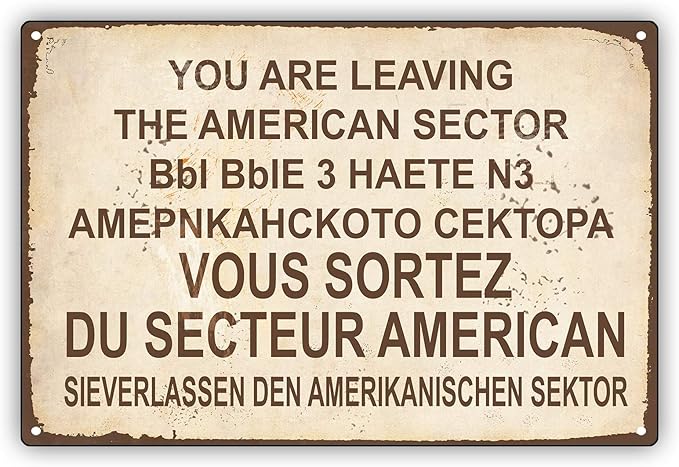
For the forthcoming publication of a newly translated Russian version of Leningrad: American Writers in the Soviet Union (here), I was asked to write an introduction, reflecting on the occasion, the time in between, and the present global situation. The original work comprised four sections of four entries each by the four authors, depicted above: Watten, Hejinian, Silliman, and Davidson. The project itself, based on a 1989 conference of avant-garde Russian and American poets (and others) as an event, has to a degree passed into lore—or better, was a self-conscious exploration of making lore, joining with a project of the ages where poetry (a poem, a body of work, a specific poet, a movement) creates a parallel text that circulates, perhaps anonymously and unwritten, to define the interpretive space (or “zone” in my sense) in which it may be situated and understood. I need only mention the Beat poets (especially the trinity Kerouac, Ginsberg, and Burroughs) to find an example of poetry creating its own lore along with its works (see my entry on “Language/Beats,” here). A new translation might take up this lore and possibly change it; with Leningrad, it seeks a new occasion, at the present moment of total disruption utterly unlike its initial time stamp. … More

Entry 74: Language/Beats

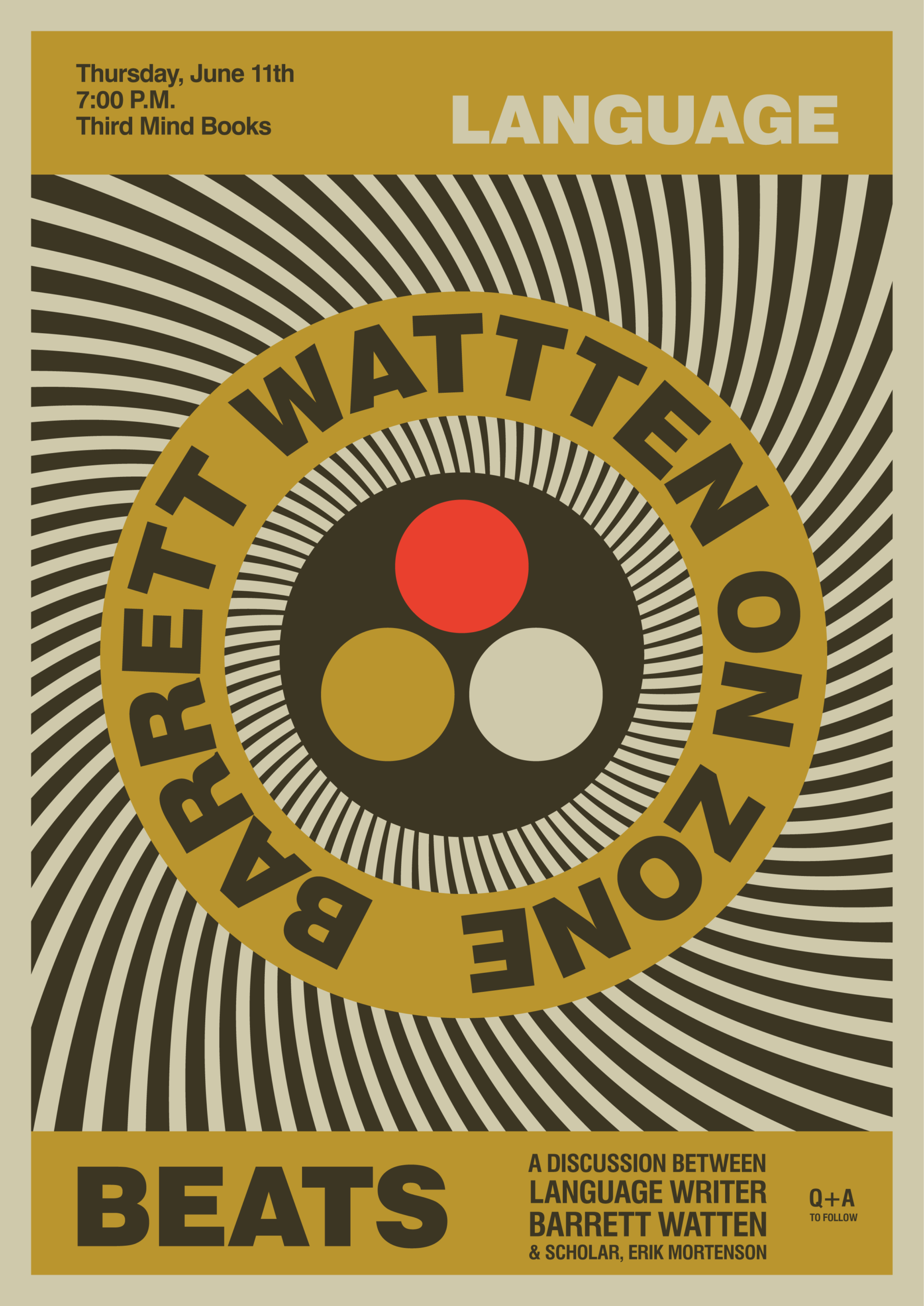
Language/Beats
Book event & discussion

Barrett Watten: Zone:
correlations (Chax Press)
Erik Mortenson: Allen Ginsberg
in Context (Cambridge UP)

Third Mind Books
118 E. Washington, Ann Arbor
June 11, 2026, 7:00 P.M.

On this day, Erik Mortenson and I took the stage to present and reflect on recent work, literary history, and our work together, which stretches back two decades since Erik was my first Ph.D. advisee at Wayne State University. His project was exemplary, on its own merits and in terms of what I wanted to direct: a comprehensive, revisionist, culturally reflexive account of the Beat movement. What resulted was his first book, Capturing the Beat Moment: Cultural Politics and the Poetics of the Present. I cannot stop recommending this book: it is “cultural poetics” as it should be: a synthesis of historical and contextual readings, revisionist expansion of the canon, and focused attention to form and media—with strong readings of key figures in a larger field of authors, history, genre, and meaning. Not only should his work be better known; it should be taught and emulated. And there is strong evidence that the range of poetics it takes part in continues, not least with Erik’s current edited volume, Allen Ginsberg in Context. It was the occasion of his publication and my own Zone that brought us to this “moment” of continuation. … More

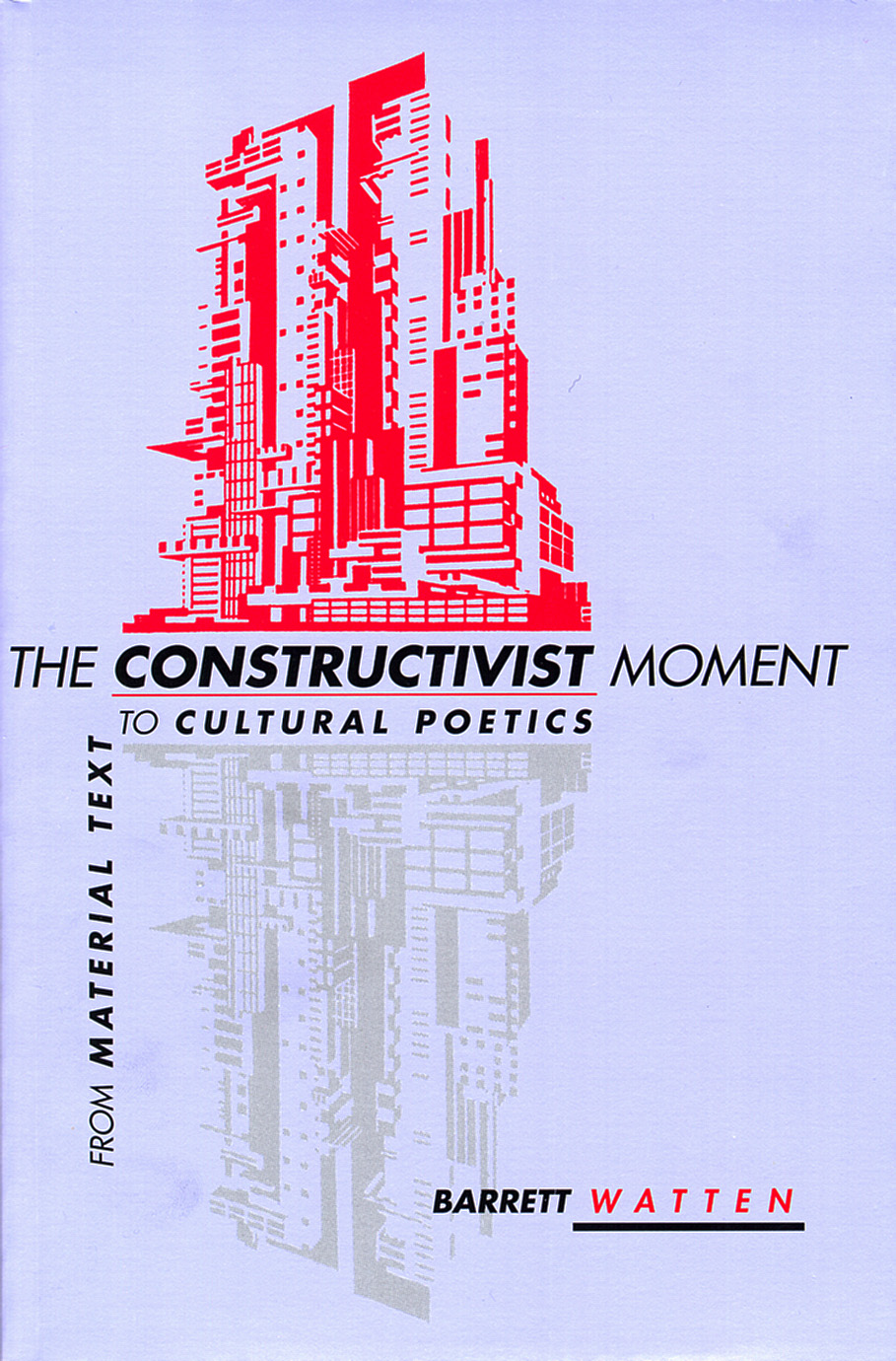
A recent post by Vladimir Feshchenko, Russian linguist and scholar of language-centered writing, raised a question of the historical reception of Language writing—as a history of its own making. Language writing’s historicism is in this sense double—not only a question of its publications, influences, reception, contexts, but the way its formal and theoretical or explorations lead to the future unfolding of new meanings. One thus can trace the historical (real-time) reception of Language writing in relation to these aspects of its “constructivist” poetics, in the sense I develop in The Constructivist Moment. That was 2003, “midway through Language writing’s journey,” and the results keep coming in. They continue in a line that extends to Lyn Hejinian’s later theory of allegory, in Allegorical Moments (2023), pluralizing “moments” in dialogue with that “moment.” … More

Zone (Paris)
@ Double Change / L’Atelier Michael Woolworth
2 rue de la Roquette, 11e
May 4, 2026

with Suzanne Doppelt, Cole
Swenson, and
Carla Harryman
Abigail Lang: translation

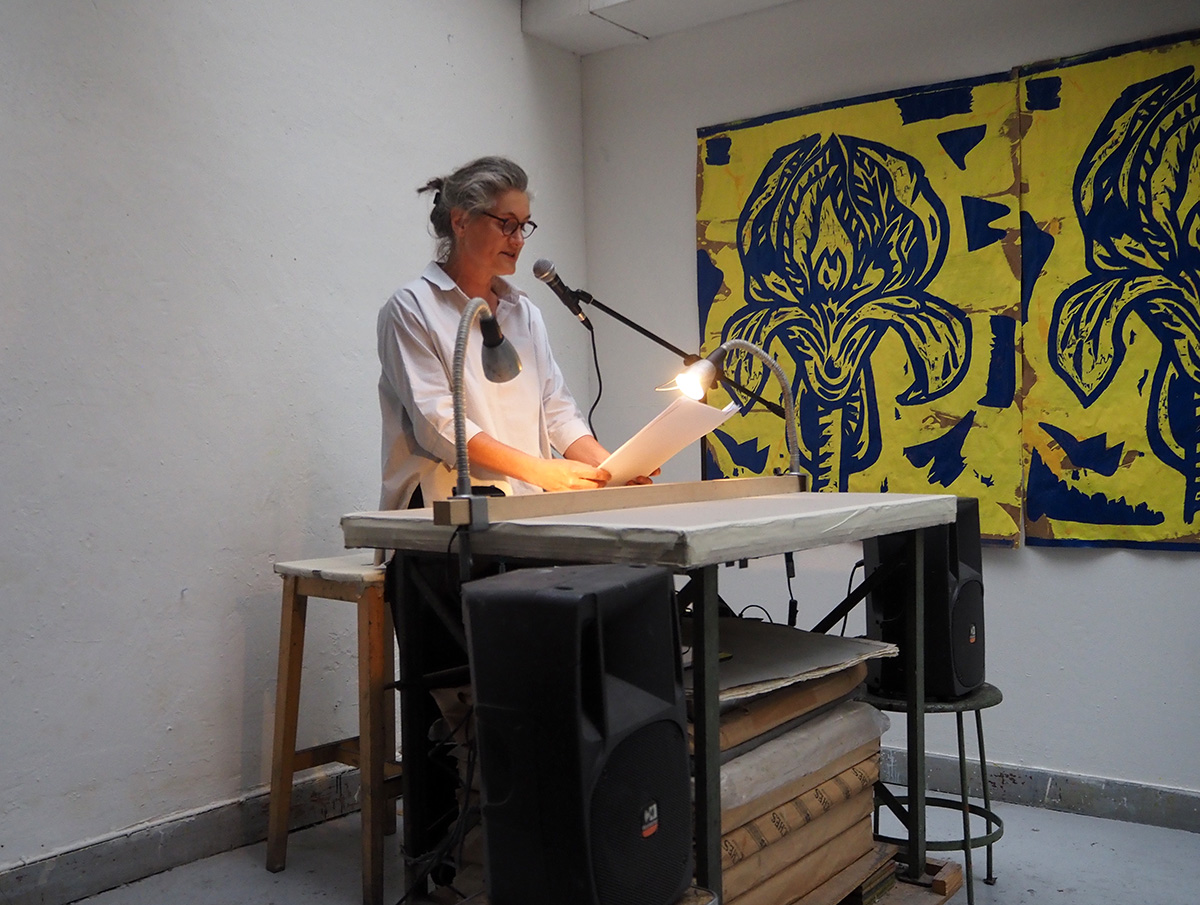
For Double Change, I followed the procedure from my previous reading in Oakland, while limiting the sequence to thirteen sections for reasons of economy. I thus sampled once from each of the twelve works in Zone plus one selected as “clinamen” or swerve to end the piece. A previous post (“Performing the Zone,” here) summarizes the method, but as before the “aleatorical indeterminate” of the randomly generated numbers for text and passage (beginning, middle, end) could not have been improved by human means.

Below, I note pagination and the beginning and ending of the thirteen samples. In addition, Abigail Lang read French translations after sections 3, 6, and 9—in the section derived from Williams’s Paterson alternating French and English with every stanza. I read the French lines from “Orphée in Translation,” after abandoning the idea of having Abigail pronounce them properly. This was the right choice: my attempting French as “other” is a mirror reinforced imagistically throughout the poem (cf. “a man cut in half by a window,” a key moment in surrealism). … More

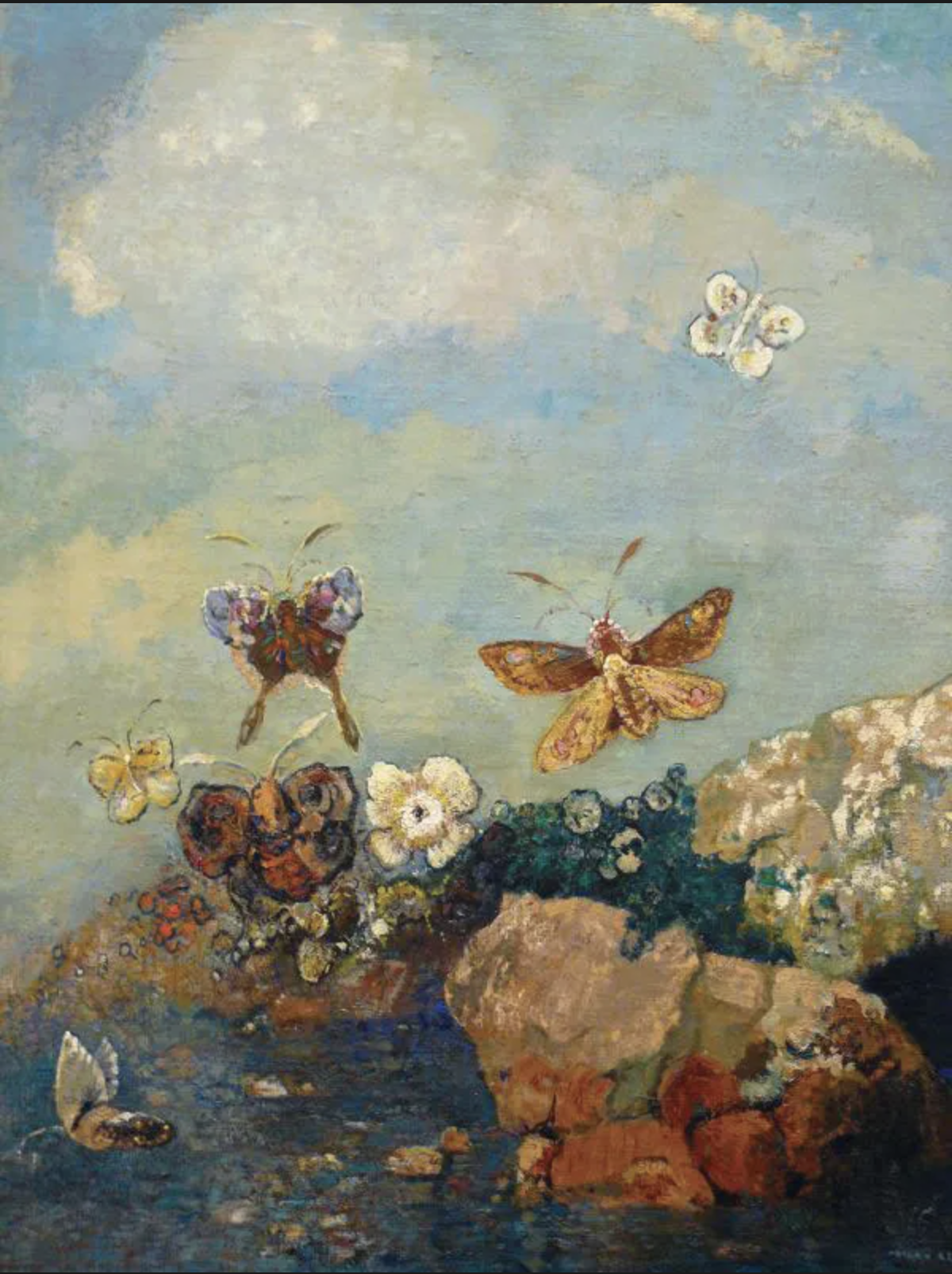
On this day in history, I am informed, Odilon Redon was born in Bordeaux, France. There is otherwise a remarkable series of destructive events, according to Encyclopedia Brittanica, none of them related to each other except for the date of April 19. I’m not going to list them, but their constellation is affected by the memory of my mother, Jeanne Alderton Watten, who was born precisely one hundred years ago on this date in 1926. I must remember not to let the occasion pass. I will further inscribe it in memory by typing out and re-presenting the work I wrote that brought those dates together in Bad History. Such were the deaths the date is associated with. Of course, nothing is ever lost, nor can it be—to quote Emerson. It is just such transcendence the date offers 100 years hence. Also in 1926 was a positive conjunction of births—the poets Allen Ginsberg, Robert Creeley, and Larry Eigner all were born that year. I once relayed that fact to Creeley, and he gave me one of those big sloppy kisses of his later days. Remind me, now that I have come to his age, not to do that to anyone (in any case we are not allowed). Odilon Redon seems just the right touch to remember my mother, who had the instincts of an artist and generously enacted them. But now I see Redon was born the next day, not the day horrible things happened. Thus erased, we move ahead. The image on the right, randomly accessed on the wrong date, thus confirms me in my mission. … More

In the Zone, there is no beginning, middle, or end—they have been erased. But there is a before, during, and after—they are activated. Zone is the space between text and world that productively activates them.
—Introduction to reading from Zone: correlations (1973 2021), 15 March 2026

For my reading from Zone, I prepared a score made by randomly sampling and sequencing selections from across its twelve separate works, a continuous presentation without individual titles and with little or no comment, with the exception of an occasional nod to an audience member (George Lakoff, Brian Ang) mentioned or inferred in the text, and on one occasion to interact with loud street music coming from outside the gallery space. This is a strategy I have deployed on a number of occasions, and it suggests or “rhymes” with the modular construction of most if not all the works in Zone, each built up by differing versions of sampling and sequencing. Brian Ang noticed this strategy in a reading I gave at Kelly Writers House in 1999 (here). In dialogue with Ang’s account, I documented two readings from 2013, in Nuremberg and Amsterdam, for their sampling and sequencing strategies (Nuremberg here; Amsterdam here). … More

“Avant-Garde Poetics of the Zone:
Interchange, Transposition, Translation”

CALL FOR PAPERS/MULTI-SESSION PROPOSAL
SUBMIT BY JANUARY 30 (CONFERENCE DEADLINE FEBRUARY 1)

European Network for Avant-Garde
and Modernism Studies (EAM)
10th Annual Conference, Stockholm, Sweden
2–4 September 2026 /flyer here
… More

Entry 69: Language Notes III

ENG 5530, “Language Writing and Beyond,” has now passed the halfway mark. Organizing the vast amount of material is one thing, but the challenge of teaching Language writing at this historical date—50 years after the first emergent activity—involves rethinking its (non)narrative, its “author function”, its categories, its forms, its values, its politics, what is revealed and concealed, and what comes next. To summarize this pedagogical work of framing, I devised a midterm exam that students understood was, to begin with, an assemblage of the work done so far. Here I want to make this intellectual labor, in the context of an advanced upper division “Topics” course at Wayne State University, available to the field. I believe strongly a revision is necessary and in the works, and that the “usual” account has long since outlived its opening rationale for our work of literary production and reception, and that much needs to be recovered. What emerges, decisively, is that Language writing was in no sense a “period style,” a combine of, say, open form plus material textuality after the New Americans or collage-driven abstraction as a “turn to language” with the New York School—or really, any of a dozen major influences, from modernism and Conceptual Art and to the politics and artist spaces of the 70s. … More